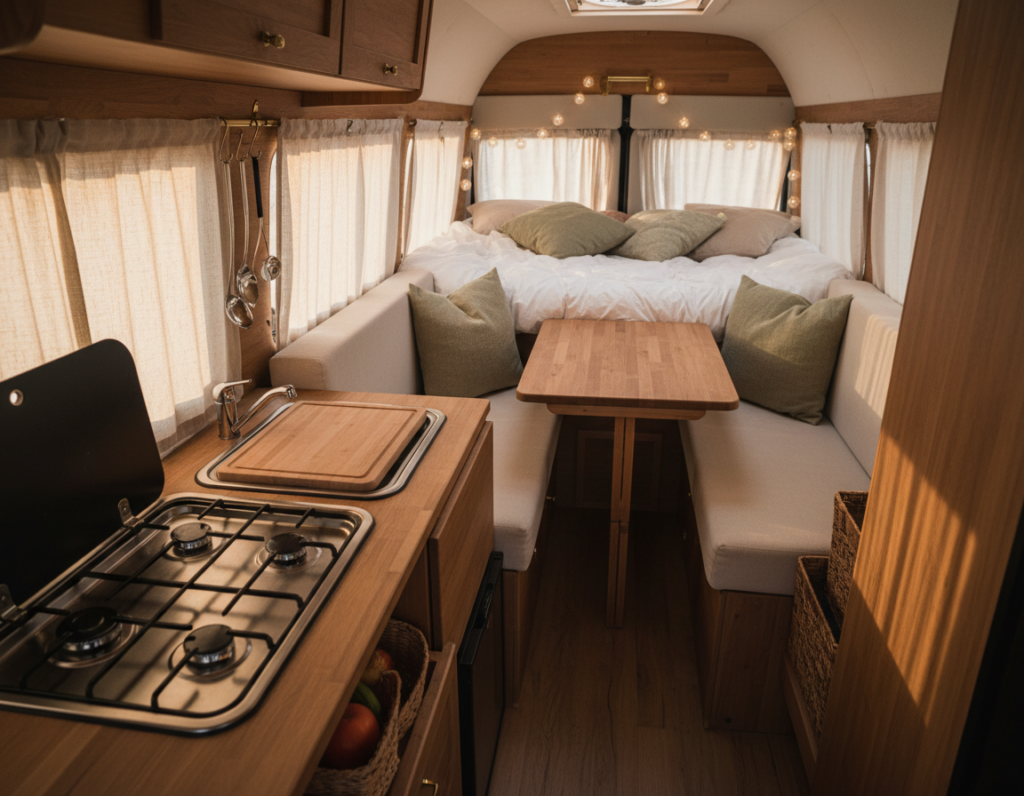
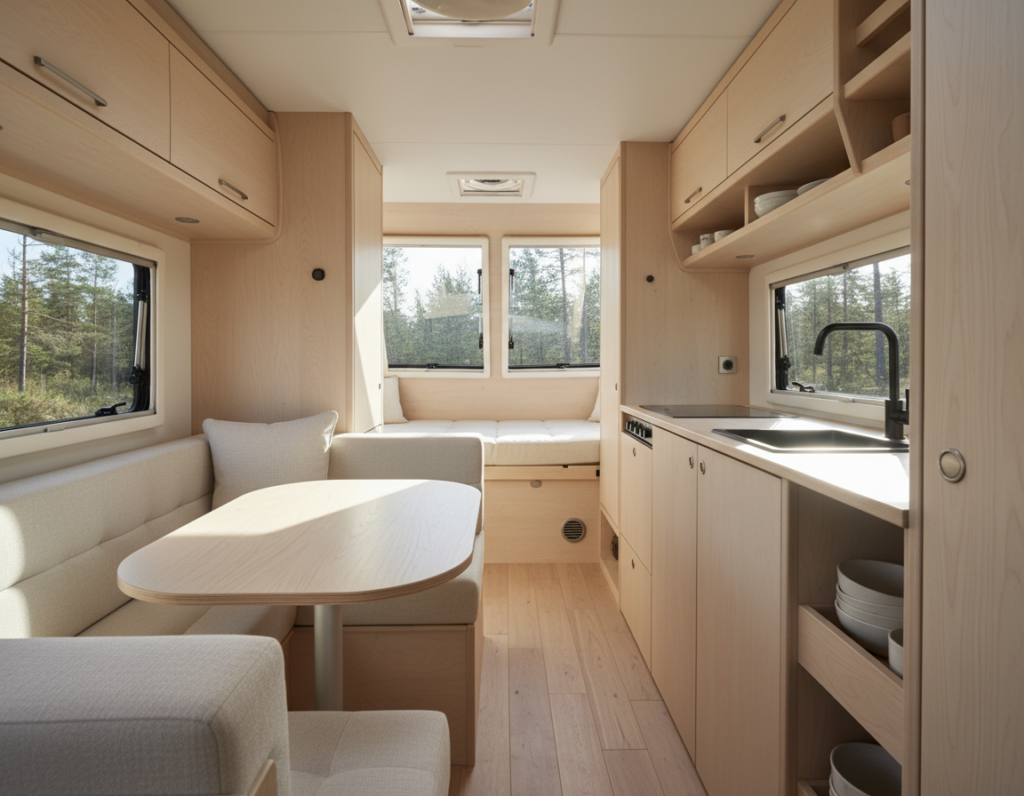
Professional organizers often noted that managing a mobile home began with a minimalist mindset. In a small space, each choice mattered for safety and comfort on the road.
Travelers learned that carrying less stuff cut fuel costs and reduced time spent tracking lost things. Simple routines kept clothes and essential items in order, and proper storage stopped things from shifting during transit.
Experts advised avoiding “just in case” piles and prioritizing what truly belonged onboard. That approach lowered the need for frequent cleaning and made the small home calmer and more functional.
Everyday habits—like returning items to a single spot and sorting clothes weekly—gave owners more freedom. They spent less time searching and more time enjoying the trip.
The Philosophy of a Clutter Free Van Life
Choosing what to keep in a compact home is more about purpose than deprivation. The idea is simple: each item should support how someone travels and rests. That mindset changes how people prioritize belongings and time.
When a dwelling fits into a few square meters, mental space becomes precious. Minimalism works as a regular reset. It helps reduce stress and makes cleaning faster.
Many travelers reported feeling lighter after weeks on the road. They valued scenery and moments more than possessions. That shift supported a sustainable way of living that favored experiences over accumulation.
- Create a space that serves actual needs, not an idealized picture of travel.
- Keep essentials that make the home functional and peaceful.
- Reassess priorities often to ensure the mobile home stays a sanctuary.
Essential Decluttering Before Hitting the Road
Clearing excess gear first helped ensure each trip started with safer weight and more room. This approach focused on removing unnecessary stuff so the small home stayed practical and legal for travel.
Sorting by Category
They began by grouping things into obvious piles: kitchen gear, clothes, tools, and food. Sorting by category made decisions faster and revealed duplicate items. Experts recommended setting a 30-minute timer for each zone to keep momentum.
The Keep or Toss Method
The three-bag method simplified choices: one bag to keep, one to donate, one to toss. A separate “maybe box” held uncertain items; if it stayed untouched for three months, it moved on. Taking photos preserved memories before donating sentimental items.
- Create a short list of essential items to prevent packing “just in case” things.
- Use small boxes or a single bag per decision category to speed sorting.
- Be ruthless early: lighter loads improved safety and handling on the road.
Mastering Vertical and Hidden Storage
Smart use of vertical walls and hidden nooks transforms limited interiors into efficient storage hubs. Thoughtful storage design helps keep everything in its place and speeds up daily routines.
Utilizing Overhead Space
Overhead shelves and lightweight bins make the most of unused room. Overhead storage works best for soft, light items so safety and balance stay intact.
Magnetic strips, command hooks, and hanging racks keep essential things within reach without crowding the kitchen counter.
Drawer and Closet Solutions
Drawer dividers stop small items from shifting while moving. Good dividers create order and save time when grabbing clothes or gear.
Hanging organizers and slim boxes turn narrow closets into useful space for shoes, clothes, and products. Clear bins make identification quick and reduce digging.
Surface Management
Keep counters clear and the room feels larger. A fold-down desk or a cutting board that fits over the sink adds workspace and tucks away when not needed.
Implementing a simple routine—return each thing to its place every time—makes a measurable difference in maintaining order and safety on the road.
Adopting Multi-Purpose Gear for Efficiency
Smart, multi-use items let travelers trade bulk for function and save valuable space. An e-reader, for example, replaced about eleven pounds of paper books and freed shelf room in the mobile home.
Resistance bands served as compact substitutes for dumbbells, cutting 17–22 pounds of workout equipment while still delivering a full routine. A smartphone doubled as GPS, camera, and alarm clock, removing several single-use devices and saving time.
Practical swaps made daily routines simpler. Solid soap bars replaced multiple liquid bottles for shampoo and dish soap, lowering plastic waste and weight. Multi-purpose furniture—like an ottoman that stores gear—turned seating into useful storage.
“Replacing bulky items with compact, multi-use alternatives improves fuel efficiency and comfort on the road.”
- Choose high-quality items that serve more than one purpose.
- Use stackable containers and modular storage to keep items organized.
- Invest in gear that lasts to reduce shopping and simplify living.
Daily Habits to Maintain Order
Small, consistent actions each day prevented small messes from growing into big chores. Those habits conserved space and cut the time spent finding things.
Morning and Evening Resets
A five-minute morning tidy made a big difference. Making the bed and clearing surfaces set a calm tone for the room.
An evening reset took about ten minutes. Dishes were washed, clothes were folded or hung, and the kitchen area stayed ready for the next day.
Cleaning as you go—wiping counters while coffee brewed—kept the area functional and reduced deep cleaning time.
The One In One Out Rule
The disciplined one in, one out method kept storage balanced. When a new item arrived, an old thing went into a donation bag under the bed.
“A ready donation bag makes decluttering a simple habit rather than a big task.”
- Return everything to its place every time.
- Use small bins and drawer solutions for shoes and gear.
- Treat tidying as a non-negotiable part of the routine to enjoy more time on the road.
Managing Resources and Consumables
Knowing where to refill water and how to store dry goods changed how people packed for days on end. A 100-liter water tank covered several days, but planning refills at urban stops let them drive lighter and save fuel.
Smart Food and Cleaning Supply Management
In a 6m² space, balancing fresh food with canned goods reduced waste. Stackable containers maximized pantry storage and kept food fresh and pest-free.
Switching harsh products for white vinegar and baking soda saved about 15€ and freed three shelves of storage. That small change made a clear difference in room and in the kitchen routine.
Keeping a repair kit with a sewing kit and universal glue solved roughly 85% of small problems on the road. Buying only what was needed prevented excess stuff from piling up in drawers and boxes.
- Assign a dedicated place for each resource so people never search.
- Use bins and clear boxes for quick inventory checks every time they packed.
- Keep a short resource checklist — see the resource checklist for a practical starter list.
Handling Sentimental Items and Keepsakes
Handling mementos required a balance between emotion and practicality on the road.
Digital solutions made this simple: scan postcards or take high-resolution photos of trinkets and tickets. These photos preserved detail without taking shelf space.
Many travelers limited keepsakes to one small box roughly the size of a shoebox. That single box forced clear choices and kept the rest of the interior organized.
When receiving gifts, explaining a minimalist approach helped. Guests were invited to offer shared experiences or consumable items instead of more physical things.
Regular review of the memory box kept only what truly mattered. Periodic checks let owners let go of items that no longer spark joy.
“The true value of a memory lies within you, not in the physical gear or trinkets you carry.”
- Scan or photograph mementos to build a compact digital scrapbook.
- Keep one small box for physical items and review it every few months.
- Suggest experiences over objects when friends ask what to bring.
For more guidance on preparing possessions before long trips, see this short guide on decluttering before you travel.
Conclusion: Sustaining Your Minimalist Journey
Minor daily choices added up to lasting order and more enjoyment on the road. Small, consistent habits saved time and kept the small home calm and ready for travel.
They treated decluttering as ongoing work, keeping a short list of wins and tasks. Regular cleaning and a quick shower routine reduced buildup and made maintenance simple.
Keeping progress photos helped track change and stay motivated. When priorities shifted, items were adjusted without stress.
Ultimately, sustained discipline supported peaceful living and safer trips. With intentional shopping and steady upkeep, the compact space remained useful and welcoming on every turn of the road.