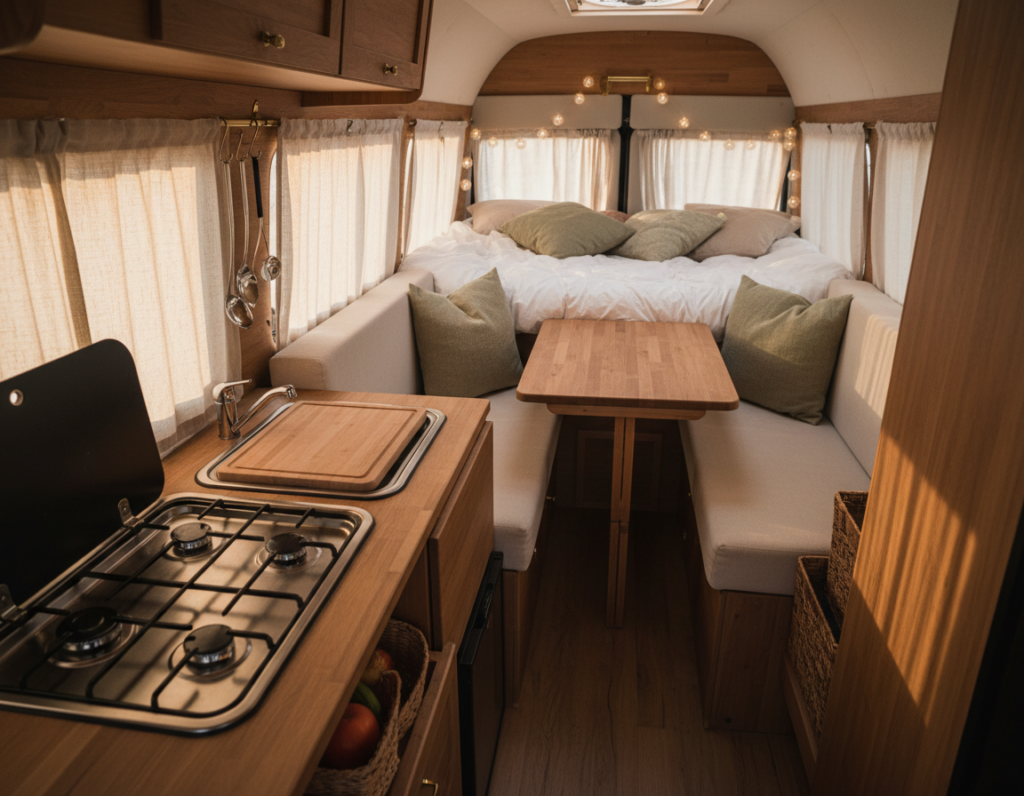
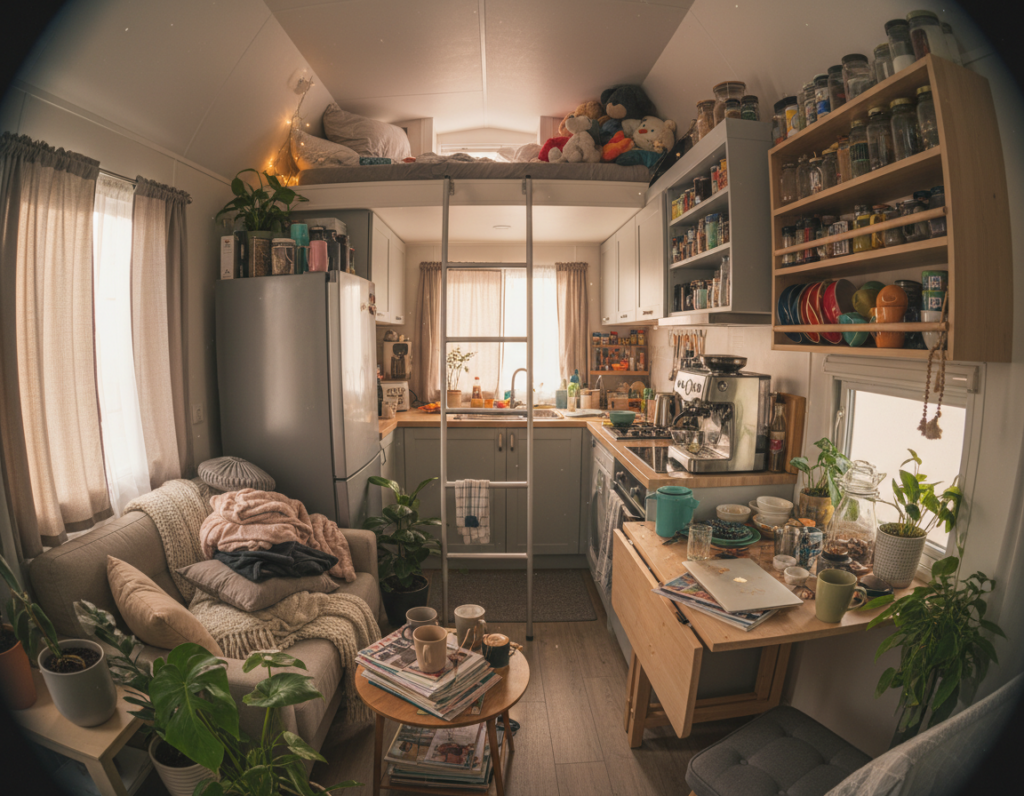
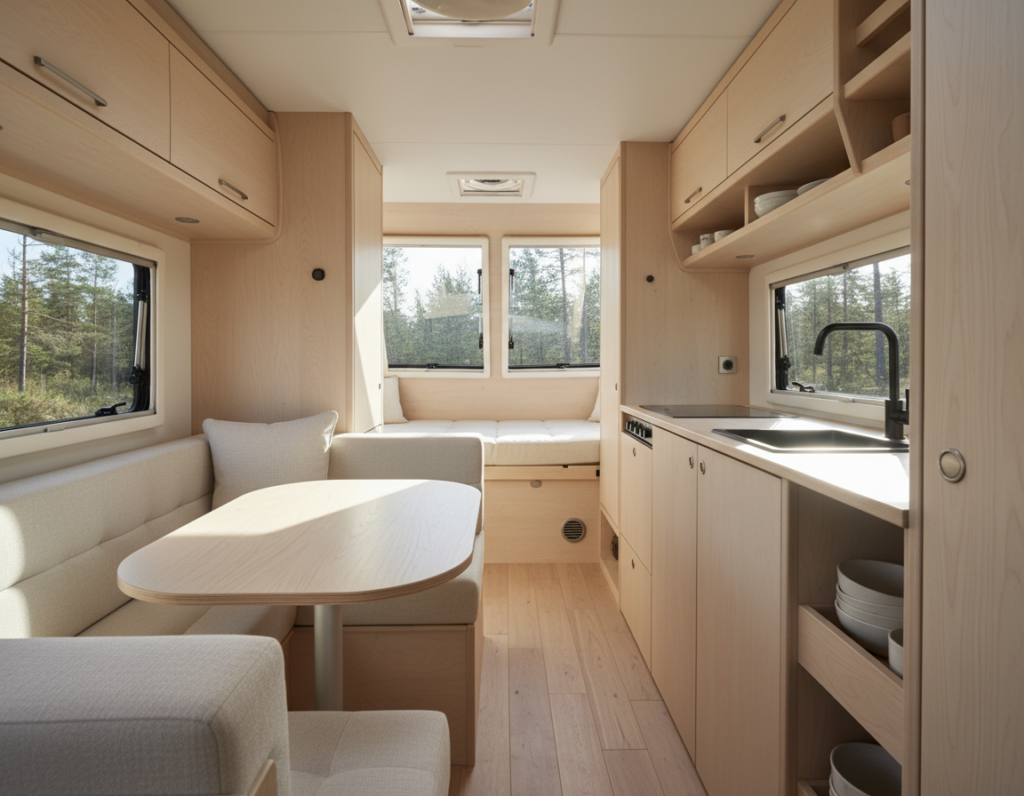
Many van owners rely on a single fixture and miss out on how layered illumination transforms a tiny interior. That lone source often casts hard shadows that make a cozy living room feel cramped. Professionals say smart light design is one of the easiest ways to open up a mobile home.
The Wonky Wave natural woven palm basket, made with Collaborative Craft Projects, shows how texture and natural light work together to lift an interior. By pairing soft ambient light with task and accent options, they banish dark corners and highlight features.
With a clear plan, owners can change how the room feels without costly refits. Layered ideas, careful placement, and an eye for scale help a compact living area feel bright, airy, and inviting.
The Impact of Lighting on Small Space Perception
How light is layered across a compact interior strongly shapes how wide and open the room feels. Clare Weeks shows that pairing different fixtures brightens narrow areas like hallways and creates the illusion of depth.
Understanding how illumination hits walls, floors, and objects matters. Improper room lighting can make a room feel far smaller than its actual size.
Choose professional fixtures to banish dark corners. That removes common features that swallow light and shrink perception. Experts recommend a mix of ambient, task, and accent lights to build visual layers.
- Layered lights add depth so a living room feels larger.
- Targeted fixtures prevent harsh shadows that close in rooms.
- Warm, even illumination keeps a small living area inviting.
- Strategic placement lets owners control the space feel for both work and rest.
“Combining different fixtures creates a bright, open feel in narrow spaces.”
Avoiding the Single Overhead Light Trap
One central fixture can make a living room read as smaller than it really is. Clare Weeks often pairs a glass pendant with wall lights and a table lamp to lead the eye along a narrow run. That mix reduces stark contrast and keeps corners visible.
The Dangers of Harsh Shadows
Relying on a single overhead bulb often produces hard shadows that close in tight areas. Those dark pockets break the flow and make furniture feel crowded.
Simple fixes work best:
- Combine a pendant or ceiling fixture with a table lamp and a floor lamp to spread light evenly.
- Use wall-mounted fixtures to lift illumination at eye level and cut shadow depth.
- Swap to a softer bulb in the central fixture to tame contrast without losing brightness.
Mixing fixtures keeps every corner useful. With an array of lamps and well-placed fixtures, the living room becomes flexible for tasks and relaxing. This approach transforms a cramped feel into an open, balanced environment.
“Combining several sources removes harsh shadows and creates a more open living experience.”
Strategic Use of Wall Sconces for Openness
Mounted wall sconces can reshape how a living room reads by washing walls in a soft, lateral glow. When fixed at or just above eye level, these fixtures cast even light across vertical planes. That widening effect makes the room feel less enclosed without taking up valuable floor or table surfaces.
Designers recommend wall sconces for their clean lines and variety of styles. They highlight architectural features and lift the visual field. Using a table lamp beside sconces builds a layered approach that balances task needs and mood.
- Wall sconces free the floor so furniture and rugs read more open and intentional.
- They accent features and boost wall color, adding depth without cluttering surfaces.
- Choose fixtures that match the room’s style to keep the look cohesive and modern.
In practice, swapping a bulky floor lamp for two slim wall lights often makes a living room feel larger and more flexible.
“Wall-mounted fixtures create clear sightlines and keep the floor plane uncluttered.”
Emphasizing Verticality with Pendant Fixtures
A pendant or modest chandelier can redirect attention upward, instantly stretching how tall a living room feels. Using vertical emphasis is an easy design move to alter the perceived space feel without structural changes.
Drawing the Eye Upward
Place a pendant so it creates a visible line from the fixture to the ceiling. That guide pulls the viewer’s gaze up and away from the floor plane.
The Twinky cordless floor lamp pairs well here: its tall, slim form extends the eye toward the ceiling without cluttering the floor.
“A properly placed pendant fixture can transform a small space feel, making it appear taller and more open.”
Selecting Scale for Compact Areas
Choose a pendant or chandelier that matches ceiling height and room dimensions. Oversized fixtures overwhelm; too tiny ones disappear.
- Match fixture diameter to the room’s width for balanced proportion.
- Combine a pendant with a table lamp to add depth and task light.
- Use slim floor lamps or wall fixtures to support vertical emphasis without crowding the floor.
Good pendant choices make the living room read taller and more refined. They are a simple, high-impact idea for better design and an improved space feel.
Incorporating Reflective Surfaces and Mirrors
Reflective finishes and mirrors amplify any lamp’s output, turning modest fixtures into powerful visual tools. When glass rods, polished brass, and mirrored panes are used together, they bounce beams across walls and up to the ceiling. That extra return light makes a living room feel taller and more open.
Drawing the Eye Upward
The Roddy table lamp uses glass rods and brass fittings to scatter light in many directions. Paired with the Rita chandelier’s clear blown-glass droplets, these fixtures double the perceived brightness.
Designers often place pendant fixtures near a mirror to boost reflection and reach higher surfaces. This trick helps light the upper walls and ceilings so height becomes more noticeable.
- Reflective fixtures distribute light evenly so every corner reads brighter.
- Mirrors paired with wall-mounted lights create a luminous, airy living room environment.
- Using glass elements and polished finishes enhances the overall design and perceived quality.
“Mirrors and reflective surfaces can double the sense of space when used with layered light sources.”
For practical guidance, see a concise primer on how mirrors amplify natural and artificial light at using mirrors to reflect light.
Mastering Small Space Lighting with Layering Techniques
A coordinated mix of sconces, pendants, and table lamps creates clearly defined zones that feel larger and more functional.
Start with a soft ambient source to set an even base glow across the room. Add task lamps near seating and work surfaces to focus light where people read, cook, or prep.
Accent fixtures — like slim wall sconces or a modest chandelier — lift walls and highlight texture. That vertical emphasis stretches the eye and reduces cramped sightlines.
Designers recommend layering so fixtures work together to erase harsh shadows. Incorporate LED strips behind cabinets or under shelves to add depth and subtle color without glare.
This approach creates a flexible environment. Dimmer switches and multiple circuits let occupants tailor room lighting levels for tasks, entertaining, or relaxing.
- Mix ambient, task, and accent sources for even coverage.
- Use wall sconces and a table lamp to define seating zones.
- Add LED accents to boost depth and color control.
“Layering makes a compact living area feel intentional, brighter, and more spacious.”
For practical plans and layout ideas, see a concise guide on mastering lighting in tight rooms.
Choosing the Right Bulbs for Activity and Mood
Bulb choice is the simplest upgrade that alters both mood and function in a living room. The proper bulb pairs with fixtures and a lamp to make overhead light, wall sconces, and task sources work together. A deliberate pick ensures the room reads as intended for reading, relaxing, or hosting.
Color Temperature Basics
Color temperature defines how warm or cool a light appears. Warm tones (around 2700–3000K) create a cozy glow. Cooler tones (3500–5000K) sharpen vision for tasks.
Professionals recommend matching bulb color to activity: warm for lounges, neutral-to-cool for work zones. This simple rule makes fixtures and wall sconces complement each other without visual conflict.
Smart Bulb Integration
Smart bulbs add control and variety. The Cync full color model offers up to 16 million color options and dimming from an app or voice assistant.
- Flexibility: change color and intensity to suit mood or task.
- Special effects: a BlissBulb laser can project red or green stars for a dramatic, playful finish.
- Retrofit friendly: swap smart bulbs into existing fixtures and sconces for instant upgrades.
“Choosing the correct bulb lets the fixture fulfill both function and style.”
Utilizing LED Strips to Expand Visual Boundaries
Continuous LED lines along a ceiling or baseboard redraw the room’s proportions without bulky fixtures. They guide the eye and create clear sightlines that make rooms feel more open.
Wafer LED fixtures are ideal for areas with low ceilings. They install without recessed housings and deliver even, bright light that lifts a living area without intrusion.
Color-changing strips add versatility. A shift in color or intensity can transform mood and make a living room feel larger or cozier as needed.
- Install strips under sofas or cabinets to create a floating effect across the floor.
- Run LEDs along the top of a wall or near the ceiling to draw the eye upward and add perceived height.
- Use wafer LEDs where recessed cans are not feasible for clean, modern room lighting.
- Combine with dimmable controls to tune the light for tasks or relaxation.
“LED strips give designers a low-profile tool to expand visual boundaries and highlight architecture.”
Selecting Furniture-Friendly Floor Lamps
A slim floor lamp tucked into a corner can brighten a room while preserving the furniture layout. These fixtures add usable light without taking over the floor. They are ideal for maintaining clear circulation and keeping the area functional.
Choose a profile that complements existing furniture. A tall, narrow lamp pairs well with a table or sofa and works with wall sconces to form a balanced scheme. Together, they lift walls and reduce shadowed pockets.
- Pick a lamp with a slim base so it fits beside chairs without blocking pathways.
- Opt for adjustable heads to direct lights for reading or tasks.
- Select finishes that match other fixtures to keep the look cohesive.
“The right floor lamp acts as both a statement piece and a practical fixture.”
By matching scale and style, a floor lamp can expand how the room reads while taking up minimal floor area. These ideas help a small living area feel open and purposeful.
Conclusion
A layered approach to illumination gives visual depth without expensive renovations. , By mastering small space lighting, owners can make a camper feel like a bright, welcoming home rather than a cramped box.
Avoid relying on one overhead source and embrace varied fixtures. A pendant or a modest chandelier draws the eye upward and makes low ceilings read taller. Mirrors, smart bulbs, and well-placed lights complete the scheme.
These ideas encourage experimentation: mix fixtures, test dimming levels, and balance task and accent sources. With clear design choices, even tight spaces become open, functional, and inviting.