Since May 5, 2025, builders and travelers have focused on functional interior design to boost comfort in compact homes on wheels.
Designing a camper van or campervan interior means balancing limited space with personal needs. They must choose storage and open floor space so the place feels like home.
Good van interior ideas use multi-purpose pieces that save room and add personality. Every camper owner should think about flow, storage, and how choices affect daily life on the road.
This guide explores practical ways to decorate a small space without crowding it. Readers will find options that improve comfort and keep the van interior airy for adventure.
Defining Your Personal Style in Small Spaces
A small rolling home becomes personal when style choices tell a traveler’s story. Nate Berkus argues a home should show who you are and what you love, and that idea fits life on wheels well.
When someone first gets a camper van, it can seem like a blank canvas. They can use simple design ideas to make the space feel like home without crowding it.
The author who rebuilt the Fiat Ducato named Alma spent months shaping the interior to match daily life. This shows how intentional choices change a place into a true home on wheels.
Practical balance matters: pick finishes that please the eye and serve storage needs. Choose furniture that supports comfort and folds or stores away to free floor space.
- Let personal items tell a story.
- Use a consistent palette to help the space feel larger.
- Prioritize storage solutions that do double duty.
These options help owners create a camper that feels like home and works for travel. Thoughtful design keeps the van comfortable, tidy, and ready for the next trip.
Essential Principles of Minimal Van Decor
Smart styling in a compact camper van begins with clear rules: keep function first and let accents add personality. This approach helps a small space feel open while reflecting a traveler’s taste.
Minimalist Aesthetics
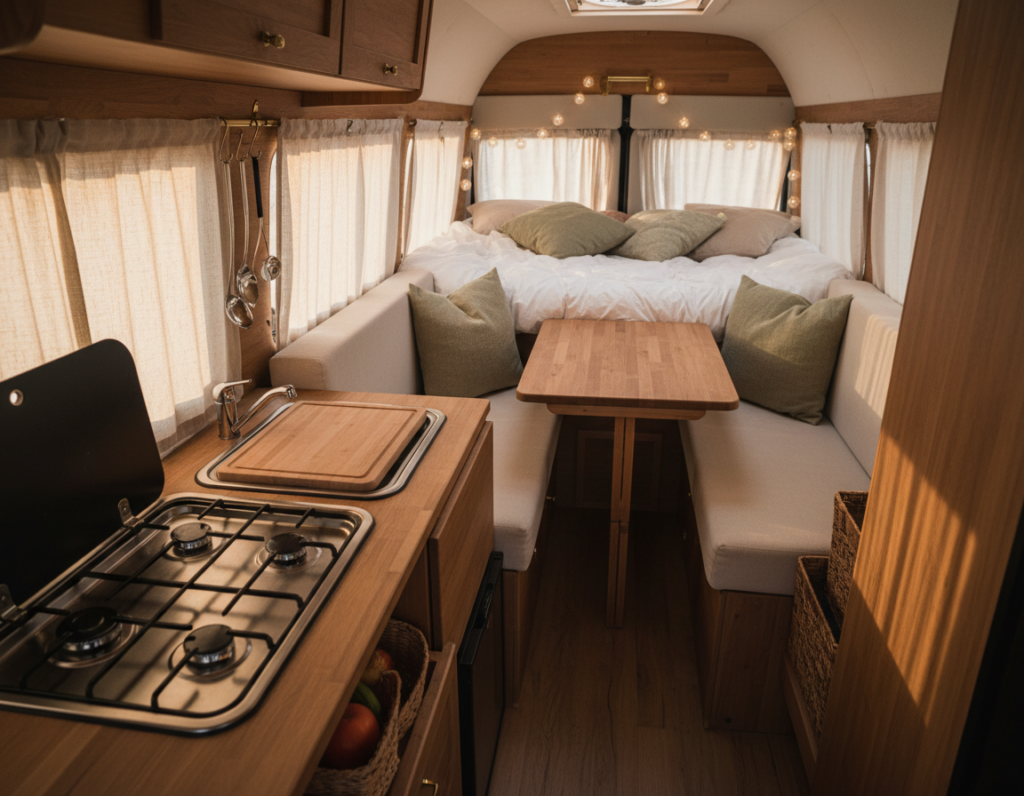
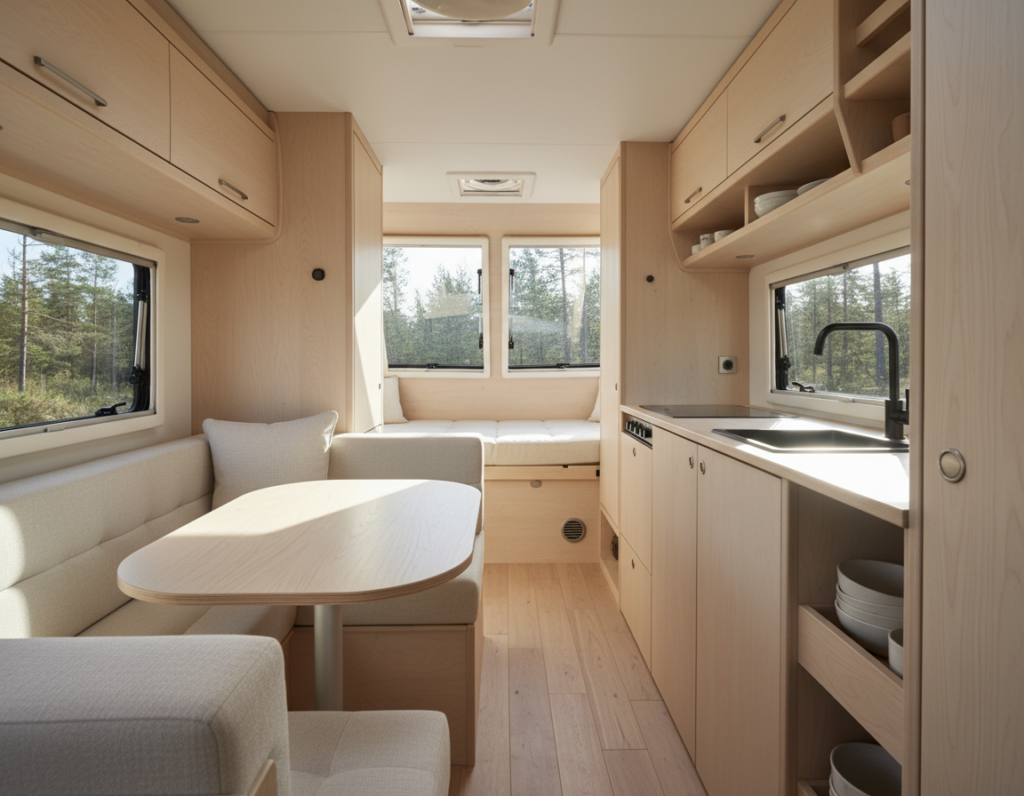
Minimalist aesthetics rely on neutral palettes and lightweight materials like bamboo to maintain an airy interior. Clean lines and clutter-free surfaces make the place feel larger and calmer.
Practical tips:
- Choose multipurpose furniture that doubles as storage.
- Stick to two main colors and one accent to widen the visual field.
- Prioritize hidden storage to keep daily life organized.
Rustic Retreats
Rustic retreats take a different route, using reclaimed wood and warm textiles to create a cabin-like comfort inside a camper. This style brings tactile depth without crowding limited space.
How to balance it:
- Use wood accents sparingly to preserve visual breathing room.
- Pick light-toned fabrics that add warmth without darkening the interior.
- Keep storage functional and intentional to support life on the road.
Bottom line: choose design elements and storage options that earn their place. Doing so turns camper vans into a functional home that supports comfort and the way people live on the road.
Maximizing Floor Space with Strategic Rugs
A well-placed rug can define zones in a camper and make small floor plans feel intentional.
Choose a low-pile, tight-weave rug for life on the road. This option reduces dust build-up and lets drawers slide open without snagging.
Pick rugs with an anti-slip bottom to keep them secure while moving or cooking in the kitchen area. That small detail adds real comfort and safety during daily use.
Rugs also act as visual anchors. Placed under the bed or in the living space, they create a clear sleeping area and a cozy spot to sit.
- Define the living space and sleeping area without adding bulky furniture.
- Keep the rug low-profile so storage under the bed stays accessible.
- Opt for easy-to-clean fibers to simplify upkeep between trips.
Bottom line: a smart rug choice extends usable floor space, supports storage strategies, and helps the camper feel more like home.
Creating Ambiance with Soft Lighting
The right lights turn a small camper into a warm, livable retreat. Soft, layered lighting helps balance function and mood in tight areas. It makes the interior feel larger and more welcoming.
Consider how each light will be used: task lighting in the kitchen, soft glow over the bed, and accent lights for evening downtime. These choices influence comfort and the overall design of life on the road.
Fairy Light Displays
Installing fairy lights is a simple way to add warmth without heavy power use. Strings can run along the ceiling to make the ceiling feel higher and the space more open.
“Fairy lights instantly add a cozy, lived-in vibe with minimal battery draw.”
Puck Light Sconces
Puck light sconces give a refined look and bright, focused light. Remote-controlled LED puck lights offer flexible placement and enhance the signature van feel.
Dimmable LED Options
Dimmable LEDs are a top option for modern camper interiors. Devices like the Camplight provide USB-C dimming and low power draw, so owners can set the mood easily.
- Use dimmers to shift from meal prep to relaxation.
- Place lights near storage and work areas for safer use.
- Run strips along the ceiling to widen the living space visually.
Selecting Comfortable and Stylish Bedding
Choosing the right bedding turns a small sleeping area into a restful retreat on the road. Good linens improve comfort and help the camper van feel like a private home.
For a fixed bed, pick high-quality sheets and a supportive mattress layer. Ikea’s BERGPALM duvet set, made from 100% soft cotton, gives a vintage feel and breathability that helps with sleep on long trips.
Durable covers keep the seating area tidy between drives. Many owners trust Covers & All for custom cushion covers in indoor/outdoor fabric that are easy to clean and built for life on the road.
Practical tips:
- Choose washable, tightly woven sheets that resist wear.
- Use multi-use storage under the bed for extra blankets and pillows.
- Pick a color palette that unifies the interior and brightens the area.
Bottom line: thoughtful bedding choices increase sleep quality and add personal style without stealing valuable space.
Layering Textures with Cozy Throws
Layering soft textiles quickly transforms a compact living area into a warm, inviting retreat. Throws add texture without taking up storage or floor space. They are an easy design move that works in a camper or campervan setting.
Choosing Durable Fabrics
A reversible Sherpa Fleece Throw is a top option for winter life on the road. It pairs soft microfiber with warm Sherpa fleece to keep sleepers cozy during chilly nights.
When selecting fabrics, favor pieces that wash well and resist pilling. Durable throws stand up to frequent use in the kitchen, on the bed, or at the seating area.
- Use throws to add visual depth to a small space without bulky furniture.
- Store versatile blankets in under-seat storage to keep the interior tidy.
- Mix textures—knit, fleece, and woven—to make the living space feel layered and lived-in.
- Pick machine-washable options to simplify maintenance during van life.
Every camper owner should consider how varied textures can boost comfort and style. A well-chosen throw is a small addition that improves sleep, lighting contrast, and the overall feel of a tiny home on wheels.
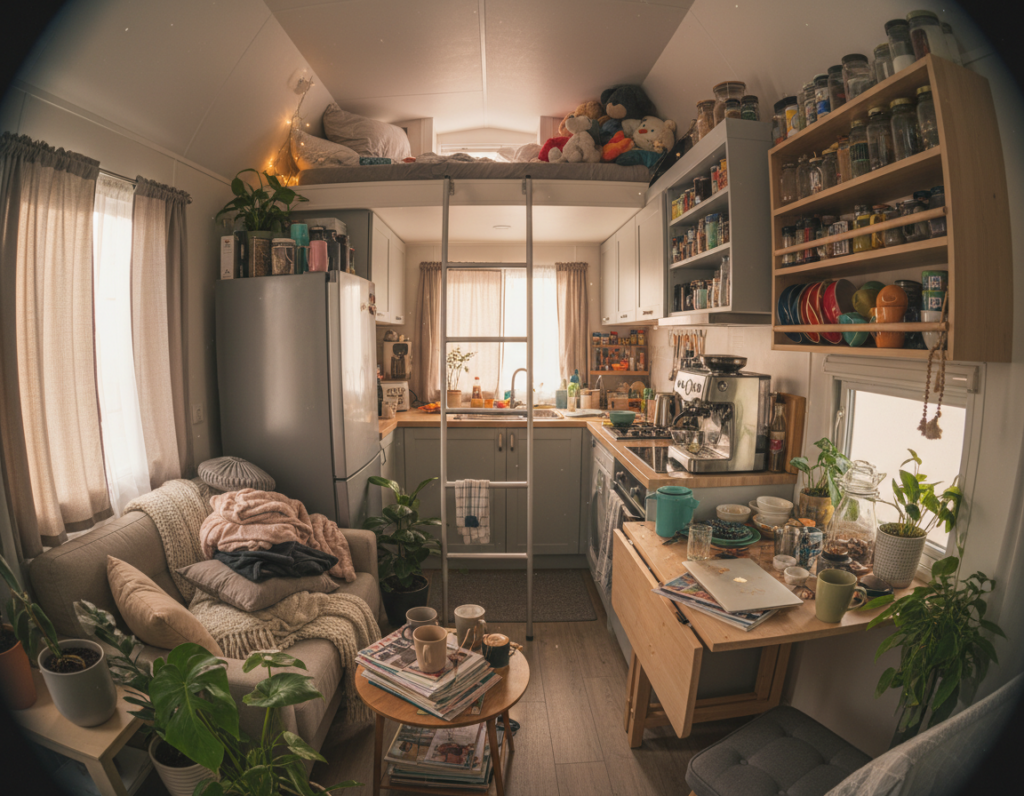
Utilizing Vertical Wall Storage
Tall storage systems turn blank walls into practical gear centers in tight camper layouts.
Vertical solutions such as pegboards, track rails, and inset shelves let the wall do the work. They free up floor space so the living space feels open and easy to move through.
Install hooks and narrow shelves near the kitchen and bed to keep utensils, chargers, and daily items handy without cluttering counters or drawers.
Many builders mount storage to the ceiling and upper walls to hold lightweight bins and gear. This keeps the floor clear and creates a tidy path from the kitchen to the sleeping area.
- Use pegboards for modular placement of pots, mugs, and tools.
- Install a track system to swap hooks and baskets as needs change.
- Choose shallow shelves to store spices and small items near the kitchen without blocking light.
Bottom line: vertical storage is a high-return option for any camper van or campervan interior. It improves organization, preserves floor space, and makes daily life on the road simpler.
Incorporating Low Maintenance Greenery
A touch of greenery brings instant life to a compact camper without overwhelming the layout.
Low-care plants add color, texture, and a calming presence to small space living. They fit neatly on shelves and in narrow corners and work well with ambient lighting and simple design choices.
Real Succulents
Real succulents and small cacti are ideal for road life. Ikea sells lightweight cactus sets that fit the shelf near a bed or the kitchen area.
Succulents need little water and are easy to tuck into shallow storage. Secure pots so soil does not spill while the van is in motion.
Faux Plant Alternatives
For those who do not want plant care, high-quality faux plants are a strong option. They require zero maintenance but still warm the interior and make the camper feel like home.
- Place plants on a narrow shelf or mounted ledge to save floor space.
- Secure pots or containers to prevent spills during travel.
- Mix real and faux pieces to balance care needs and visual interest.
Adding greenery is an easy design idea that makes any small space more inviting and personal.
Organizing Essentials with Chic Net Bags
Lightweight organic net bags offer a stylish way to keep essentials organized in tight quarters. They are washable, breathable, and perfect for a camper van that needs tidy solutions.
Practical benefits: net bags free up counter and shelf storage while letting items breathe. Use them in the kitchen to hold fruit or in the sleeping area to store worn clothing by the bed.
- They take up minimal space and hang easily from hooks.
- Washable organic cotton keeps items fresh and reduces odor.
- Transparent mesh makes it quick to find what is needed.
These simple storage ideas suit van life and make a small space feel more like home. Every owner can adopt net bags as an unobtrusive, effective way to organize daily gear on the road.
Using Adhesive Solutions for Decor
Damage-free mounting transforms blank walls into useful, changeable displays. It gives owners quick options to personalize a small camper van without tools or holes.
Benefits of Damage Free Mounting
Self-adhesive hooks let people hang lights, dream catchers, or kitchen tools without drilling into cabinets. They protect the wall finish and keep the layout flexible.
Practical advantages include easy removal, cleaner cabinets, and the ability to free up floor space when needed. Hooks help organize gear near the bed or in a cooking area.
- Use hooks to hang lights or small pans in the kitchen for quick access.
- Swap placements to reconfigure storage and keep the van interior tidy.
- Pick high-quality, waterproof adhesives to hold items while driving.
Tip: choose rated weight limits and clean surfaces before applying. Adhesive systems are a low-risk way to add personality and useful storage to a tight area.
Displaying Travel Memories on Walls
Walls that showcase travel photos and small keepsakes turn cramped quarters into a personal gallery. This approach ties daily life to past trips and supports a warm van life feeling.
Simple, low-impact ideas work best. Turn digital images into mini Polaroid-style prints with Snapfish and clip them to a string with tiny clothespins. Add a strand of battery-powered lights above the string to create soft evening light.
Use sticky tack or lightweight clips to arrange postcards and ticket stubs on a blank wall. These pieces add color near the kitchen or seating area without taking up space.
- Hang Polaroids of friends and family to keep loved ones close.
- Group souvenirs, stickers, or magnets near a fixed bed to make the sleeping area feel private and cozy.
- Rotate photos often to refresh the story your walls tell.
Bottom line: displaying memories is a great way to personalize the space and build a small, meaningful home on the road through thoughtful, low-impact decor choices.
Adding Character with Decorative Bunting
A line of cotton bunting brings instant color and personality to small living quarters without taking up floor space. It is a great way to add warmth and cheer to a camper interior.
Choose cotton for durability and light weight. Cotton holds up to travel, cleans easily, and keeps a soft, handmade look that ages well.
Hang bunting across a window, along the ceiling, or at the rear doors. These placements lift a wall or the whole set of walls and make the space feel more inviting.
“Cotton bunting is durable, lightweight, and festive.”
- It frees floor and shelf space while adding style and personality.
- Lightweight pieces store flat and travel well for those living the van life.
- Combine with soft lights or a single light strand to enhance evening ambience.
Bottom line: decorative bunting is a simple, low-cost addition that reflects personal taste and makes a compact home feel cozy.
Transforming Surfaces with Peel and Stick Tiles
Updating surfaces with removable tiles makes a kitchen or bathroom feel fresher in hours, not days. The Smart Tiles brand offers high-quality, peel-and-stick options that work well as a splashback for small spaces.
These tiles are a great way to upgrade interior looks affordably. They mimic real tile finishes without the weight, grout work, or long installation time.
If someone is living the van life, peel-and-stick tiles give a durable, easy-to-clean surface. They protect the wall behind sinks and stoves and handle spills under harsh lights and cooking conditions.
- Easy application—peel, stick, and trim to fit.
- Multiple patterns—subway, Moroccan, and geometric styles suit many tastes.
- Removable and repositionable—ideal for renters or those who want to refresh walls later.
“Peel-and-stick tiles offer style and function without the permanent commitment.”
Bottom line: these tiles deliver a stylish splashback that protects surfaces, brightens tight spaces under light, and keeps maintenance simple while preserving a personal, lightweight interior.
Choosing Sustainable Materials for Your Interior
Sustainable materials bring both function and conscience to small living spaces. Bamboo is a standout option: it grows quickly and offers strong durability for countertops and flooring.
Choose materials that last: cork or bamboo reduce environmental impact and are lightweight for mobile living. Reclaimed wood adds character to walls or cabinets while giving old timber a second life.
- Pick bamboo or cork for floors and surfaces that resist wear and cut waste.
- Use reclaimed wood on walls or cabinetry to add warmth and history.
- Select low-VOC paints and finishes to keep the interior healthy for occupants.
- Favor durable textiles and fixtures to reduce replacements over time.
More travelers in the van life community favor sustainable builds for long-term durability. Every choice—from the lights to wall coverings—can lower footprint and support a conscious lifestyle.
Small choices in materials and decor add up, creating a safer, greener interior that still feels welcoming on the road.
Enhancing Natural Light Flow
Strategic daylight openings transform a compact interior into a bright, breathable living area.
Place windows and skylights where they capture morning and afternoon sun to help the space feel like a true home. Skylights bring light from the ceiling, while side windows soften shadows along the walls.
Keep taller storage and appliances away from window lines. That clears sightlines and lets natural light move farther into the layout.
Install mirrors or reflective panels opposite openings to bounce daylight deeper into corners. This trick makes the area read larger and improves the overall van feel.
- Maximize daylight: use pale finishes to reflect light.
- Ventilate: roof vents add fresh air and extra light.
- Plan layout: orient furniture to protect light paths.
Every owner should test light at different times of day to ensure the plan works in practice. Good daylight flow helps a small space feel airy, cheerful, and more usable.
Conclusion
, Small changes in layout and lighting can turn a rolling space into a warm retreat. Simple swaps—better light, a few photos, or smarter shelves—help the interior feel like it was made for its owner.
Styling on home wheels is about personality and purpose. Thoughtful storage and a handful of personal touches let the space feel like home and welcome family or friends on each trip.
There are many ways to make this happen. Small updates support comfort on every adventure, so the space will always feel lived-in and ready to travel.