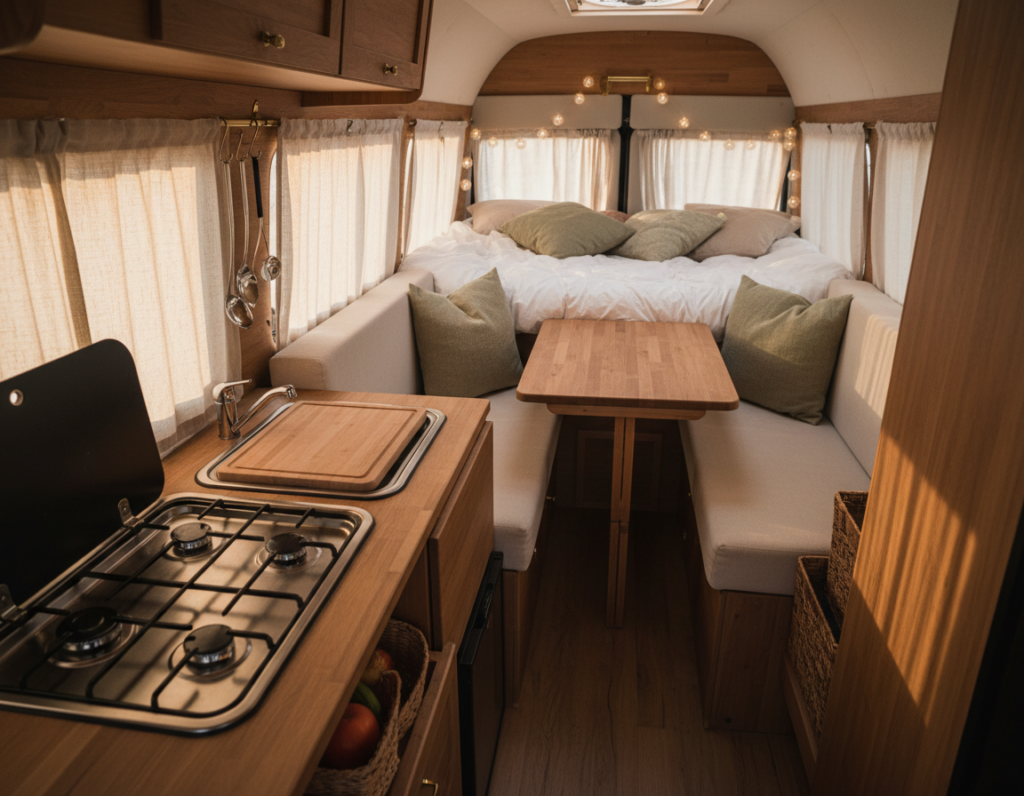
Carma and Richard learned the hard way during trips across Canada that small errors can cause big problems. Their travel log showed how one oversight in a tiny space turned routine maintenance into a roadside emergency.
Designing a tiny mobile living space requires clear planning and respect for weight, height, and usable space. New owners often skip research on the water tank, gas lines, or power system and pay the price later.
Many people underestimate storage needs and power management on the first trip. Simple things like tire pressure and kitchen layout affect safety and comfort every day on the road.
This article highlights common errors and offers practical ideas to keep a home on wheels safe. By learning from past issues, an owner can avoid repeat problems and enjoy years of travel.
Understanding Common Camper Interior Mistakes
Design choices that work in a house often fail when squeezed into a rolling tiny living space. Owners learned that a mobile unit needs different rules than a fixed home. Grizzly Tarps supplied practical maintenance tips that reduced costly repairs and kept trips on track.
One frequent mistake was over-packing. Crowding the limited space cut necessary air circulation around appliances. That raised repair risk and lowered comfort during long drives.
Insulation and weather-stripping mattered most for year-round use. Proper seals kept moisture out and made heating and cooling work far better. Regular checks of these parts prevented leaks and damage.
- Use storage that fits the layout, not household habits.
- Keep zones organized to protect belongings on the move.
- Follow pro maintenance tips to avoid surprise failures.
People who treated a vehicle like a house often made the same mistake: ignoring specialized needs for camping life. A small idea change—design for movement—saved time and money.
The Pitfalls of Buying Without Research
Buying on impulse can turn a weekend dream into a years-long repair saga. One 38-foot Class C motorhome bought sight-unseen became a “mobile wrecking ball” in downtown Minneapolis. That purchase cost time, money, and a lot of patience.
Assessing Your Needs
Start with honest needs, not wish lists. A vehicle that is too large can add hidden costs for tires, fuel, and parking.
Plan storage, gas, and power needs for the long haul. Think about how many years you will use it and what items you must carry every day.
Avoiding Project Nightmares
Expect overruns. Typical project budgets grow 25%-35% and take about 200% more time than owners predict.
“Every wall opened revealed two new problems.”
Buying a used unit assuming it will be easy to fix is a common mistake. Inspect tanks, wiring, and chassis. Bring a checklist or a trusted mechanic to avoid costly surprises.
- Choose size for real life, not Instagram.
- Estimate repairs and add contingency funds.
- Verify service history to limit future problems.
Managing Your RV Weight and Height
Safe travel starts with accurate measurements and balanced loading. Drivers often forget to add a safety margin when checking vertical clearance. They should add six inches to any measured height to avoid hitting bridges, signs, or low roofs.
Measuring Your Clearance
Before a trip, the owner must measure rooftop items and the A/C unit. For a 40-foot vehicle, constant awareness of low clearances saves the roof and electronics.
- Make sure to know the exact height of your camper, including the A/C, so low bridges are not a hazard.
- It is a common mistake to ignore weight distribution; heavier items should be packed low and spread out evenly.
- Make sure to check clearance whenever entering parking structures or underpasses — this is a frequent mistake for new owners.
- Make sure to verify the vehicle’s weight limits and consult the manual for model-specific rules.
- Make sure you take the time to measure accurately and make sure that air flow and balance are not compromised by poor loading.
Essential Safety Checks Before Hitting the Road
A thorough walk-around before departure often prevents costly breakdowns on the road. A quick pre-trip inspection should include oil, fuel, and propane levels. It must also check tire condition and pressure.
Drivers should retract scissor jacks and close vents before driving. Failing to do so is a common mistake that can cause major damage.
Take time to verify lights, generator operation, and that windows, stairs, and external locks are secured. These are frequent failure points on a moving vehicle.
“A few minutes of checks saved them hours of roadside repairs.”
- Do a full checklist before every trip to ensure the vehicle is road-ready.
- It is a serious mistake to skip fuel and propane checks; running out in remote areas is costly and unsafe.
- Check tires for tread, cuts, and proper inflation — they are critical for safety on the road.
- Inspect lights and the generator; both systems are essential for a safe, successful journey.
For a printable routine and detailed items, consult a pre-trip checklist like the one on the sample checklist page. Following a routine prevents the small errors that turn a fun trip into an emergency.
Proper Care for RV Refrigeration Systems
An RV fridge needs different handling than a household unit to avoid lasting damage. Owners learned that leveling and airflow are not optional. Small oversights cost time and food.
Air must move freely around vents and interior shelves. Overfilling the fridge blocks circulation and forces the cooling system to run harder. That is a common mistake that shortens unit life.
Air Circulation Tips
Pre-cool items before loading and avoid stuffing warm food inside. Place bulky containers where they won’t block vents. Check door seals often for gaps.
Leveling Requirements
Parking on a side incline can damage the cooling unit permanently. Level the camper before switching to gas or electric mode. Verify gas and power connections each time to ensure safe operation.
- One thing many people forget: an RV fridge is unlike a home kitchen appliance.
- Monitor temperature daily to catch issues early.
- For step-by-step service, consult a maintenance guide.
Avoiding Water Damage in Tiny Spaces
Water intrusion can silently destroy lightweight panels and ruin a mobile living unit if left unchecked. An owner should inspect seams, seals, and visible joints before and after each season.
Water leaks corrode fast on thin materials. A small drip behind cabinetry will spread and harm storage areas and structural supports.
Never flood floors when cleaning. Excessive water is a common mistake that speeds corrosion in thin metals and composite floors.
- Check roof and windows every season; these are the most common entry points for water.
- Avoid letting small cracks go unchecked — they let water into wiring, cabinets, and insulation.
- Remember the kitchen handles more moisture than a home; plan ventilation and dry spills right away.
- Take the time to look under sinks and in storage bays after rain or long trips.
Protecting against water keeps value and extends life. Treat leaks quickly and use quality sealants to prevent long-term damage to your camper and belongings.
The Importance of Correct Tire Maintenance
Simple tools and timely alerts make tire failures rare instead of routine. Proper tire care saves a lot of time and keeps travel safe on the road.
The authors credit an EEZTire-TPMS system with warning them before a slow leak became a flat. That early alert let them stop safely and change the wheel without an emergency.
Tools and Checks That Matter
A frequent mistake is not carrying the right gear. A 2-tonne bottle jack lifts a high vehicle safely. Many standard jacks fail under the height and weight of a camper.
- Take the time to monitor pressure with a reliable system to avoid blowouts.
- Check the sidewall for the manufacturing date; old tires peel and fail.
- Keep a strong jack and proper lug tools in storage for quick roadside service.
“A good TPMS and the right jack turned a potential disaster into a quick fix.”
Securing Interior Items for Travel
Simple latches and non-slip liners are the unsung heroes that keep daily life intact while rolling down the highway.
Using thick shelf-grip waffle matting and expandable rods is an easy way to stop dishes, cans, and gear from shifting. These products fit many storage spaces and add a lot of friction so things stay put.
Failing to latch doors and drawers is a common mistake. When cupboards open, food and personal items spill and create a mess. Owners then spend time cleaning and replacing broken goods.
- Make sure all cabinets and drawers are latched before heading out on the road with your camper.
- Do not leave loose items on counters; sudden stops can send them flying and cause damage.
- Using waffle matting and expandable rods keeps storage items from shifting while driving.
- Pack carefully so every thing is stowed securely and avoid the common mistakes that make travel stressful.
Securing the interior is a small task that prevents a big mess at destination. Spend a few extra minutes before departure and save time and headaches later.
Handling Electrical System Overloads
Overloading the onboard electrical system happens faster than many owners expect. Running the air conditioner and microwave at once often trips breakers and cuts power in critical moments.
The authors learned this the hard way after a plug began to melt. They upgraded the RV’s wiring and breakers to improve safety and avoid a repeat.
- Common mistake: running multiple high-draw appliances at the same time.
- Take the time to know your power limits; blowing a breaker is avoidable.
- Do not use aftermarket plugs that are not rated for the system’s draw.
- If a plug or outlet feels hot, stop using it and get a qualified tech to inspect the connection.
- Proper management prevents melted connections, fires, and costly repairs.
Good practice includes labeling circuits, adding surge protection, and upgrading components to match real power needs. That small investment saves a lot of time and keeps travel safe.
Winterizing Your Plumbing Lines
A rushed winter prep often leaves unseen water that turns into costly ice inside the lines.
One cold season lesson: Richard pumped winterizing fluid through the system but forgot to close the drain valves and wasted the supply.
Failing to drain the tank and pipes can let pockets of water freeze and crack fittings. That is a common mistake that costs a lot in repairs.
- Make sure all drain valves are closed before pumping winterizing fluid.
- Completely empty the fresh water tank and blow out lines if possible.
- Do not rush: double-check every valve and fitting to avoid missed water.
- Use the correct amount of antifreeze; under-dosing leaves sections vulnerable.
- Store hoses and gas fittings dry and protected to prevent corrosion over the off-season.
“A few extra minutes to verify valves saved them a major plumbing repair in spring.”
Proper winterization is simple, but it requires attention and time. Owners who follow a checklist will protect water lines and enjoy a problem-free start to the next season.
Choosing the Right Toilet Paper
A small purchase at the store can save a lot of time and prevent a costly clog in your holding tank. Specialized RV toilet paper is 100% biodegradable and designed to break down quickly in moving systems.
Using standard household rolls is a common mistake. Ordinary paper does not dissolve well and can form blockages that are hard to clear. Owners who switch to RV-safe paper avoid repairs and foul cleanups.
- It is a common mistake to use regular household toilet paper, which does not break down properly in a camper tank.
- You should take the time to buy specialized, biodegradable toilet paper to protect plumbing.
- Many owners assume all paper is the same; that assumption leads to messy mistakes and costly service calls.
- Choosing the right products for your camper is an easy way to avoid damaging the plumbing system.
- Always keep a supply of RV-safe toilet paper on hand — this small item makes a big difference and saves you a lot of hassle.
Mastering the Art of Boondocking
Successful boondocking depends on preparing water, power, and a realistic exit plan. They must track fuel, manage storage, and plan for limited space and services. Planning keeps people safe and reduces surprises on the road.
Urban Parking Strategies
Urban boondocking can save a lot of money. Large retail lots like Walmart or Cabela’s offer legal overnight options when allowed.
Keep the vehicle neat and compact. Use one clear plan for food, power, and fuel runs, and avoid overstaying in a lot to prevent complaints.
Rural Land Rules
On public land follow the 7 & 7 rule: move at least seven miles after seven days. That simple idea prevents the mistake of overstaying and protects the site.
Make sure to check local rules and pack for water and power limits. Carry spare water for cooking and a small tank monitor, and keep a backup option if a site is full.
- Research before arrival to avoid a costly mistake.
- Respect signs and leave no trace.
- Have a secondary option if conditions change.
Communicating Effectively with Travel Partners
Good communication keeps simple tasks like hitching and parking calm and efficient.
Before arrival, the team should agree on roles and a brief plan. This saves time at the site and reduces awkward moments when backing in or hooking up the sewer hose.
Use calm, positive language when giving directions. Yelling orders is a common mistake that raises stress and slows setup.
- Take the time to outline who watches mirrors, who guides, and who handles hookups.
- Many owners assume a partner already knows steps for leveling; that assumption is a frequent mistake.
- Teach with short demonstrations rather than criticizing — it builds confidence and skill.
- Keep commands simple and specific: drive, stop, turn left/right, hold position.
“A calm, practiced routine turned a tense setup into a few efficient minutes.”
Effective communication is the key to a smooth trip on the road. When partners work together, setup is faster and everyone enjoys the time at the site more.
Learning from Past Design Errors
Experience shows that a single dashboard slip can turn an easy drive into a long roadside fix.
Richard’s high-idle error is a clear example. He meant to switch to the auxiliary fuel tank but engaged high idle instead. The truck lost power and they stopped for repairs.
Even seasoned travelers make such errors. Sharing these stories helps other people avoid the same problem on their first time out.
- It is a common mistake to hit the wrong dash button; practice controls before leaving.
- Keep a repair log so power, gas, and tires issues are easy to track.
- Talk with friends and swap camping stories — laughter makes learning easier.
- Address small problems quickly; a tiny issue can become a major vehicle failure.
“Recording fixes and reviewing them saved them hours on later trips.”
Make time to review past errors and update systems. That simple habit reduces repeat issues and improves safety on the road.
Conclusion
Small habits, like daily checks and clear roles, produced the biggest gains on the road. Careful planning and regular maintenance cut surprises and kept travel budgets steady.
Prioritizing safety checks, managing water and power, and communicating with travel partners creates a calmer trip. They found that routine prep turned problems into short, solvable tasks.
Every challenge on the route became a lesson to improve systems and packing. Taking time to research a vehicle and its systems saved them money and headaches later.
With the right preparation and a positive outlook, anyone can enjoy RV life safely and make each journey memorable.