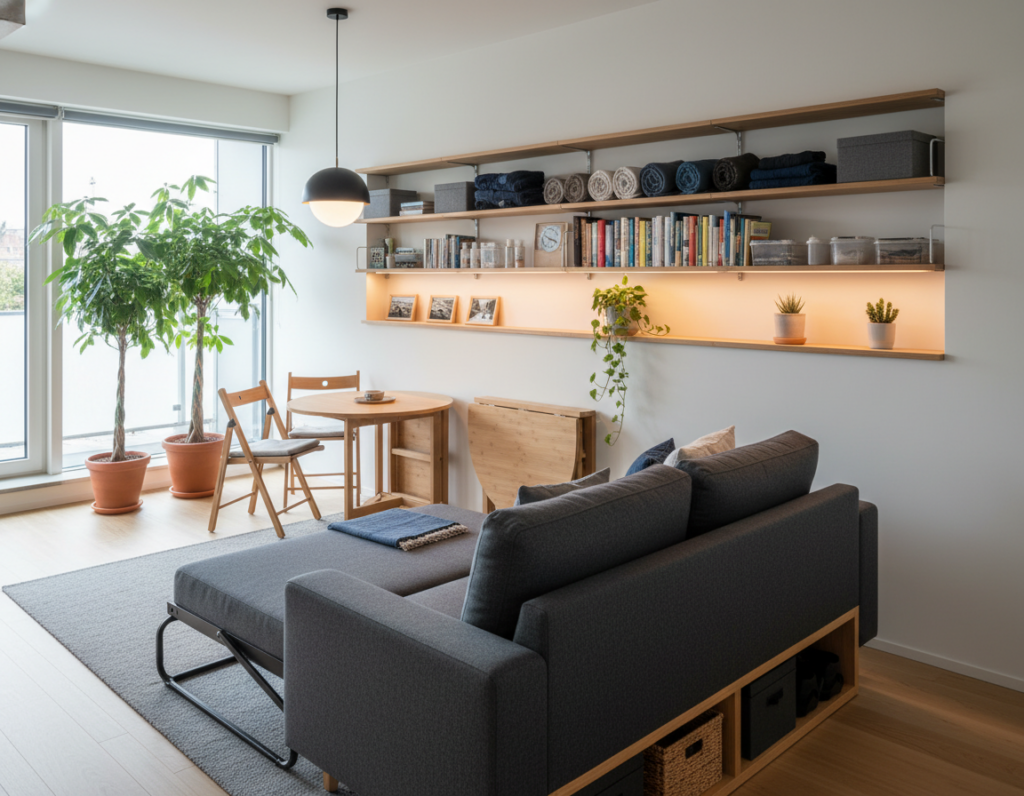
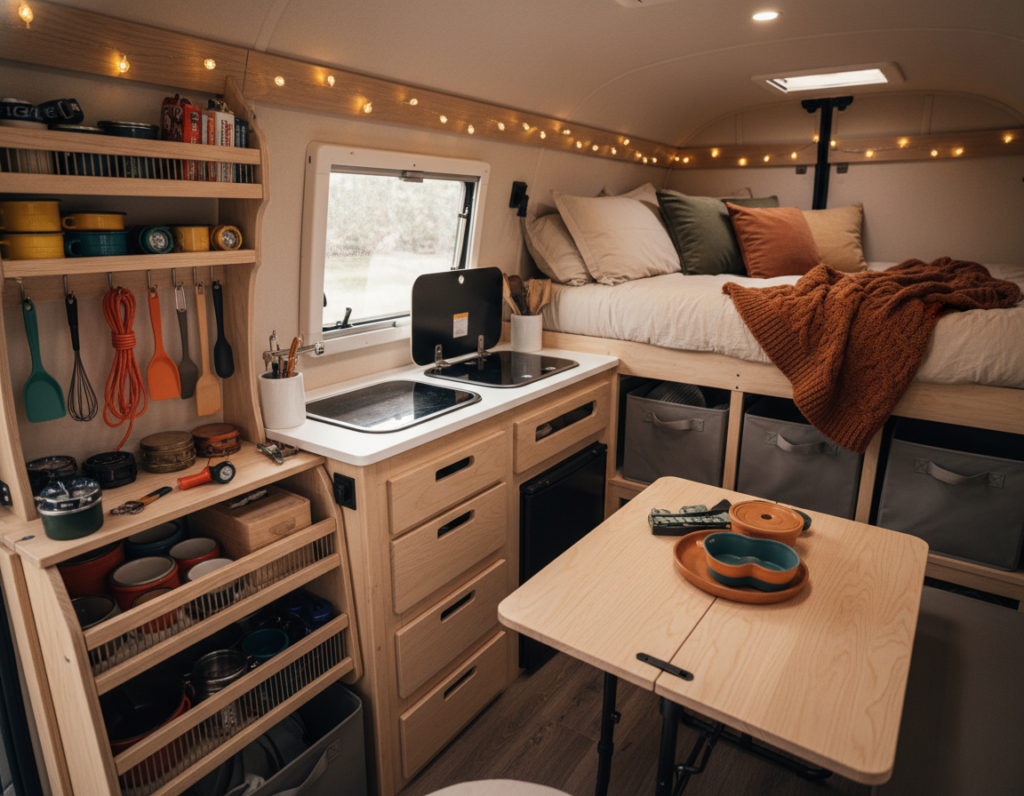
Van life becomes calmer when one treats the interior like a small, orderly home. Clear cabinets and labeled containers help people find essential items quickly. This cuts time spent searching and reduces daily friction on the road.
Specialized gear, like the Radius Outfitters 5500 Gear Box, offers a secure way to store delicate electronics such as the Starlink Dishy and modem. A planned conversion gives each item a designated place and prevents chaos during extended trips.
Practical systems for clothes, food, and tools make the camper van feel more like a stable place. When the kitchen and bed areas are organized, daily routines run smoother and stress falls away. Small storage tweaks deliver big returns in comfort and function.
Strategic Planning for Your Mobile Layout
Good planning turns a tight interior into a calm, efficient home. Start by mapping the floor and cabinet dimensions so any future build fits precisely. Measuring prevents misfits and wasted material during a conversion.
Measuring Your Footprint
They should measure every inch of the floor and inside cabinets before selecting storage solutions. Note ceiling height, cabinet depth, and door clearances. These numbers guide custom cabinets and drawer layouts.
Categorizing Belongings
Categorize belongings into groups: kitchen tools, clothing, electronics, and tools. This makes it obvious where items belong and which containers work best. Dedicated drawers for kitchen utensils and personal items keep them from sliding while driving.
“Plan the layout around daily routines — bed access, kitchen reach, and secure storage make life simpler on the road.”
- Measure first: floor, cabinet, and shelf sizes inform design.
- Group things: logical categories speed retrieval.
- Use custom cabinets and drawer systems: they lock gear and keep the interior tidy.
Essential Space Saving Van Ideas for Every Interior
Maximizing usable area starts with reliable systems that lock gear down and make daily routines easier. Sturdy slide-out drawers let travelers lock large items away while keeping the floor clear for daily use.
Drawer Systems
Heavy-duty drawer systems like DECKED support up to 2,000 lb on top, so the unit can hold a bed platform or work as a solid base.
A standard D-box provides 18.21 cubic inches of storage for tools, food, or camping supplies, keeping items sorted and secure during transit.
Small Container Organization
Use labeled containers and stackable boxes to separate kitchen, clothes, and electronics. This prevents shifting and speeds retrieval.
Multifunctional Furniture
Benches and tables that double as storage multiply a campervan’s living space. Wall-mounted cabinets and overhead boxes free floor area and keep the interior tidy.
“Choose systems that balance capacity and top-load limits to ensure a safe, long-lasting conversion.”
- Keep the floor clear: slide drawers store bulky gear.
- Organize by use: containers for food, clothes, and tools.
- Double-duty furniture: use beds and benches for storage.
Utilizing Vertical Surfaces and Seat Backs
Vertical surfaces and seat backs turn wasted areas into quick-access storage for everyday items. The Overland Gear Guy Sprinter III Seat Organizer makes the back of the driver’s seat a tidy place for chargers, snacks, and small gear.
Attach mesh pouches to the side of cabinets or a wall to hold maps and cords. These low-cost solutions keep essentials visible and off counters so the campervan feels less cluttered.
Install hooks on a cabinet side or wall to hang clothes, kitchen utensils, or backpacks. Mount a folding table to a vertical surface to create a workspace that disappears when not needed.
“Seat-back organizers and wall-mounted systems keep frequent-use items secure and within reach.”
- Use seat-back organizers to keep small items from getting lost.
- Install hooks to maximize vertical storage for clothes and utensils.
- Choose mesh pouches and folding tables to add function without taking floor space.
Always fasten attachments tightly so nothing falls while the van is in motion. These simple systems make daily life on the road more organized and calm for anyone living the van life.
External Storage Solutions for Bulky Gear
Exterior storage frees the main living area by giving dirty or oversized things a clear place outside the campervan.
Rooftop and Exterior Racking
A roof rack or side-mounted box gives a reliable option for hauling large pieces and dirty gear outside the living area. Rooftop racks carry canoes, extra boxes, or a rooftop bag without taking up the floor inside.
External boxes such as the Owl Vans Medium Expedition box keep hoses and tools away from the kitchen and bed. Radius Outfitters also sells weatherproof gear boxes and currently offers a 15% discount on many models. These boxes protect expensive items from rain and dust.
- Keep dirty gear out of the main living space with a dedicated exterior box.
- Use rooftop racks to move bulky items and free up interior floor areas.
- Mount a side drawer or rack to store tools, linens, and extra kitchen supplies.
- Shift heavy items off the floor to improve weight distribution during a conversion.
- Always check racking weight limits so the vehicle stays stable on the road.
“Well-installed exterior systems extend storage capacity and protect items from the elements.”
Managing Trash and Waste in Small Quarters
Tackling daily refuse early keeps a small campervan smelling fresh and running smoothly.
Good trash routines are part of smart storage planning. A dedicated cabinet for kitchen waste locks odor and pests out of the living area. It also keeps food wrappers and compostable scraps from mixing with other items.
For bulky or dirty refuse, the Overland Gear Guy Spare Tire Trash Bag is a durable, water-resistant option that lives outside the vehicle. That exterior solution keeps greasy gear and wet items out of the main space.
“Storing waste in one place makes cleaning and waste removal faster and less stressful.”
Practical habits help: hang temporary liners on hooks attached to the wall, empty the cabinet daily, and choose liners that reduce leaks. These systems keep the area tidy and protect fabrics and cabinets from stains.
- Plan trash storage early during any conversion.
- Use a sealed cabinet for kitchen waste to control odors.
- Keep an exterior trash bag for bulky or dirty gear.
For more organized suggestions, see the best camper storage ideas that pair well with these waste systems.
Maintaining Order Through Regular Habits
Consistent tidying every few days prevents small messes from growing into big problems on the road.
They should build a short routine that returns items to their place right after use. This habit keeps storage systems effective and the conversion working as intended.
Daily resets of the kitchen and bed take only a few minutes. Wiping counters, folding clothes, and stowing food reduces clutter on the floor and in drawers.
“A little discipline each day makes the campervan feel more like home and less like a project.”
- Put clothes, utensils, and gear back in their designated spot after use.
- Organize drawers and the floor area every few days to avoid pileups.
- Follow a simple cleaning system to keep systems and storage functional.
These small practices help keep van life calm and let travelers focus on the journey instead of the mess.
Conclusion: Sustaining a Stress-Free Mobile Lifestyle
They find that a clear plan for where items live turns a cramped interior into a calm, practical home. This approach helps keep daily routines simple and makes living on the road more restful.
By using focused storage systems and regular habits, travelers maximize usable space and reduce clutter. Smart solutions for a custom bed or modular units support long trips and steady comfort.
, Consistent effort keeps a tidy storage layout in a small space. With these methods, van life stays freeing rather than chaotic. They can enjoy the journey and the life that follows.