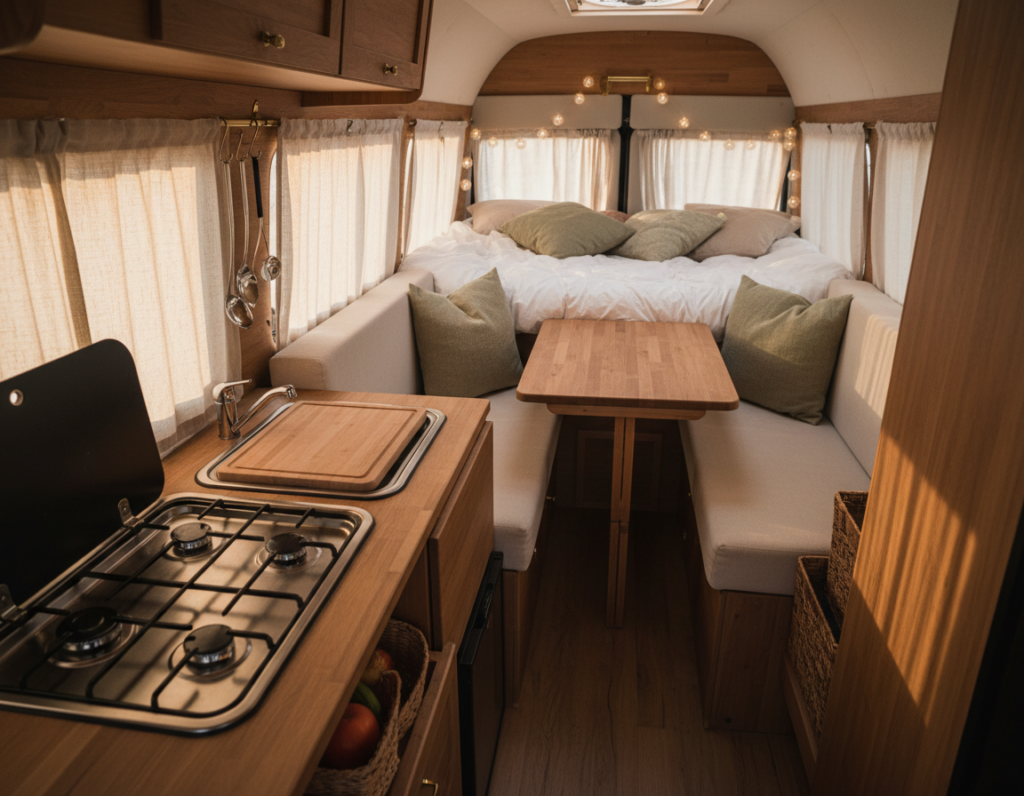
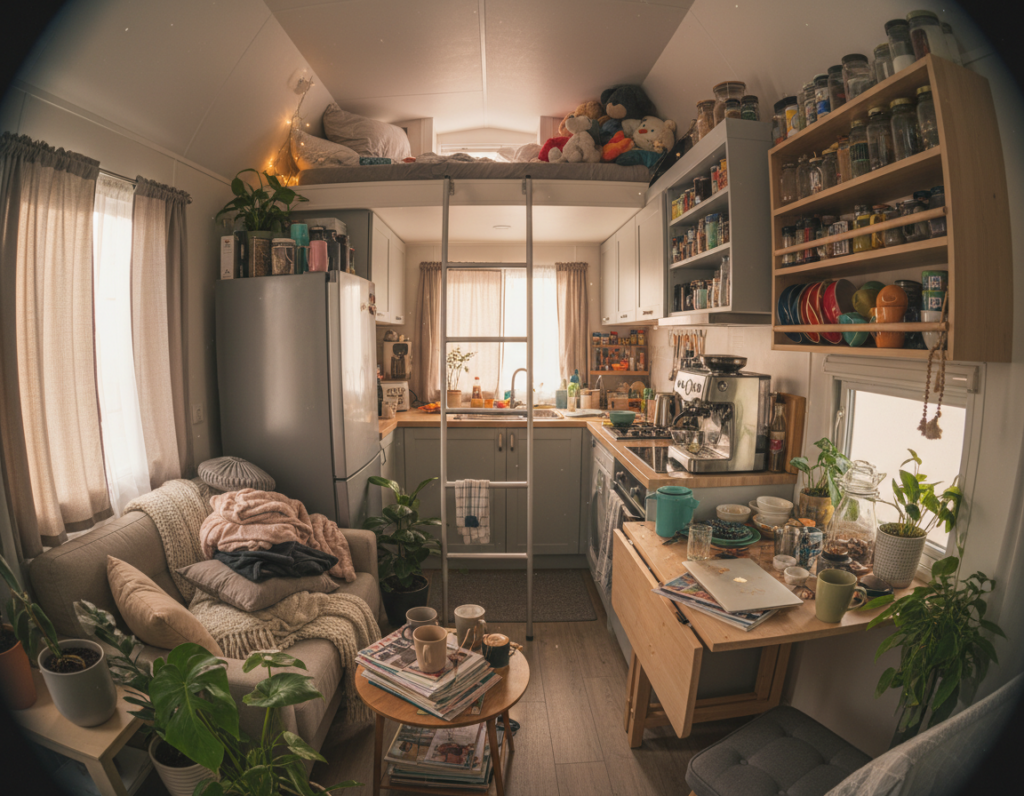
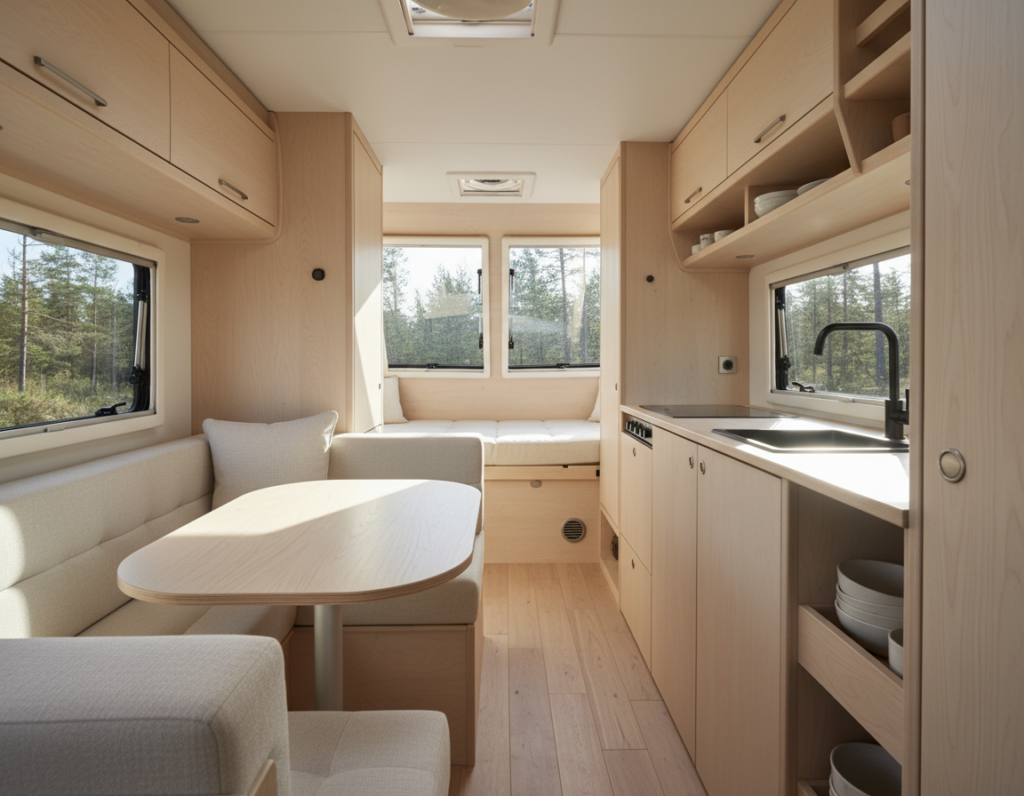
Quirky Campers identified 20 layout approaches that turn a metal vehicle into a cozy home on wheels. These ideas focus on clear zones for sleeping, cooking, and storage so the living area reads larger without costly work.
The right layout organizes limited interior space. A thoughtful plan helps the bed, kitchen, and storage work in harmony. Travelers often find a smart conversion more comfortable than a larger RV with poor layout.
By prioritizing flow, window placement, and multiuse furniture, one can maximize every square inch. These solutions suit weekend trips and full-time travel alike. They improve comfort, save time, and make van life less stressful.
The Philosophy of Compact Van Design
A focused philosophy turns a small cargo area into an efficient, liveable home on wheels. This approach treats each square foot as intentional. It insists that every element must justify its share of the area.
Real examples make the point: a Ford Transit short wheelbase offers roughly 70–80 square feet of configurable cargo space. The Vansmith DUO uses that area by allocating 35% to sleeping, 30% to the kitchen, 20% to seating, and 15% to storage.
Designers often follow RV Industry Association guidelines so the layout balances daily living, cooking, and shower needs. Prioritizing multi‑functional furniture, convertible benches, and foldaway tables reduces wasted room.
When storage is limited to 15% of the total, owners must choose essentials. That discipline keeps the interior uncluttered and improves flow. The goal is simple: every item has a home and every space earns its role.
- Use percentages to plan sleeping, kitchen, seating, and storage.
- Favor multi-use pieces that support van life and travel routines.
- Organize walls, ceiling, and rear area so the vehicle feels larger.
Maximizing Vertical Space for Better Flow
Treating height as usable area helps reclaim floor room and improves movement. By planning upward, the living space feels less cramped and more functional.
Ceiling Height Considerations
Allowing full headroom where people stand improves airflow and comfort. Even modest roof increases make shower stalls and a small kitchen easier to use.
The Mercedes Metris offers 199 cubic feet of cargo volume, which gives more usable interior space than many other models. That extra volume translates into taller cabinets, a higher bench, or a roomy rear area.
Level Changes for Delineation
Subtle floor steps or platforms separate zones without walls. A 10–15 cm rise behind the kitchen creates a clear sleeping zone and a psychological sense of room.
- Raise the bed platform to add storage under the mattress.
- Use vertical cabinets to keep the main floor open for a table or convertible bench.
- Plan ceiling height so the camper feels like a home, not a cargo hold.
Vertical thinking lets a camper, campervan, or van conversion fit features that typically need more square footage. This approach supports better flow for travel and van life over time.
Implementing Multi-Functional Furniture
Adaptive furniture turns one cramped area into dining, work, and sleeping zones. In a typical van conversion, pieces that serve two or more roles free up vital space and simplify daily routines.
A convertible table that doubles as a workspace keeps the living area flexible. It offers a place for cooking prep, laptop work, and meals without permanent bulk.
Seating that folds out into a guest bed saves the need for extra furniture. When combined with bench storage, clothing and gear stay tucked away and the main room stays uncluttered.
- Extendable kitchen counters add prep area and keep the aisle clear.
- Raiseable beds create headroom by day and full sleeping area by night.
- Convertible benches include built-in storage to hold gear and food.
Good conversions ensure each item earns its place. The ideal layout makes the rear and side wall areas work for storage, seating, and a table, so the vehicle feels larger on travel and camping trips.
Creating Psychological Room Separation
Simple visual breaks make a small interior feel like multiple rooms. In a campervan or camper, this approach creates privacy and order without building permanent walls.
Using curtains and sliding panels lets occupants hide the bed and rear storage from the main living area. Lightweight fabric curtains separate the cab from the living space for evening privacy.
Using Dividers and Curtains
Modular dividers adapt to daily needs. They can conceal the kitchen when relaxing, or open wide for cooking and socializing.
- Curtains create a private sleeping area without losing floor space.
- Sliding panels offer a tidy way to hide the table and kitchen when not in use.
- Free‑standing screens let couples carve out personal corners in tight quarters.
Psychological separation gives the interior a sense of room and purpose. With simple dividers, a van conversion feels organized and larger, improving comfort and storage use over time.
Utilizing Under-Bed Storage Solutions
Raising the mattress platform unlocks hidden storage and simplifies daily routines. This approach reclaims valuable space beneath the bed and keeps the interior tidy.
The Vansmith DUO uses an elevated bed platform that creates massive storage underneath for gear. Full-width access from the rear doors lets users reach boxes and tools without disturbing the sleeping area.
Many van conversions place batteries, water tanks, and systems under the bed to keep them out of sight. This preserves the living and kitchen zones while giving easy maintenance access from the rear.
- Organize gear in labeled bins so the main room stays free of bulky equipment.
- Locking the rear doors provides secure storage for valuables and outdoor kit.
- Long items like bikes or paddles fit across the rear area under the platform.
A neat, well-planned under‑bed system is the foundation of a functional campervan conversion. It extends usable space, protects gear, and supports smarter layouts for van life.
Optimizing Side Wall Functionality
A well-planned side wall turns wasted sheet metal into reachable, organized space for daily tasks.
Install shallow cabinets along the side wall to maximize storage without narrowing the central aisle. This keeps the main room open for a table or quick passage to the rear and bed.
Mount foldaway shelves and a small, stowable table for cooking and work. Magnetic strips and hooks keep utensils visible and tidy. These choices make kitchen essentials easy to grab and return.
The boxy shape of models like the Ram Promaster simplifies building custom runs of storage. Use vertical space to add drawers, lights, and a charging station. That approach preserves floor area and improves flow for everyday living.
“Careful side wall planning makes a small camper feel larger and more functional.”
- Cabinets and shelves free floor space.
- Hooks and magnetic strips hold tools and cooking gear.
- Mounted lights and chargers save counter space.
Thoughtful wall layout keeps the interior organized. It speeds access to gear and supports better sleeping and shower setups in tight conversions.
Incorporating Outdoor Kitchen Expansions
A quick outdoor kitchen can transform a campsite into an extra living area in minutes. It moves cooking smells and moisture away from the interior and doubles usable space when parked.
Many campervan and camper models offer slide‑out outdoor kitchens that deploy in seconds from the rear or side. These setups keep the bed and main living area cleaner and leave more room for a table and seating inside.
Weatherproof Setup Tips
Choose weatherproof materials and sealed connectors for fuel and water lines so the outdoor kitchen works in light rain. A small awning or pop‑up canopy helps keep the cooking area dry and extends usable time.
Proper lighting is essential. Install a focused LED task light and ambient lamps to support evening cooking and social gatherings around the kitchen area.
Windbreak Integration
Windbreaks stabilize flames and protect a portable stove. Use foldable screens or rigid panels that anchor to the vehicle’s rear or a freestanding frame.
- Place the unit near the rear to share storage and reduce hose runs.
- Integrate a simple shelf for plates and spices to keep the cooking area tidy.
- Locate the setup so the table and seating form a social cooking zone.
“An outdoor kitchen is a smart way to make a small van feel much larger and more versatile.”
Leveraging Swivel Seat Technology
Swivel bases turn the cab into an instant living area with almost no effort. By rotating the driver and passenger chairs, a campervan gains two usable seats that form a social circle around a small table or laptop workspace.
Many owners find the Mercedes Metris supports a swivel seat base well, making it one of the few small vans that fit this upgrade without major modification. This change boosts perceived space and brings the front area into the main layout.
Swivel seats often become the go-to spot for working on a laptop, sharing meals, or relaxing after driving. When folded into the interior plan, they add flexible seating and extra storage options around the rear and side zones.
- Social seating: Rotated seats create a roomy conversation area for guests.
- Work-ready: The swivel doubles as a daytime desk for van life routines.
- Easy upgrade: Installation is straightforward and improves overall livability.
Integrating swivel seats is a practical way to optimize a vehicle’s layout. For those wanting more modular setups, exploring classic seating options at Classic Mode OG can pair well with a swivel conversion.
Designing for Panoramic Views
Framing large openings and windows turns the outside into a usable part of the interior. Thoughtful glazing and wide rear doors extend the perceived living space and invite landscape into daily life.
The Honda Element’s French-style doors are a classic example: they create an unbroken view and a sense of freedom. Positioning a bed or seating to face those openings makes every stop a private lookout.
Efficient window coverings keep daylight and views by day, and provide privacy at night. Lightweight blinds or removable curtains work well for quick transitions.
- Face the seating or bed toward rear doors to make scenic parking feel like a room with a view.
- Use slim frames and low sills to increase sightlines without sacrificing storage or kitchen function.
- Park intentionally — many who embrace van life choose sites to maximize sunrise or sunset views.
Panoramic openings help a small campervan feel larger and more connected to nature. For photographers or anyone who values outlook, this layout strategy is a simple way to boost perceived space and enjoyment.
Managing Interior Lighting and Ambience
Layered light turns tight quarters into a calm, usable living space. Thoughtful illumination changes mood and how much space the layout appears to offer.
Warm vs Cool Tone Effects
Warm tones create a cozy atmosphere. They are ideal for evening downtime and make a camper feel inviting during cold nights.
Cool tones work best over the kitchen and table where clear visibility matters. Task lighting reduces mistakes while cooking and prepping in small areas.
- LEDs give efficient light with low battery draw and long life.
- Dimmable fixtures let occupants shift from bright task light to relaxed accent light in seconds.
- Use a mix of warm and cool sources to balance ambience and function for van life.
“Proper placement highlights storage and seating, making the space read larger.”
Practical takeaway: install layered LEDs, place task lights over the kitchen and table, and use dimmers to control mood. This approach improves living comfort without any structural work.
Selecting the Right Compact Van Design
Choosing the right base vehicle shapes how much usable living and storage a conversion delivers. The decision balances easy driving, parking, and the space needed for a bed, kitchen, and table.
Short Wheelbase Advantages
Short wheelbase models are simpler to maneuver in tight city streets and garages. They make daily errands and parking far easier for those focused on van life.
They naturally reduce blind spots, require less turning radius, and keep fuel use lower.
Boxy Cargo Hold Benefits
Choosing a boxy cargo hold, like the Ram Promaster or older Chevy Astro and GMC Safari, eases the build process.
Straight walls and square corners maximize usable space for storage runs, a fixed bed platform, or a small shower. Builders save time and materials when walls do the work.
Reliability Factors
Reliability matters. Toyota and Honda models are popular because they cut maintenance time and let owners spend more time traveling.
- Ford Transit Connect: still sought after despite discontinuation in 2022 for its compact footprint.
- Chevy Astro / GMC Safari: discontinued but favored for their boxy shape in smaller packages.
- Pick a dependable vehicle and the layout possibilities — bench, table, bed, and kitchen — expand with confidence.
“Your choice of base vehicle will dictate the possibilities for your layout and overall van life experience.”
Improving Airflow and Climate Control
Fresh air and smart climate choices keep a small campervan comfortable in every season. A high-capacity roof fan is essential to move air, cut condensation, and keep the interior dry after cooking or sleeping.
Insulation and heating matter as much as airflow. Proper insulation lowers cold drafts and reduces heater run time. Many owners add insulated window coverings to stabilize temperature and protect storage from moisture.
Strategic air intake points help bring fresh air through the space even when windows are closed. This simple step improves circulation and lowers musty smells in a camper.
- Install a reliable heating system to extend camping into colder months.
- Use a certified carbon monoxide detector when operating fuel-burning heaters, per NHTSA guidance.
- Position vents so fresh air reaches the kitchen and sleeping areas without creating drafts.
Effective climate control makes a van feel more like a permanent home and keeps living comfortable across different climates.
Simplifying Daily Bed Conversions
Fast, reliable bed changes let occupants use interior space without fuss. A quick-convert bed turns sleep area tasks into a short, repeatable routine. That reduces daily setup and makes the van feel more like a functional home.
Many modern layouts include a raised platform that stores gear below. Using a split mattress lets someone reach boxes in the storage underneath without moving the whole bed. This approach keeps the kitchen and seating areas clear for daytime use.
Choosing durable hardware matters. Slide-locks, gas struts, and simple hinge systems survive thousands of cycles. While some travelers prefer a fixed bed for comfort, a convertible system often fits smallest campervan models and maximizes usable space.
- Plan access: place frequently used items near the rear for quick reach.
- Use a split mattress: access storage without full disassembly.
- Pick reliable parts: test hinges and locks before long trips.
“A well-designed bed system is one of the most important features for a comfortable and stress-free living setup.”
Enhancing Internal Garage Access
Internal garage access keeps wet, muddy, or bulky gear out of the living area while letting occupants reach items without stepping outside. This is valuable in bad weather and on long trips.
A hinged mattress section or lift-up platform creates a simple route from the bed to the storage bay. It saves time and protects the interior from dirt and moisture.
Many photographers and adventure users store trip-specific equipment in the garage so the main space stays uncluttered. A weatherproof connection preserves gear and keeps clothes dry.
- Easy reach to storage improves daily routines and reduces hassle.
- Hinged or split bed panels allow fast access without disassembling the sleep area.
- Storing bulky items beneath the platform keeps the living space tidy and usable.
“Internal garage access is a hallmark of a well‑thought‑out campervan conversion.”
When planned into the layout, garage access inside boosts function and comfort. It is a practical upgrade for any small vehicle that prioritizes usable space and organized living.
Maintaining an Uncluttered Living Environment
Daily habits that reduce clutter transform a cramped campervan into a restful retreat.
A minimalist approach helps preserve calm. Keeping only essentials makes the interior space easier to use and maintain.
Regular sorting and short weekly checks prevent piles from growing. When everything has a place, the sleeping area and common zones stay clear.
Good storage choices matter. Use labeled bins under the bed and shallow shelving for daily items. These tactics keep gear accessible and off the floor.
- Put items away immediately after use to avoid buildup.
- Store clothing under the bed and rotate what is in reach.
- Limit extras — pack for need, not “maybe.”
- Adopt a five‑minute tidy routine each evening.
“An uncluttered space feels larger and more inviting, making relaxation much easier.”
Simple routines and smart storage support a flexible layout and long‑term living in a camper van. They keep the interior functional and let occupants enjoy the journey with less fuss.
Conclusion
Intentional layout choices let every square foot work harder for daily life on the road. By combining multi‑functional furniture with smart storage placement, a small vehicle becomes a comfortable, efficient home.
Practical elements — a reliable bed, a flexible table, and easy access to gear — make daily routines simple. Adding an outdoor kitchen extends usable space without needing a larger vehicle.
For those exploring options, thoughtful van conversions prioritize needs and travel goals over trends. Start the build with clear priorities, test fit layouts, and refine until the layout supports life on the move.
Learn more about practical tradeoffs and real setups in the pros and cons of camper vans and begin turning plans into a home that fits how they travel.