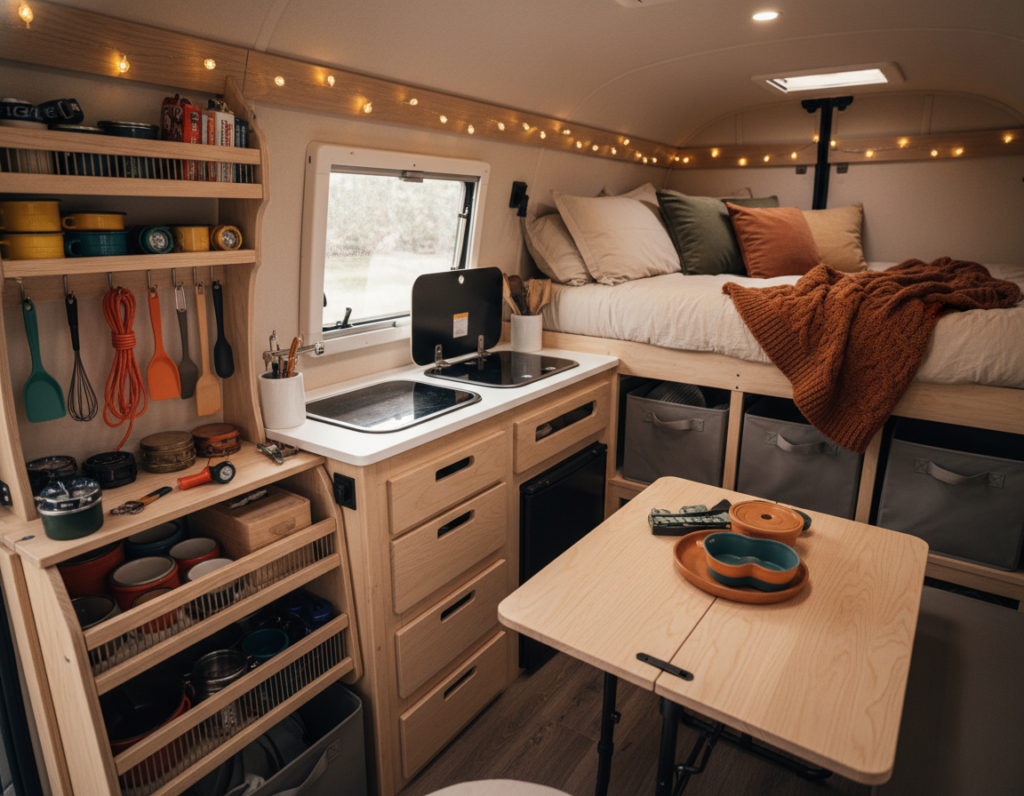
Van kitchens often hide the most frustrating wasted space where pans and spices get pushed to the back. Many owners find these dark nooks useless, and daily cooking becomes harder when items vanish behind awkward cabinet shapes.
Smart corner storage solutions let people reclaim that wasted area without any major build work. By using pull-out racks, lazy Susans, and tiered baskets, a compact mobile home can gain order quickly.
Optimizing corner space improves access and keeps the kitchen tidy on long trips. Small adjustments in cabinet layout and labeled containers make it easy to keep essentials in reach and reduce clutter.
These practical ideas focus on function and appearance. They help van owners get more usable room while keeping a clean, professional look on the road.
Understanding Your Cabinet Layout
Start by mapping how each cabinet opens and what hides behind its doors. A quick audit reveals which areas waste space and which cabinets need an organized design change.
Identifying Cabinet Types
Many kitchens include a diagonal corner cabinet with an angled front or a blind corner that swallows items. Badger Cabinets in Oak Creek, Wisconsin, recommends noting the exact type before buying any hardware.
Corner drawer cabinets are shaped to match the room angle and often make small items easier to reach. Measuring each cabinet and door opening helps match new pieces to the existing fit.
Assessing Storage Needs
- Check reachability: List which kitchen items are hard to access and how often they are used.
- Measure carefully: Take height, depth, and width so any new drawers or shelves fit the space.
- Choose by use: Decide if you need specialized drawers or simple shelving for daily items.
- Analyze layout: Identify which cabinets cause the most hassle in the home and prioritize them.
Understanding the layout first ensures upgrades will improve function and keep essentials within easy reach.
Essential Corner Storage Solutions for Base Cabinets
Practical upgrades for base cabinets can turn hidden nooks into easy-access zones. A brief retrofit often removes the need to reach into a deep back cabinet and saves time when cooking.
Installing Lazy Susans
Lazy Susans are rotating trays that bring pots and pans into view. They fit into many corner cabinets and make it possible to spin items toward the front instead of digging to the back.
Pull-Out Shelf Systems
Pull-out shelf systems slide items forward on tracks when the cabinet door opens. These racks organize essentials and reduce clutter by grouping similar things on separate shelves.
Magic Corner Units
Magic corner units use staged shelves that pull out and unfold, capturing nearly all the deep space in a diagonal cabinet. They work well where a simple drawer or rotating tray won’t reach.
- Retrofitting a lazy susan often requires only a simple drill and a few minutes.
- High-quality pull-outs support heavy pans and pots safely.
- Grouping like items on shelves speeds up meal prep and keeps the cabinet tidy.
Maximizing Upper Corner Cabinet Potential
A clever upper cabinet plan turns awkward angles into useful display and storage areas. Small adjustments make the topmost cabinets both pretty and practical.
Install adjustable shelves to fit plates, jars, and small appliances at varying heights. Adjustable shelving uses the vertical space and keeps items accessible without stacking too high.
They can add a modern look by mixing open shelving with closed cabinet doors. Homeowners often fit pull-out shelves or shallow drawers to pull items forward from the back angle.
- Plan shelf placement for less-used items higher up.
- Limit weight on upper shelves; test with appliances before final placement.
- Choose finishes that match cabinet style to improve the overall look.
With careful layout and the right hardware, upper corner cabinet space becomes a highlight of the kitchen. The result is easier access, better organization, and a cleaner visual style.
Solving the Blind Corner Dilemma
Many kitchens have a blind corner that swallows pots and cleaning supplies and makes access frustrating. A blind corner cabinet often features one door with a hidden space that extends deep into the corner, so things vanish at the back.
Half-moon pull-out systems use curved shelves that swing toward the user. These units bring pans and pots to the front, so heavy items no longer require awkward reaching.
Slide-and-Pivot Organizers
Slide-and-pivot organizers combine tracks and hinge action to pull shelves out smoothly when the cabinet door opens. They make the full depth of a base cabinet usable without forcing someone to bend or reach into the dark back cabinet.
- They return items to the front for easy access and faster meal prep.
- Many people store cleaning products in blind corner cabinets; pull-out drawers keep those items upright and visible.
- Proper installation ensures the cabinet door closes flush while maximizing usable space.
Professional organizers recommend these approaches for anyone struggling with inaccessible areas. The right system saves time, protects backs, and turns an awkward cabinet into a practical part of the kitchen.
Utilizing Vertical Space and Door Interiors
The back of a cabinet door is an overlooked spot that can free up shelf room fast. Small changes here let a kitchen gain practical storage space without new builds.
Simple hanging rails and hooks make the interior of cabinet doors useful. They hold measuring cups, pot lids, and small utensils so shelves stay clear.
Adding Hooks and Rails
Install slim rails or adhesive hooks on cabinet doors for frequently used items. This creates a dedicated place for items and speeds meal prep.
- Vertical racks inside a corner cabinet increase usable height and keep pans upright.
- Use lightweight baskets on doors to hold wraps, bags, or spice packets.
- Check hinges and test a cabinet door before hanging heavy items to protect hardware.
Door-mounted organization is a low-cost, low-effort way to stretch space. It preserves main shelves for larger cookware and drawers while keeping small items in reach.
Smart Lighting Upgrades for Dark Corners
Motion-sensor strips make it simple to find the back of a cabinet without fumbling in low light.
Installing motion-sensor LED lights inside a corner cabinet is an effective way to brighten deep shelves and dark drawers. The lights activate when a door opens, so items become visible instantly.
These small fixtures help people avoid buying duplicates because they can see what lives at the back. They also modernize the kitchen and make the interior easier to navigate.
- They are simple to install and often battery-powered or plug-in.
- Motion activation means no switches to fumble with at night.
- Proper placement improves access to deep shelves and tight corners.
For more tips on lighting upgrades, see this guide to brighten kitchen cabinets: brighten kitchen cabinets.
Budget-Friendly Organization Hacks
Affordable tweaks often make the busiest cabinets work like new without a contractor. Small fixes cost little but improve access and save time in the kitchen.
Use an affordable lazy susan in a base cabinet to bring pots and pans forward. It fixes wasted space and keeps heavy items within reach.
Add shelf risers to double usable shelves and stack small items without clutter. Stackable bins inside drawers help group utensils and pantry items so finding essentials is fast.
Hang DIY racks and hooks on the inside of a door to store lids or small pans. Keeping cleaning supplies in a designated corner cabinet makes the main area neater and safer for food prep.
“Small, low-cost changes can transform tight areas into practical, everyday places.”
Reorganizing takes little time and gives lasting benefit. With a few tools and basic racks, homeowners can maximize corner space and enjoy a more functional home kitchen.
Choosing the Right Materials for Longevity
A long-lasting build starts with picking the right materials for shelves, drawers, and doors. Durable choices keep a cabinet functional and reduce repairs down the line.
Choose robust finishes. High-quality wood or metal gives cabinets a professional look and supports heavy items. Many homeowners prefer stainless steel or solid wood for a modern style and strong performance.
Pick easy-to-clean interiors. Moisture and heat affect the back of a cabinet, so select laminate or sealed wood where cleaning is frequent. This protects the interior and keeps the space hygienic.
- Invest in sturdy drawers and doors to maintain value and function.
- Match materials to use: heavy pans need metal brackets; a lazy susan works best on solid wood or reinforced ply.
- Consider design and look so new parts blend with the home.
“Proper material selection prevents wear and keeps cabinets working for years.”
Conclusion
Simple tweaks to doors and shelving transform awkward nooks into reliable workspaces. Transforming your corner cabinets into efficient areas improves daily cooking and saves time. Small upgrades often pay big dividends in ease and cleanliness.
Whether they choose a rotating lazy susan or new cabinet doors, homeowners will notice faster access and less frustration. One well-planned change can reclaim a tight corner cabinet and make the kitchen feel larger. Assess your layout today and pick a single upgrade to start the improvement journey.