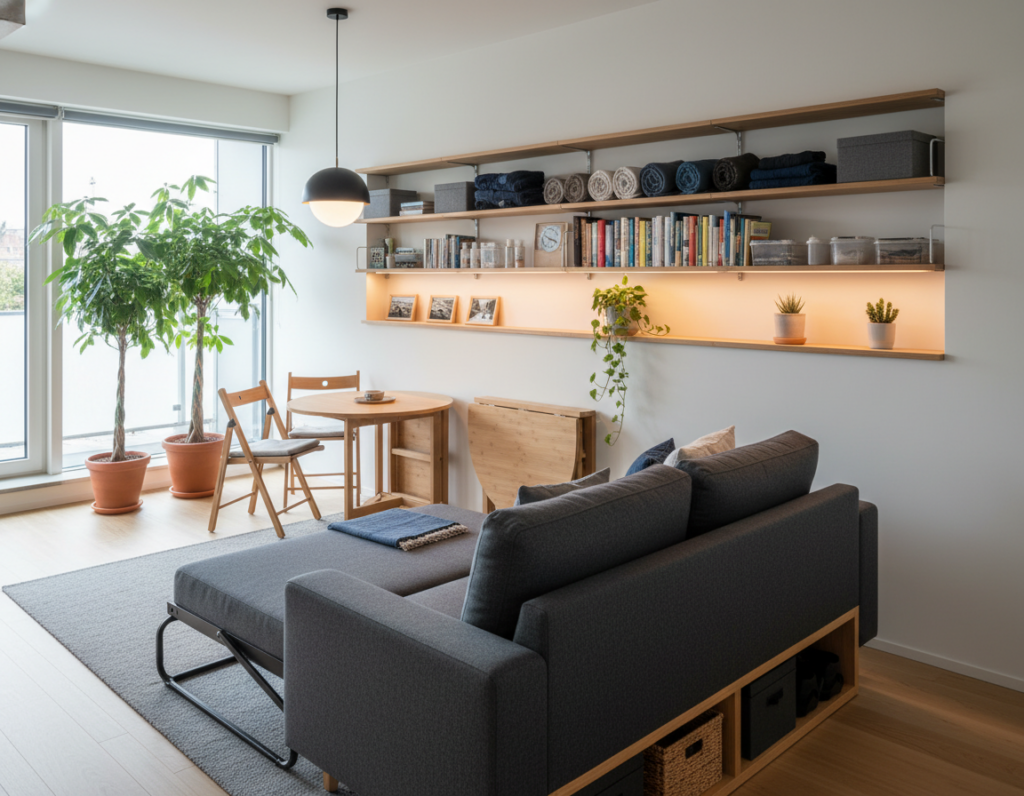
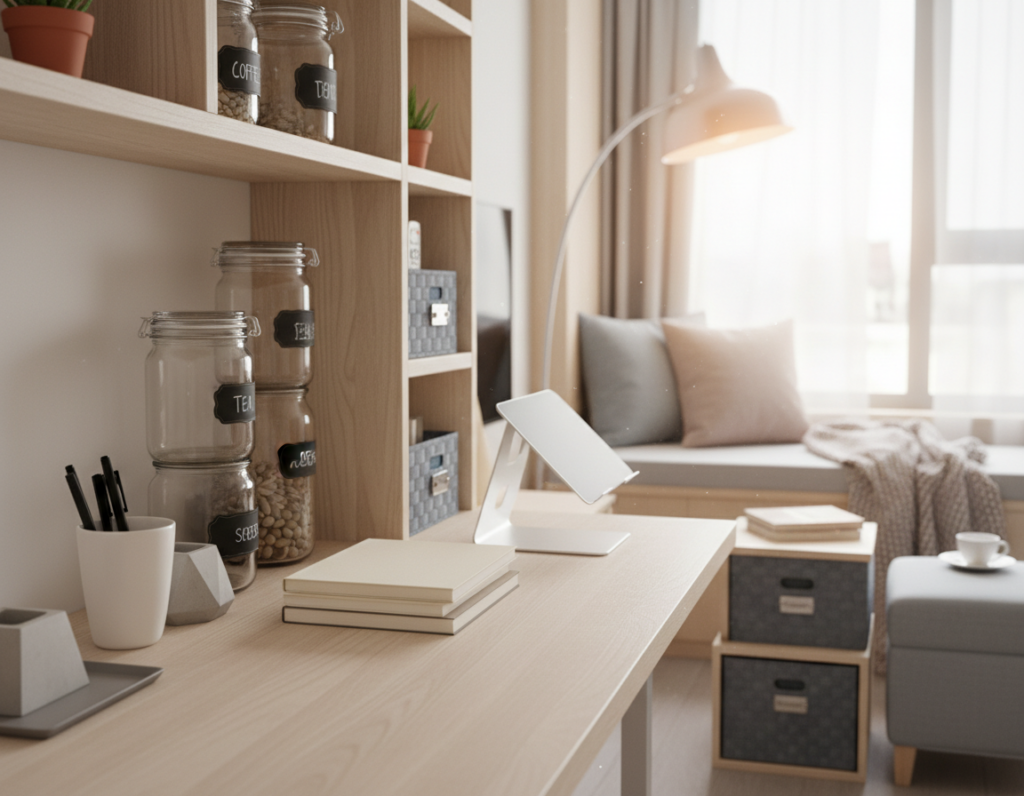
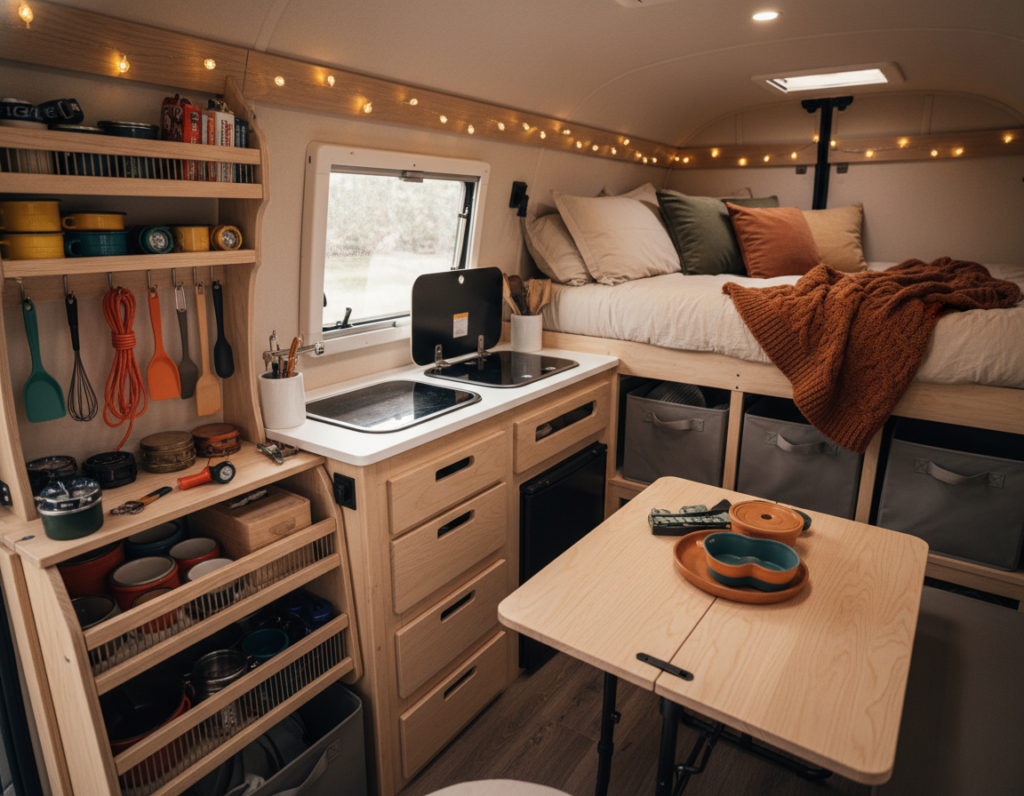
Every inch counts in very small interiors, and smart design turns tight quarters into usable rooms. In these setups, residents must plan how each inch will serve daily life. Prioritizing a folding table lets people change a spot from dining to work in seconds.
Professional designers often recommend items that stow away to keep the interior open and airy. The installation of a sturdy table lets a cramped area feel larger and more functional. Strategic use of such furniture makes small spaces work for sleep, meals, and tasks without clutter.
For practical ideas on making the most of tight quarters, see these folding furniture ideas. FarOutRide also documents the folding table build and installation process for camper conversions, helping owners maximize every usable inch.
The Philosophy of Compact Living
Living well in a tight footprint starts with a mindset that values flexibility over permanence. In small interiors, items must perform multiple roles so each square foot works harder for the resident.
Minimalism here is practical, not punitive. Reducing belongings makes moving between activities simple. It also lowers the visual and physical weight that clutters a tiny space.
Successful compact living depends on instant reconfiguration. One setup can shift from sleep to work to dining in moments when surfaces and storage are planned around use.
- Design for multi-use: surfaces that serve daily tasks and sleep needs.
- Prioritize clear pathways so movement feels natural and unobstructed.
- Use storage that tucks away items but stays accessible for routine life.
Designers stress that small-scale living is about efficiency and intention. With smart choices, people gain more functionality and freedom from less space.
Why a Collapsible Furniture Van Setup is Essential
A smart, fold-away layout turns a cramped camper into a flexible living room, office, and bedroom in minutes. This approach makes daily life smoother and keeps the floor space clear for movement and gear.
Benefits of Multi-Functional Design
Multi-purpose beds such as the Broad Arrow 1 Seat Folding Bed 500 AR and the Lippert EuroLoft Smart Bed let a single footprint serve several needs. A simple extension converts sleeping space into seating or storage access.
Retractable counters and wall-mounted tables add options without permanent bulk. They give more storage and create work or dining surfaces on demand. These choices improve comfort and make the interior feel larger.
Maximizing Floor Space
Using a folding table keeps the dining area off the floor when not in use. That saves valuable inches and opens pathways in tight layouts.
Practical features like heavy-duty brackets and smart storage maximize every inch. For more practical ideas on how to save space, see these save space tips.
- One extension surface serves as a dining table or desk.
- Wall mounts free floor space for sleeping and gear.
- Modular choices add storage and flexible options for campervan life.
Identifying High-Traffic Zones for Folding Surfaces
Positioning a folding surface near doors and windows reduces obstructions and boosts usable space. Identify spots where people enter, cook, or sit. These zones get the most use and matter most when planning placement.
Measure the available inches carefully. A table top should fold out without blocking movement. Check swing paths and allow clearance so people can pass and access storage.
In a typical campervan, the area beside the kitchen or dining nook is ideal for a folding extension. It provides extra storage and a quick dining surface without taking floor space when stowed.
“Place surfaces where traffic flows to keep the interior organized and safe.”
- Map high-use routes near a window or door before mounting.
- Measure in inches to ensure the table does not impede access to storage.
- Apply practical ideas vanlife experts suggest to free floor space and keep paths clear.
Selecting the Right Hardware for Stability
Durable hardware makes a folding table feel reliable every time it is opened. Choosing the correct parts at the start saves time and prevents risky failures later.
Choosing Heavy-Duty Brackets
Pick brackets rated for daily load and frequent motion. Heavy-duty shelf brackets and folding shelf brackets reduce flex and extend service life.
Understanding Load Capacities
Verify the bracket or bracket set carries more than the expected weight. Check ratings in pounds and allow a safety margin for people, gear, and dishes.
- Match bracket capacity to the table top size and planned use.
- Allow extra inches of clearance so the surface stays level when loaded.
- Choose options with corrosion-resistant finishes for long life.
Preventing Sagging and Wobbling
Proper installation matters as much as the hardware itself. Fasten brackets into structural studs or reinforced panels. Use quality fasteners and check alignment during installation for smooth operation.
Material Considerations for Durable Surfaces
A durable top starts with the right material choice for moisture and temperature changes.
Marine-grade plywood and solid hardwood are the top recommendations when a table top faces regular water or condensation near a window.
Bamboo also performs well. A bamboo table is lightweight, strong, and resists daily wear. It is a practical choice for people who need a balance of weight and toughness.
The final durability depends on the finish. Laminate, epoxy, or a natural bamboo coating protect against spills and swelling. Choose a finish based on expected use and exposure to water.
“Selecting high-quality materials ensures tables stay functional and attractive through long-term use.”
- Pick marine-grade plywood or solid hardwood for moisture resistance.
- Consider a bamboo table for a lightweight, durable top.
- Protect the surface with laminate, epoxy, or a suitable natural finish.
Installation Techniques for Maximum Load Capacity
Correct attachment points transform a simple table into a dependable daily surface. A careful installation lets the surface carry real loads and stay level across several inches of span.
Strategic Mounting Points
Pick locations that tie into the campervan’s structural frame. During installation, make sure the brackets fasten into studs or reinforced panels so the table top supports heavy items without flex.
- Use multiple mounting points and shelf brackets so load spreads across the frame.
- Match bracket capacity to the expected table use and add a safety margin.
- Plan the extension path so the table does not block doors, storage, or other interior features.
- Check level and alignment during final fastening to prevent wobble over inches of span.
A well-executed installation provides a stable extension and reliable bracket system for daily use. Proper choice of brackets and careful layout reduce maintenance and keep tables safe under routine loads.
Integrating Folding Furniture with Existing Systems
Smart connections between a table and built-in storage transform scattered parts into a single useful system.
Plan the table fold around plumbing and power runs. Coordinate installation with the water and electrical layout so the extension does not block valves, outlets, or access panels.
Attach the table to cabinetry using reliable brackets that align with reinforcement points. This creates a unified surface that supports daily use and links to nearby storage.
When the table tucks away, it frees space for fold-down beds or kitchen extensions. That extra room improves circulation and keeps the interior organized.
- Integrate the table with modular storage to maximize usable space.
- Coordinate installation with water and electrical systems for safe access.
- Choose brackets and attachment points that tie into cabinet frames for strength.
- Plan options and features so every table and storage piece serves a purpose.
These integration ideas help create a cohesive campervan layout where tables, storage, and systems work together without clutter.
Balancing Weight and Structural Integrity
Balancing load and mass is the quiet engineering step that keeps a mobile interior safe and efficient. Designers must pair light materials with strong anchors so a table performs under daily use and during travel.
Selecting Lightweight Materials
Choose materials that reduce mass without sacrificing strength. Stainless steel fasteners and aluminum framing offer high strength-to-weight ratios ideal for a van build. For the top, marine-grade plywood or a bamboo option keeps the surface light and resistant to moisture.
Reinforcing Support Structures
Solid hardwood reinforcements behind panels give the brackets support they need. Properly sized folding brackets and a distributed anchor pattern prevent flex and reduce stress on wall assemblies.
- Balance weight: aluminum or marine-grade plywood for the table top.
- Reinforce: solid hardwood blocking for secure brackets support.
- Save fuel: every ounce cut in tight space improves efficiency by inches over distance.
“Secure anchoring prevents movement and preserves structural integrity during transit.”
Enhancing Ease of Use with Modern Mechanisms
When mechanisms do the heavy lifting, residents spend less time setting up and more time using the space. Gas-strut assistance and magnetic latching turn a manual table fold into a reliable, quick motion. That saves time and reduces strain during daily use.
Choose components that match planned load and frequency of use. Folding shelf brackets with integrated gas struts give a smooth operation and steady support for a table top or extension. Magnetic latching keeps the surface secure when stowed.
- Quick deploy: gas struts speed the table fold and help single-user setup.
- Secure stow: magnetic latching locks the surface during transit or storage.
- Smart brackets: pick folding shelf brackets rated for the expected load and moisture near water sources.
- Simple installation: integrate mounts into reinforced panels for a stable extension and easy maintenance.
“Modern mechanisms make tables effortless to deploy and reliable for daily life.”
Safety Protocols for Moving Vehicles
A quick safety checklist for stowed surfaces reduces risk during sudden stops or rough roads. Drivers and passengers should adopt simple routines that protect the interior and everyone on board.
Securing Surfaces During Transit
Before you drive a camper van, make sure every folding table and extension is locked in the closed position. Loose tops can shift and damage cabinets, water lines, or electrical runs.
Use hardware with locking features. High-quality folding brackets and a single reliable bracket for hinge points keep surfaces from unfolding while moving. Choose options rated for the expected weight and road conditions.
“Fast, consistent checks of locks and load balance prevent in‑transit damage and keep passengers safe.”
- Make sure all tables and beds are properly stowed before travel.
- Check that items placed on surfaces are evenly distributed to avoid undue stress on brackets.
- Select folding brackets with locking features as a key safety option for campervan use.
Aesthetic Considerations for Small Interiors
A well-chosen surface can transform a tight interior into a warm, intentional living area. A bamboo table adds natural warmth and a textured look that helps small spaces feel inviting rather than cramped.
When you save space with a folding design, the extra room highlights features like a large window and decorative bamboo accents. A coordinated palette makes the seating and dining spot read as a single, calm zone.
The top should resist water and wear while complementing other wood tones. Choose finishes that match the cabinetry and trim so tables look purpose-built and last through daily use.
- Match materials: pair bamboo surfaces with similar wood accents for cohesion.
- Keep it minimal: a tidy dining area reads larger and stays functional.
- Mind the clearance: allow a few inches around the table so movement stays easy.
Thoughtful ideas like repeating bamboo grain and keeping hardware subtle help the van interior feel like a small home. Good design balances beauty and utility so every inch works and looks intentional.
Conclusion
,Thoughtful design with sturdy parts makes a small interior perform like a full home. A single folding table and well‑placed brackets can free valuable space and create flexible living zones.
Success depends on quality materials, correct mounting, and attention to daily ease use. When builders pick heavy‑duty folding brackets and plan load paths, tables stay steady and reliable for years.
In short, investing time in layout and hardware turns multi‑use tables and other furniture into practical solutions for life on the road. With care, a compact van interior will feel organized, comfortable, and ready for daily use.