Full-time travelers live with limited square footage and must adopt clear habits to keep their home tidy and useful. Short daily routines cut cleaning time and make living in a compact space feel calm.
Every item should earn its place. Travelers keep essential items close and reduce things that cause clutter. Smart storage choices and simple organization help protect belongings while moving between locations.
A reliable way to manage possessions means fewer surprises on the road. Choosing multiuse pieces and checking items regularly saves time and creates more usable space. These practical tips improve daily life and let travelers focus on the journey.
Assessing Your Current Living Space
Begin with a clear snapshot of your living area so you can plan meaningful change. A brief, honest assessment saves time and directs effort to the places that matter most.
Taking Before Photos
Photograph every room and storage zone from several angles. These images create a visual baseline to measure progress and reveal trouble spots.
- Capture the main living area, kitchen corners, and closet shelves.
- Use natural light and steady framing for clear comparison shots.
- Store photos in a single album labeled by date and location.
Defining Your Goals
Set simple, specific objectives for each room and closet. Examples include freeing floor space, improving access to daily items, or reducing items to carry between locations.
- Prioritize zones that hinder daily routines.
- Estimate how much space you want to reclaim.
- Record one measurable decluttering target per area.
With photos and clear goals, the team can move into action with focus and confidence. This step ensures the home becomes more functional without wasted effort.
Implementing Minimalist Organization Tips for Small Interiors
Assigning purpose to each possession turns a cramped room into a practical living area. This approach ensures every item in the home has a clear place and function.
Simplify storage by keeping daily-use items within reach and packing extras away. When storage needs shrink, the space feel improves and even a small room reads as larger.
Decluttering is more than removing things. It creates a sustainable way of life that cuts daily stress. Experts note that focusing on the items you truly use improves overall quality and reduces upkeep time.
- Designate a home for each item to speed cleanup.
- Choose multiuse pieces to free floor space and reduce clutter.
- Practice regular quick edits to keep storage functional while traveling.
Over time, these small changes help reclaim the home and support a simpler, intentional life on the road.
The Power of Grouping Like Items
Putting like items together saves precious minutes and reduces frustration. This simple habit makes daily routines faster and more predictable for people who live in small spaces or travel full time.
Grouping works in any room. Whether in a kitchen drawer, a closet shelf, or by the door, keeping similar things together creates a clear system.
“A well-arranged home lets travelers find a single item without searching through multiple bags or boxes.”
- Store toiletries in one pouch and all cleaning supplies in one place.
- Keep utensils in a single tray in kitchens and shoes near the door.
- Group clothes in closets by season or use to speed packing and access.
Assigning a specific place for each category of items makes the home more functional. This way, everyday use becomes easier and the traveler maintains a steady sense of order on the road.
Managing Cords and Cables
A few deliberate choices about cables can cut daily mess and save precious time. Cords often create visible clutter in a small home, so basic rules help keep things tidy.
Start with small bins for tangled power leads and spare chargers. Store one item type per bin and label each container.
Hidden Storage Solutions
Many travelers use hidden spots like behind a couch or inside a nightstand to tuck cords out of sight. These areas free surface spaces and protect cables while keeping them accessible.
- Keep a dedicated place for electronics so the room stays neat.
- Organize cords by type to save time when charging on the road.
- Proper use of labeled bins ensures the home remains functional and reduces the stress of visual distractions.
By consistently keeping things in designated areas, travelers maintain high-level organization. This simple way prevents recurring mess and makes small spaces easier to live in.
Maximizing Visibility in Storage Areas
Clear sightlines in storage make it far easier to find and actually use what is kept at home. When shelves are arranged so every item is visible, the whole room feels more useful and less crowded.
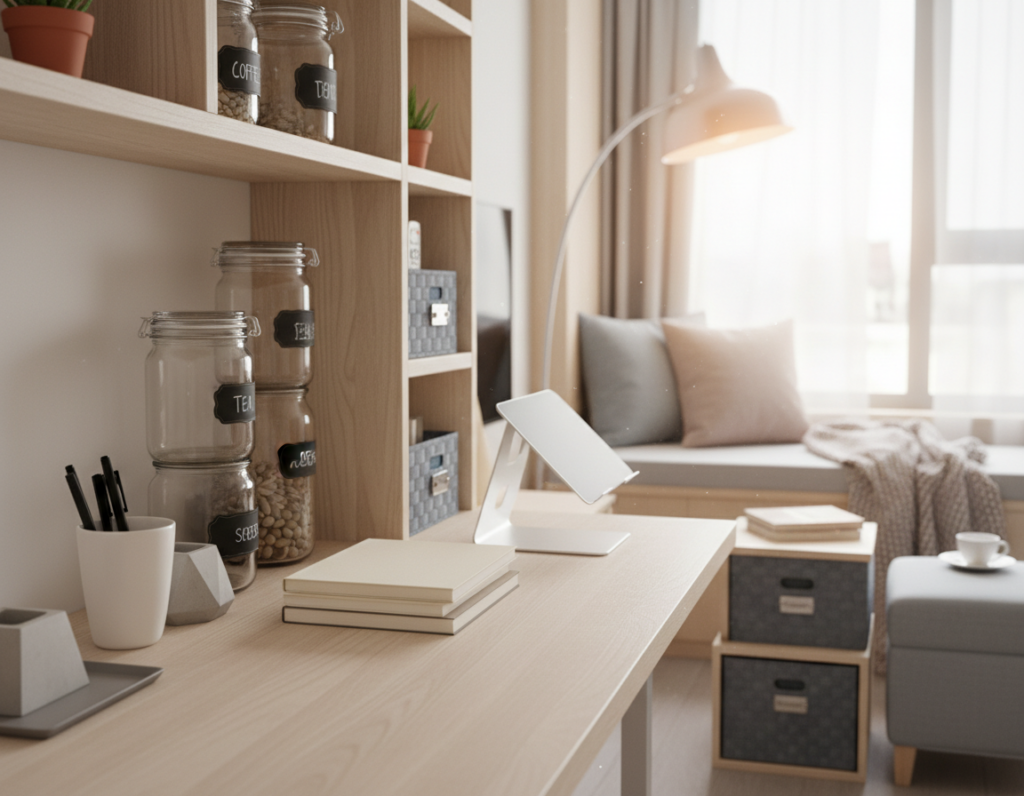
Use vertical shelves in a closet or kitchen to turn deep recesses into visible zones. Open shelving, clear bins, and labeled boxes let travelers spot what they need at a glance.
The KonMari method for folding clothes keeps every piece of clothing upright and easy to pull. This simple change reduces duplicate purchases and saves precious space in drawers and closets.
“When you can see every item, you are less likely to buy duplicates.”
- Arrange kitchen items by frequency of use so cooking is faster.
- Keep a single place for travel gear near the door for quick access.
- Rotate and edit shelves seasonally to keep storage functional across areas.
Utilizing Boxes and Bags for Order
Using dedicated bags and boxes makes packing and finding things faster and more reliable.
For small spaces, containers act as a second set of hands. When limited storage is a reality, grouping similar items into pouches or small boxes keeps everything in its place. This approach works well for daily gear and office supplies alike.
Many travelers rely on sturdy boxes to keep belongings secure while moving. Repurposed shoe boxes or shipping cartons often do the job without added cost.
Labeling matters. By grouping small things into labeled boxes, a person can reach what they need fast and avoid rummaging through every container.
- Use one bag per category so a single item is easy to find.
- Stack durable boxes to protect fragile gear in transit.
- Keep everyday bags within arm’s reach to speed packing and exit.
Consistent use of boxes and bags helps travelers maintain order regardless of location. Over time, this simple habit makes a compact living space far more functional.
Repurposing Everyday Items for Storage
Turning ordinary containers into organizers gives small homes more usable surface and shelf space. This approach uses what people already own to cut costs and reduce waste.
Sustainability Benefits
Reusing jars, tins, and shoeboxes supports a greener routine. Travelers save money while reducing the need for new plastic or cardboard.
Repurposing also lowers the frequency of buying single-use products. That small change adds up over a day, month, and year.
Creative Container Ideas
Simple conversions work well in a compact kitchen or on narrow shelves.
- Use food jars for spices, cotton swabs, or loose screws to keep small things visible.
- Line shoeboxes with fabric to create drawer dividers for socks or cords.
- Turn a cereal box into a slim magazine holder for maps and travel papers.
These practical ways to reuse an item cut clutter and aid decluttering without spending time hunting for new solutions. By rethinking everyday things, travelers gain a clearer sense of control over their space.
Assigning a Dedicated Home for Every Item
Giving each item a fixed spot turns daily clutter into a one-step habit. When keys, headphones, and chargers each have a place, finding them takes seconds not minutes.
Keep a simple rule: one home for one thing. Stow a yoga mat under the bed, place charging gear in a single drawer, and use a small bin by the door for daily essentials.
Travelers who adopt this method free up valuable space in tight living areas and cut the time spent searching. Returning each item to its home at the end of the day keeps the home calm and ready for the next move.
- Designate spots for high-use items to maximize storage and speed packing.
- Label containers so every item is easy to return to its place.
- Practice the habit daily to stay organized and gain more time for travel or work.
“A clear home for every object makes small spaces function like larger ones.”
Leveraging Unused Nooks and Crannies
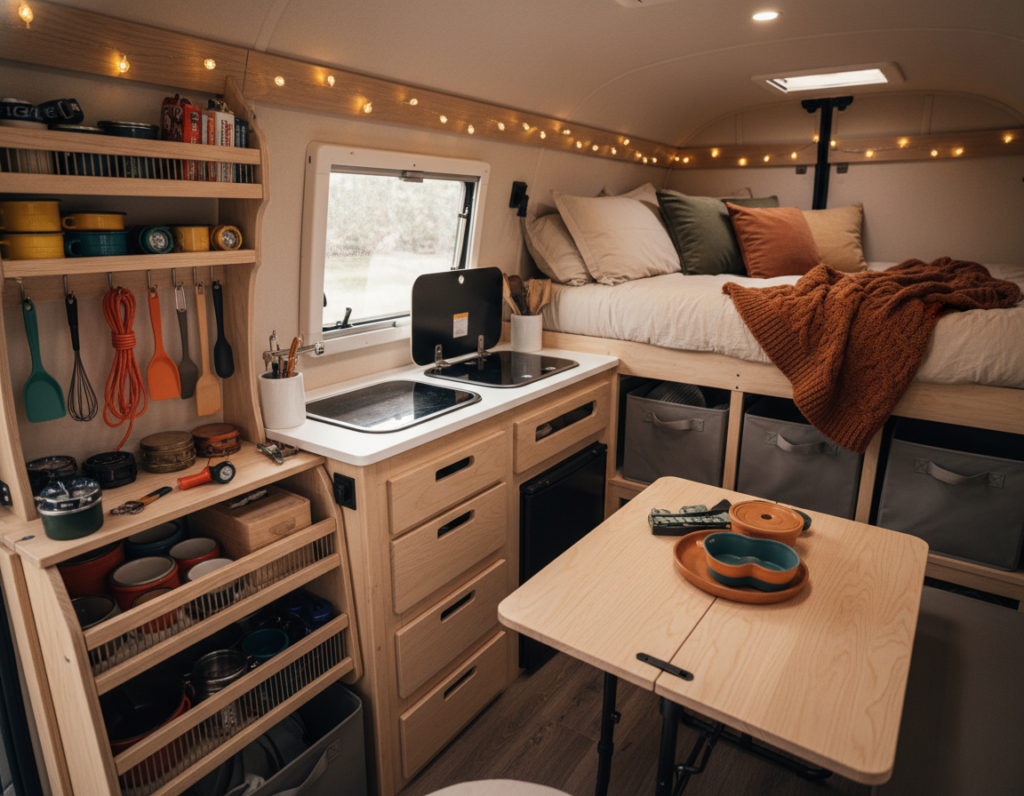
Tiny nooks often hold large opportunities for extra storage in compact homes. Travelers can use the space beneath a bed or the corners of a closet to keep bulky items out of sight.
It takes only 15 minutes to clear a flat surface in the kitchen. That short burst of time makes the whole room feel cleaner and more functional.
Install a few slim shelves or hooks behind a door to add storage for lightweight gear. Small additions like these reduce clutter and free main living spaces.
Many travelers tuck seldom-used items into hidden pockets around the home. Even in small kitchens, overlooked areas become handy storage for daily essentials and tools.
- Use under-bed boxes for off-season gear.
- Add corner shelves to convert wasted areas into tidy zones.
- Try behind-door hooks for bags, hats, and chargers.
Consistent use of these tricks keeps belongings tidy without sacrificing comfort. For a longer list of clever ideas, explore hidden storage ideas that work well for full-time travelers.
“Finding a place for everything stops small items from overwhelming a compact home.”
Establishing a Routine for Ongoing Maintenance
A short, repeatable routine removes small messes before they pile up. Establishing a regular check keeps home areas tidy and reduces the need for long cleanups. This simple way supports steady decluttering and protects usable storage.
The Penalty Box Method
The Penalty Box method stores questionable items for set periods: 1, 3, or 6 months. If an item is not used in that window, it moves to donation or sale. This creates breathing room and lets travelers decide without pressure.
Use four boxes for quick edits: Keep, Sell, Donate, and Trash. Sort clothes, office supplies, and small items into labeled bins or bags. Aim to sell only things worth more than $30 and target at least 20% of the original price to save time.
Set one day each month to drop off donations and clear the Sell box. Return every thing to its place after use. Over time, this habit helps travelers stay organized and enjoy a calmer, more functional living life.
“Small, regular actions beat occasional deep cleans for keeping a compact room usable.”
Conclusion
Simple daily choices add up, making a compact living area feel orderly and easy to use. Apply the small tips in this guide to preserve calm while living on the move.
By giving each item a dedicated place, travelers save valuable time and reduce stress. Regular decluttering keeps the home a comfortable sanctuary and prevents excess from piling up.
Every small change — from repurposing containers to using labeled bins — improves how the space functions. For more space-saving strategies, see this space-saving sample page. These steady habits create a simple, reliable way to focus on travel and the experiences that matter most.