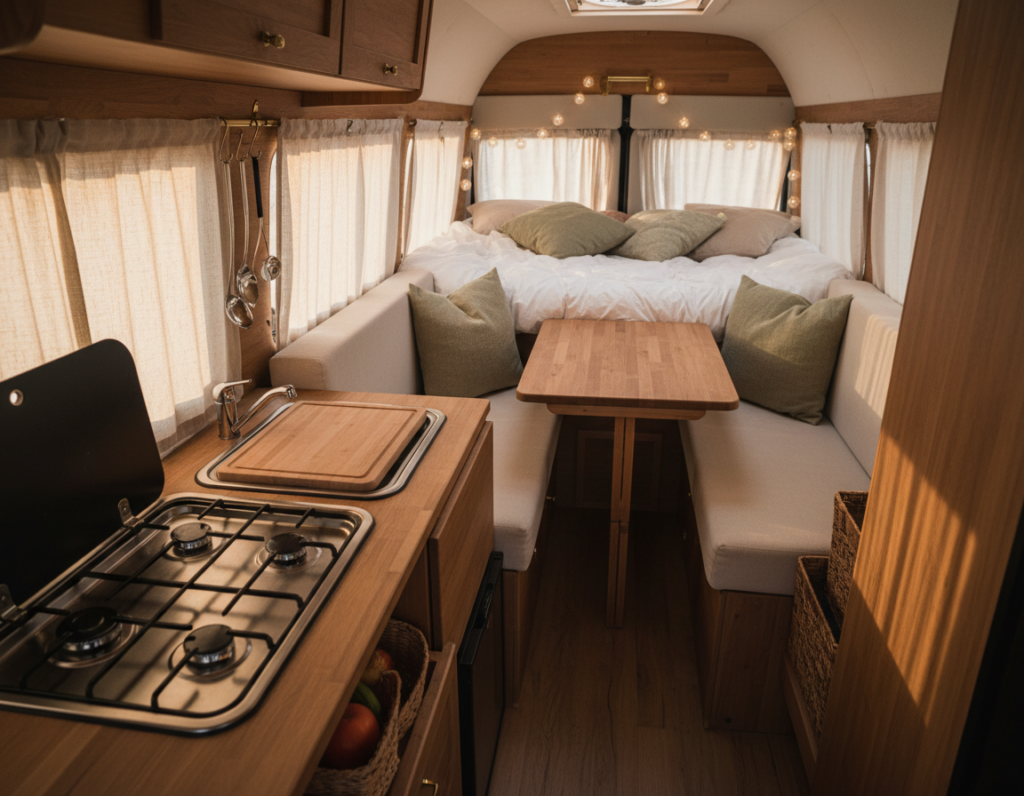
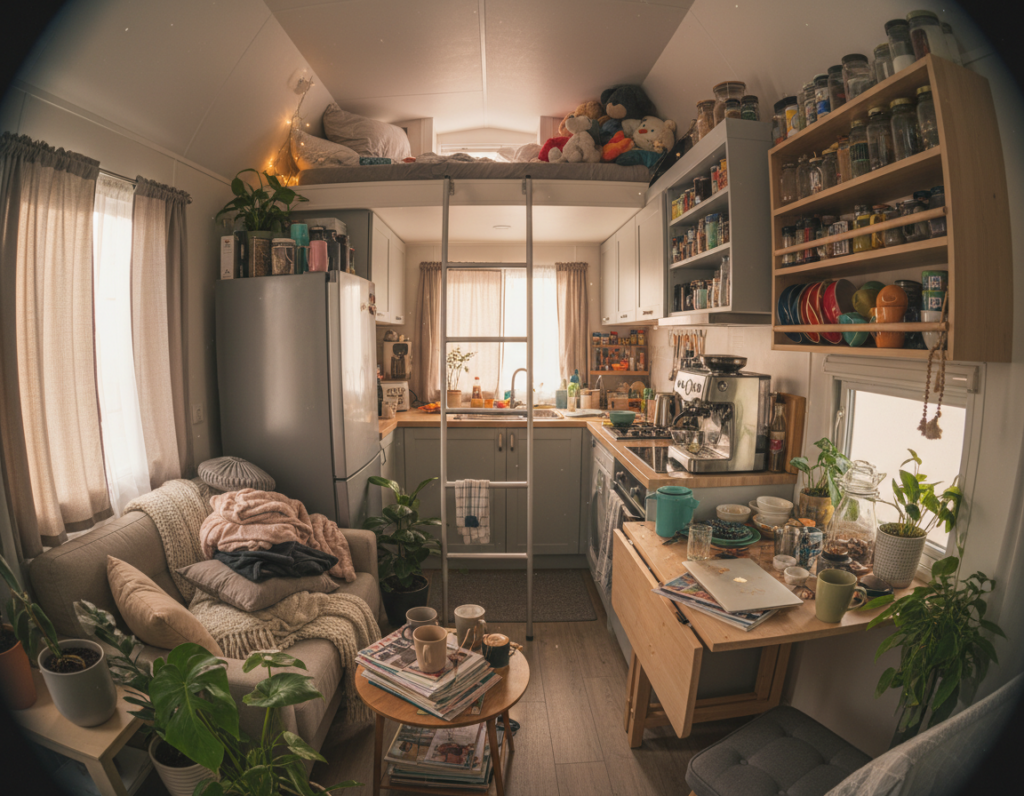
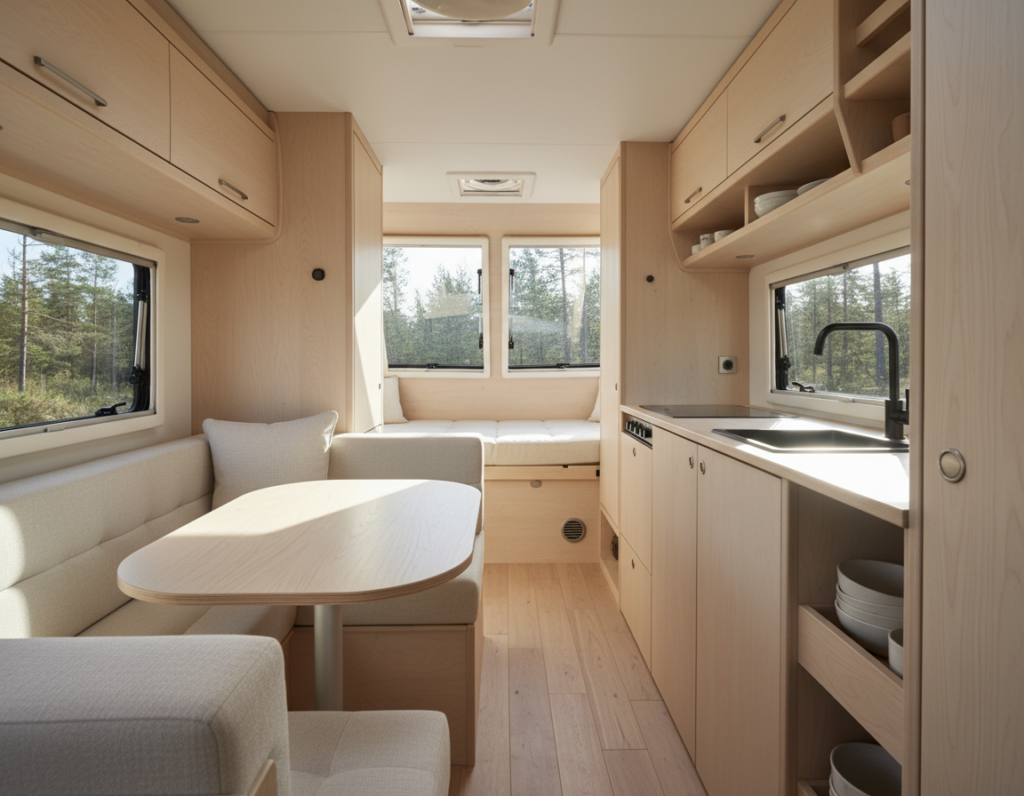
The aesthetic can succeed or fail based on a few clear choices. TB Outdoor Rentals shows many travelers how van life can be inviting before they build a custom rig. Good design makes a tiny home on wheels feel warm and useful.
When a small camper sacrifices storage for empty surfaces, the space can feel harsh and clinical. Designers say a smart layout and soft materials help balance open floor plans with needed cabinets and living zones.
Practical interior ideas focus on soft textiles, warm lighting, and personal items that make the van feel like home. If people plan sleeping areas, kitchen spots, and shower space with deliberate use of color and light, the result is a cozy retreat rather than an empty vehicle.
The Psychology of Cozy Minimalist Camper Interiors
A warm, lived-in feeling in a small vehicle starts with deliberate choices about space and use.
Experts in May 2025 note that making zones feel distinct yet connected is central to a cozy small camper.
Color and texture shape mood during long trips. Soft fabrics, warm tones, and layered lights make a living area feel inviting.
Layout matters: a clear flow between kitchen, sleeping, and day areas reduces friction and supports daily routines.
Professional builders now favor multi-functional furniture to maximize utility. Fold-down tables and convertible beds create more usable space.
- Smart storage keeps items at hand and reduces clutter.
- Personal objects make the vehicle feel like home on wheels.
- Balanced zones let people relax, work, or cook without feeling crowded.
When design prioritizes comfort, the camper becomes an extension of personality. That emotional fit is what makes life on the road feel stable and calm.
Mastering the Minimalist Camper Interior Aesthetic
A clear purpose for every object turns a small mobile living space into a calm, usable home. This design approach makes the most of limited space and helps people live comfortably on the road.
Defining the Philosophy
Every item must have a use. Select furniture and finishes that add function or warmth. Choose durable materials like bamboo or lightweight plywood to cut weight and lift the look.
Balancing Function and Form
Maximize floor space with foldable tables, hidden storage, and vertical solutions. TB Outdoor Rentals showcases pop-top vans and bunk bed options that illustrate smart layouts and clever use of cabinets and wall areas.
- Use hidden storage to keep life tidy and uncluttered.
- Pick neutral palettes and layered lights to expand the day area visually.
- Choose multi-use beds and convertible furniture to free floor space.
Selecting Color Palettes That Warm Up Small Spaces
Choosing a warm color palette is one of the fastest ways to soften a small living space and make it feel lived-in.
Light tones such as soft gray or pale blue reflect light and make a small camper feel larger. These options work well across walls, cabinets, and flooring to create an airy layout.
Reduce visual clutter by painting cabinets the same hue as the walls. That single trick simplifies the view and makes storage zones recede visually.
Introduce warmth through textiles. Beige or blush throws, cushions, and rugs add a cozy layer without heavy remodeling. Peel-and-stick flooring in light shades is a low-weight, easy option for updating the look.
“A consistent palette creates flow; it helps a compact living area feel intentional and like home.”
- Keep the main color neutral to expand the space.
- Add two accent tones via pillows or a table runner.
- Match small finishes—knobs, lights, and cabinet trim—for cohesion.
When colors are chosen to support daily use and the sleeping and kitchen areas, the vehicle feels calm and welcoming. That careful design makes life on the road more comfortable.
Strategic Use of Natural Light
Capturing natural light is the single most effective way to make a compact living area feel larger.
Natural light opens the space and cuts down on artificial lighting needs. For a small camper, that means planning window placement, roof vents, and reflective finishes early in the layout phase.
Reflective Surfaces and Mirror Placement
Placing a mirror across from a window bounces sunlight deeper into the living area. Mirrors near the table or bed visually double the daylight and reduce dark corners.
Use glossy cabinet faces or light-toned wall panels to amplify rays. Reflective surfaces help the limited natural light reach every corner without extra power draw.
- Install roof vents with transparent covers as an option to bring in more natural light while retaining privacy.
- Keep taller items away from windows so daylight flows across the kitchen, shower, and sleeping areas.
- Choose translucent window coverings to protect privacy but keep the day bright.
Finally, always consider how the camper is oriented when parked. Sun path and shade will dictate which areas receive the most light during the day and how storage and cabinets should be arranged for best use.
Implementing Multi-Functional Furniture
Smart furniture choices let a tiny living area shift from daytime work hub to a restful night nook in seconds.
Multi-functional pieces are the fastest way to save floor space and make space for work and rest. They keep items organized and clear the main walking area for daily movement.
Convertible Bed Designs
Convertible beds, such as rock-and-roll or platform styles with under-bed storage, turn a living area into a sleeping zone in moments.
Many owners pick platform beds with drawers beneath to maximize storage and sleeping comfort.
Swivel Seating Options
Swivel seats let driver and passenger chairs become part of the living space. This simple move increases usable seating without bulky furniture.
Modular Units
Modular cabinets and stackable units let users rearrange zones for cooking, working, or relaxing.
- The Lagun table system is a top option because it adjusts to almost any layout.
- Choose furniture that doubles as storage to keep the kitchen and cabinets tidy.
- Pick pieces that stow away when not in use to save space and simplify life on the road.
“The best designs make the most of every inch so the living area feels useful, not crowded.”
Vertical Storage Solutions for Clutter-Free Living
Stacking storage upward lets a compact living area gain function without stealing floor room. Using walls and overhead zones is a proven way to save space in a small camper and make daily life easier.
Simple systems change how the interior works. Pegboards, track systems, and slim wall shelves keep spices, utensils, and books organized and within reach. Magnetic strips hold knives and tools so items stay secure while driving.
Overhead cabinets along the ceiling perimeter increase capacity without taking floor space. Door-mounted pocket organizers tuck small items out of sight and tidy the living and kitchen areas.
- Use pegboards for flexible hanging and quick access.
- Choose magnetic strips for metal gear that must stay put on the road.
- Install secure latches on all cabinets and overheads to prevent shifting.
“Clear floor space makes a small camper feel larger and less stressful.”
Well-planned vertical storage makes a big difference. It helps people find items fast, preserves floor space for beds or a table, and keeps life on the road calm and usable.
The Role of Soft Textiles in Creating Comfort
Textiles act as a quick, flexible way to bring warmth and personality into a small mobile living area.
Soft fabrics are one of the easiest interior ideas to make a small camper feel like home.
Choosing washable and layered fabrics keeps a living space clean and cozy on long trips. Families should pick machine-washable throws and slipcovers as a practical option.
Mix cotton, linen, and a faux fur throw to add texture. Use pillows to define the bed or seating area and tie colors to the wall or cabinets for cohesion.
Practical fabric choices
- Pick durable, easy-to-clean fabrics to protect storage and furniture during outdoor use.
- Blackout curtains are a must for privacy and better sleep, especially near the sleeping area.
- An area rug warms the floor and helps the space feel intentional and lived-in.
Small touches make a big difference: slipcovers that change the look, layered throws for warmth, and a single patterned cushion to anchor the table or day zone.
Enhancing Ambiance with Layered Lighting
Thoughtful light placement lets a compact living area shift moods for work, cooking, or rest.
Warm tone LED selection matters. Experts recommend 2700K–3000K bulbs to promote relaxation and better sleeping in a small camper. Dimmable LEDs let residents move from bright task light to soft evening glow without swapping fixtures.
Accent lighting techniques add depth and highlight design. LED strips under cabinets or along a wall create a refined look and draw attention to storage and surfaces. Battery puck lights brighten dark corners and require minimal wiring.
Motion-activated lights improve convenience when someone moves around at night. They protect others’ sleep and keep the table, kitchen, and bed areas safe to use.
Always factor power use. Efficient LEDs extend off-grid life and make lighting choices an option that supports longer trips.
“Layered lighting makes a big difference in a small space: it boosts function, safety, and the feeling of home.”
Incorporating Personal Mementos and Decor
Personal objects anchor a small living space and turn it into a place someone truly recognizes as home.
Simple decor choices make a big difference. Display travel photos or postcards on the wall to remind occupants of favorite trips. Use lightweight frames or command strips so nothing damages surfaces.
Choose secure, portable items: pressed flowers, vintage lanterns, and small prints add character without heavy weight. Rotate pieces seasonally to keep the space feeling fresh and inviting.
Plants like succulents add life but require little care. Keep decor stowed in cabinets or tied down near the bed or table to prevent shifting while driving.
“Displaying meaningful items transforms a basic vehicle into a home on wheels.”
- Use wall space smartly for photos and lightweight shelves.
- Secure items with museum putty, straps, or command hooks.
- Keep storage options flexible so decor can change with the trip.
Smart Layout Tweaks for Better Flow
A few small layout changes can make moving through a tight living area feel natural and calm.
Segmenting Living and Sleeping Zones
Clear divisions help a small camper feel organized and more like home. A short wall, a curtain, or a low shelf gives privacy and defines each area.
Keep the kitchen and shower easy to reach. Place them near the entrance or on one side so daily tasks require fewer steps.
Use a fold-up bed or convertible table to free floor space during the day. Stowing the bed creates a flexible living area for work, dining, or guests.
- Store frequently used items by the door to speed access and reduce clutter.
- Position cabinets and open shelves so they do not block light or walking paths.
- Plan lighting and task lamps to separate the day zone from the sleeping area.
Pro tip: study professional layouts like those in a detailed guide to camper van layouts for real-world options.
Climate Control and Insulation Essentials
A tight thermal envelope is the single best upgrade for comfort in a small camper. Proper insulation and smart airflow keep the living space usable in heat and cold.
Walls and ceiling matter most. Insulating the roof and wall cavities with closed-cell foam or wool creates a steady interior temperature. That reduces the work for heaters and fans.
Insulated window covers are an easy option to block daytime heat and trap nighttime warmth. They also protect privacy without bulky curtains.
Ventilation is equally important. A powered roof vent or vent fan moves stale air and prevents condensation in sleeping and shower areas.
- Seal gaps around doors, windows, and cabinets to stop drafts and unwanted air exchange.
- Choose materials rated for the climate you plan to visit to match insulation needs and weight limits.
- Combine insulation with efficient lights and a small heater or fan to cut energy use and extend off-grid life.
“A well-insulated rig improves comfort and reduces the energy needed to heat or cool a compact living space.”
Sustainable Material Choices
Opting for sustainable finishes improves air quality, reduces weight, and gives the space a warm, lived-in feel.
Benefits of Bamboo and Cork
Bamboo and cork are lightweight, durable, and renewable. They make great flooring, cabinets, and wall panels for a small camper while keeping overall weight down.
Both materials resist moisture and wear. That reduces maintenance and keeps storage and bed areas functional for longer trips.
Reclaimed Wood Accents
Reclaimed wood brings a rustic aesthetic that makes the living area feel like a cozy home on wheels.
Used sparingly—on a table face, cabinet trim, or an accent wall—reclaimed wood adds warmth without crowding the layout.
“LED lights use up to 80% less electricity than traditional bulbs, and 12V refrigerators are ideal for solar-powered living.”
- Choose water-based, low‑VOC paints to protect air quality.
- Pick energy-efficient appliances and LED lighting to extend off-grid life.
- Favor easy-care finishes so the space stays clean and durable over time.
Integrating Technology Without Sacrificing Style
Discreet electronics can enhance living and sleeping zones while preserving style.
Integrating technology into a small camper lets owners enjoy modern comforts without disrupting design. A secondhand projector for around $50 creates a simple home theater in the living space and keeps the table or bed area uncluttered.
Practical device ideas:
- Install USB ports near the bed and table for easy charging and daily use.
- Use smart plugs to schedule lights and fans and manage energy on the road.
- Choose battery puck lights as an option for extra lighting without new wiring.
Hide routers, batteries, and surge protectors inside cabinets or under benches to protect storage and keep the wall and surfaces clean. That maintains a polished look in the kitchen, shower, and day areas.
Always check power draws and fuse ratings before adding devices. A well-planned tech setup makes a small space feel like a real home and extends life off-grid with efficient lighting and smart controls.
Creative Use of Indoor and Outdoor Kitchens
Combining a compact indoor galley with an outdoor cooking option creates a flexible setup that maximizes usable space in a small camper. This approach keeps the interior clean and gives occupants more room at the table and bed areas.
Maximizing Space with Awnings
An awning extends the living area and provides a covered spot to cook, dine, or relax without crowding the interior. It is a simple way to make space feel larger and add protected outdoor storage for a stove or cooler.
- Build a small indoor kitchen with a propane stove and sink for rainy days and quick prep.
- Store the stove in a cubby when not in use to free floor and cabinet space.
- Use an outdoor shower and kitchen setup to keep the interior clean and reduce mess inside.
- Choose finishes and surfaces that are easy to wipe down so daily life on the road is simpler.
A well-designed kitchen lets travelers prepare meals anywhere and helps the camper feel like home without sacrificing storage or layout. The goal is a functional system that supports life on the road and helps make space work harder for daily use.
Avoiding the Cold and Empty Look
Warmth comes from layered details, not bare surfaces. In a small camper, soft textiles and warm lighting make a big difference.
They should choose natural wood accents and fabric that soften hard lines. Small changes at the wall, bed, or table bring personality into the space.
Balance matters: pair practical storage with cozy items so the living area stays tidy and inviting. A good layout keeps the kitchen and sleeping zones useful and calm.
- Use layered lights—task, ambient, and accent—to create depth.
- Add washable throws and a rug to warm the floor and define areas.
- Display a few meaningful items secured in cabinets or on a shelf.
“A few personal touches and smart storage turn a tiny home on wheels into a real sanctuary.”
These ideas help a small camper feel like home while keeping function front and center. Thoughtful interior design makes life on the road more comfortable every day.
Conclusion
Small choices—like a warm light or a well-placed shelf—shape how welcoming the space feels.
Balance matters, and practical solutions make a big difference. Smart storage, multi-functional furniture, and layered lighting keep the layout useful and calm.
Personal touches let a rig truly feel like home. They add warmth without crowding the plan and help the space reflect who travels in it.
With careful planning and quality materials, anyone can build a stylish, practical van that supports daily life and long trips. Use these ideas to guide decisions and enjoy the journey.