Van life asks owners to balance the call of the road with the need for a true home base. Alexa Mosier published a practical guide on June 12, 2023, showing how layout choices shape rest and well-being. A smart layout helps a small sleeping area feel inviting instead of cramped.
Design matters. Simple shifts to bed placement, storage, and the flow to the kitchen or door can free up space and brighten the sleeping area. That change turns a mobile shelter into a place to recharge after a long trip to the beach or a National Park.
Owners who prioritize comfort over the stock finishes often enjoy better rest and more time in nature. Understanding the van interior is the first step toward a layout that supports travel, adventure, and daily living on the road.
Understanding the Psychology of Small Space Living
The way a van is arranged can change how calm someone feels at the end of the day. Light, order, and accessible storage shape emotional responses to a small living space.
“Hygge is a quality of coziness and comfortable conviviality that engenders a feeling of contentment or well-being.”
Anna Altman wrote in the New Yorker that hygge lacks a direct English equivalent, though the idea links closely to feeling settled. That sense matters in a camper van, where choices affect mood as much as function.
Practical psychology points:
- A cluttered camper van interior can create claustrophobia rather than rest.
- Good interior design maximizes each square inch to keep the van interior useful and calm.
- Intentional decisions stop the living space from becoming a storage dump for gear.
For examples of common layout mistakes and how they undermine rest, see this analysis on small-bedroom design.
Common layout mistakes in small bedrooms
Defining the Hygge Concept for Your Camper
A thoughtful hygge approach shifts a vehicle from a sleeping spot to a comforting home on the road.
Origins of Comfort
The word hygge comes from the 16th-century Norwegian term hugga, which means to comfort or console.
This root links hygge to the idea of a warm embrace rather than a style fad.
Applying Hygge Principles
In practice, hygge favors soft textiles, warm earth tones, and furniture that invites rest.
For a camper van interior, that means swapping stiff materials for plush upholstery and layered blankets.
Simple actions include:
- Choose tactile fabrics over slick surfaces.
- Use warm tones in paint, cushion covers, and small decor accents.
- Keep the van interior uncluttered so the limited space feels open.
“Hygge is about comfort, presence, and small rituals that make a place feel like home.”
Prioritizing these choices helps travelers make their van interior a restful retreat during long travel days.
Why Your Cozy Camper Interior Matters
A thoughtful layout turns a mobile dwelling into a true place of rest after hours on the road. When the camper van interior is set up with care, it serves as a reliable retreat from weather, noise, and travel fatigue.
Design choices shape daily life. A well-organized van interior reduces stress and makes the living space feel larger. That matters whether someone parks near a busy trailhead or spends a weekend at the beach.
Simple upgrades—better storage, a supportive mattress, and clear pathways—help the camper van become a calming home base. These changes improve sleep and mood, so the next day on the road starts fresh.
Mental recovery is practical. Treating the sleeping area as a priority pays off. A neat, maintained interior prevents clutter-related anxiety and keeps gear accessible for quick departures.
Quick checklist:
- Prioritize usable storage to free floor and bed space.
- Choose durable, breathable fabrics that aid sleep.
- Keep cleaners and small repairs on hand to maintain the van interior.
“A reliable sleeping area is the backbone of comfortable life on the road.”
Preparing Your Van for a Design Refresh
Start with a deep clear-out. A full clean reveals usable floor and storage space and helps plan what stays on the road. Remove nonessential gear, wipe surfaces, and vacuum any hidden corners.
Decluttering is deliberate work. It exposes which systems fail and where more storage is needed. This step saves time when adding shelves, hooks, or modular bins.
The Importance of Decluttering
Give every item a permanent home so daily life stays calm. Proper storage solutions keep the camper van interior organized, especially when cooking in the galley or accessing tools at night.
- Deep-clean before any major project to set a clear baseline.
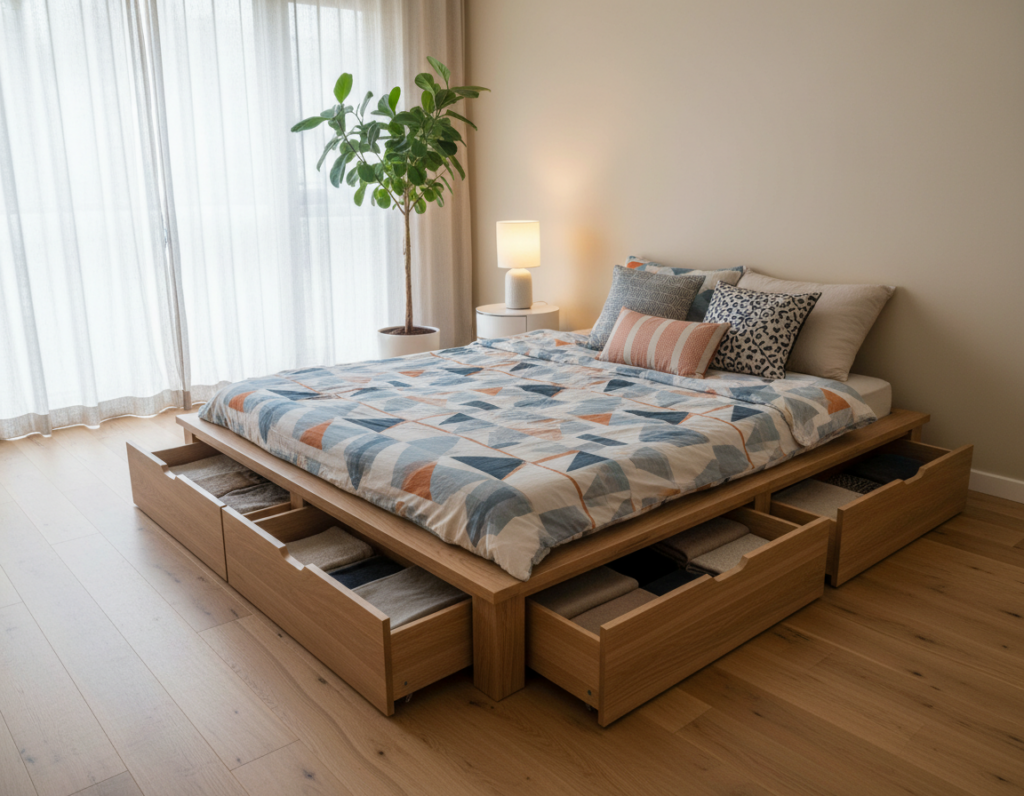
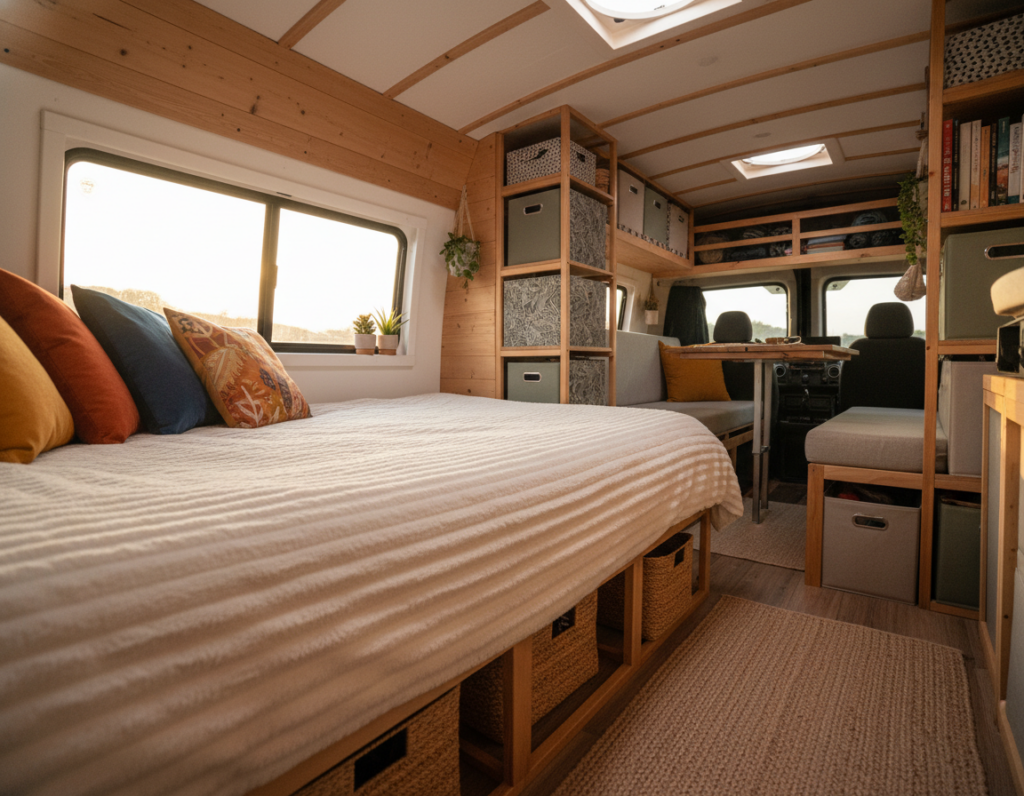
- Choose stackable bins and under-bed drawers to free visible space.
- Label zones for sleep gear, cooking supplies, and maintenance items.
“A clean, organized van interior provides the foundation for a successful design refresh.”
Optimizing the Bedroom for Better Sleep
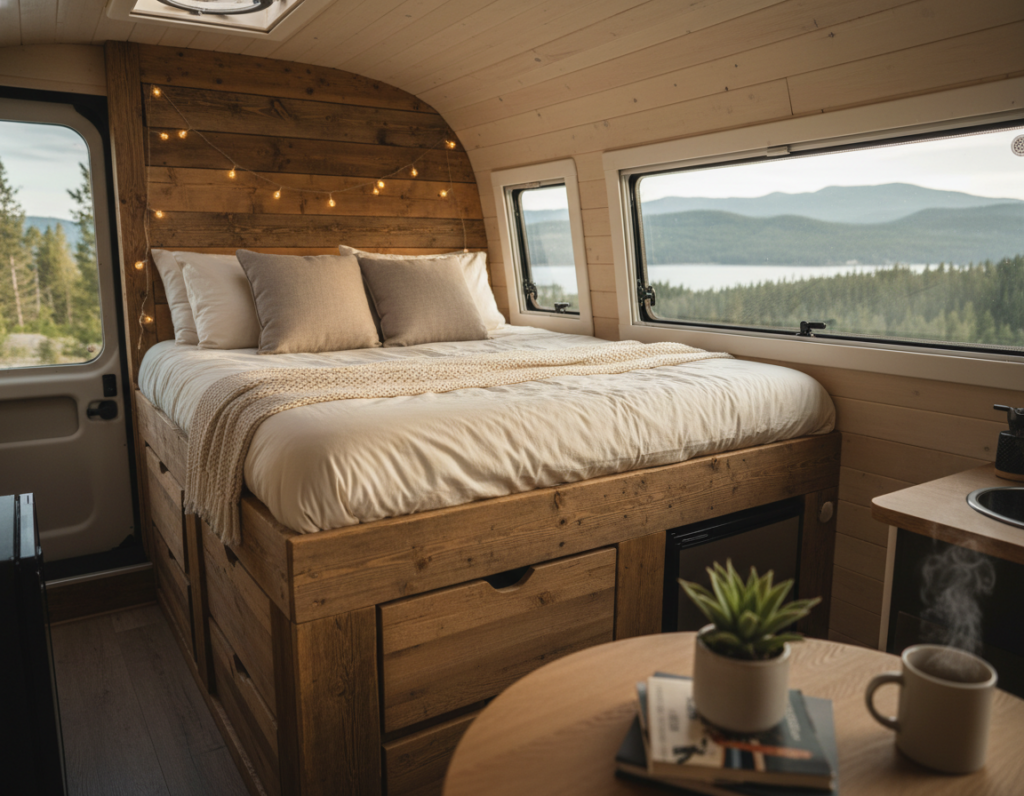
Small changes to the bed area can turn restless nights into full, restorative sleep on the road. A focused refresh of mattress, bedding, and window treatments makes the van interior feel more restful and useful.
Upgrading Your Mattress
Upgrade the mattress first — it gives the biggest boost to sleeping quality. Choose a supportive foam or hybrid mattress sized to the van space to avoid gaps around the bed.
Many owners find a thicker mattress reduces back pain and improves sleep on long travel days.
Choosing Breathable Bedding
Pick natural fabrics. Linen or cotton bedding breathes better than synthetics and keeps night temperatures stable.
- Beddy’s zippered duvets help keep an awkward bed space tidy and fast to make.
- Select bedding that fits the mattress snugly to save space and reduce bunching.
Smart Window Treatments
Block unwanted light with blackout curtains or shades over each window area to protect sleep quality.
Use hem tape as a no-sew fix when trimming curtains for camper van windows. Add stick-on lights or dimmable string lights for soft lighting near the bed area.
Enhancing the Living and Dining Area
Smart seating and a flexible table turn a small living area into a true daily hub. The living and dining area in a camper van often serves for eating, working, and relaxing.
Add a few throw pillows to lift seating comfort and style. Fold blankets over the couch so they are ready for the night without crowding the bed.
Make sure any new furniture fits through the door and suits your layout. Measure clearance around the table and by the window before buying or building pieces.
- Choose a collapsible table to free floor space when not in use.
- Reupholster dining table cushions to refresh the living area without costly swaps.
- Pick modular seating that doubles as storage to keep the van interior tidy.
“A purposeful living and dining setup makes every meal and task feel intentional.”
Creative Upgrades for the Galley Kitchen
Simple swaps in the galley change how the whole van functions day to day. Small, targeted upgrades improve cooking flow, save space, and lift the overall style of the kitchen area.
Functional Hardware Swaps
Replace cabinet knobs and drawer pulls to modernize the look without heavy remodels. New hardware is lightweight and gives the cabinets a refreshed feel.
Install a peel-and-stick backsplash as a fast, low-cost option. It adds character to the camper van interior without the weight of tile.
- Use a washable kitchen rug for cushion while cooking; Ruggable makes water-resistant, machine-washable options.
- Check the sink and faucet for leaks regularly — a reliable sink keeps long-term adventures smooth.
- Add practical mugs and compact accessories to make the kitchen setup feel like home on the road.
“Small changes to hardware and finishes deliver big gains in usability.”
Transforming the Bathroom into a Retreat
A small bathroom can become a tranquil retreat with a few targeted upgrades.
Use peel-and-stick wallpaper to add pattern and personality without heavy work. It is a great way to refresh the whole area and protect walls from moisture.
Swap a bulky medicine cabinet for a mirror with a built-in shelf to maximize storage for toiletries. This change frees the limited space and keeps daily items within reach.
Choose light wall colors to make the small space feel open and airy during any adventure. Upgrading the sink or vanity hardware is an affordable refresh that lifts the van interior without a full renovation.
Tip: Pack high-quality Turkish cotton towels. They absorb well and compress for smarter storage, saving valuable room in the camper van.
- Peel-and-stick wallpaper: fast surface change.
- Mirror shelf: smart, visible storage.
- Hardware swap: low-cost refresh for sink and vanity.
“Small, deliberate updates can turn a utility area into a restful, functional space.”
Selecting the Right Color Palette
The right hues help light travel, reduce visual clutter, and make a compact living space feel intentionally larger.
A fresh coat of paint is one of the easiest interior design moves that changes mood quickly. Soft tones—creams, pale blue, and warm grays—calm the eye and suit long days on the road.
Light colors also expand perceived space. They reflect available light, making the van interior feel more open during the day and less claustrophobic at night.
Consider how natural and artificial light shift through the day before committing to a shade. Test samples on several surfaces and view them at morning and evening hours.
- Keep a cohesive scheme across sleeping, cooking, and seating zones to unify the camper van.
- Use accent colors sparingly on textiles or cabinet faces to add contrast without crowding the palette.
- For more palettes and visual examples, see a guide on camper trailer color schemes.
Strategic Lighting for Ambiance
Thoughtful placement of lights helps define zones and extend usable space in a camper van. Proper lighting makes each area feel purposeful and easier to use after dark.
Under-cabinet touch lights are a great way to illuminate counter space while preparing meals. They add task light without wiring complexity and keep the galley functional at night.
Dimmable string lights or rope lights can be installed in the camper van interior to set mood. Use them over seating, near the bed, or under shelves to add soft, adjustable glow.
- Mount rope lights along the floor to add low-level pathway light and a touch of magic at night.
- Layer overhead fixtures, task lamps, and accent lights to control ambiance for any activity.
- Choose LED fixtures for low power draw and long-lasting performance in a van interior.
Strategic lighting is essential for making the van interior feel like a comfortable home rather than a sterile vehicle cabin. By layering different types of lights, one can control the mood to suit cooking, reading, or sleeping.
Incorporating Personal Decor and Artwork
Personal touches turn a vehicle from a transit shell into a place that reflects a traveler’s life and memories. Small, meaningful art helps the bed area feel lived-in without crowding the limited space.
Keep things simple and secured. Use Command strips or Velcro strips to mount photos and prints so items stay put while on the road. A single multi-photo frame saves wall real estate and shows many memories without clutter.
Less is more. Limiting knick-knacks prevents breakage and keeps storage functional. Choose a few pieces that matter and store extras in labeled bins under the bed or in overhead storage.
- Hang family photos or local prints to personalize the camper van interior.
- Use one frame that displays multiple images to save wall space.
- Fasten small shelves and art with strips or straps to prevent shifting on the road.
“Personal decor turns a mobile space into a place worth returning to.”
When adding pieces, make sure each item is firmly attached and tucked away from movement paths. Thoughtful decor supports mood, protects belongings, and keeps the van interior functional for long travel.
Bringing Nature Inside with Plants
Bringing living plants aboard helps maintain air quality and a sense of place on the road. A few pots or hanging planters introduce life and a daily caring ritual that connects travelers to nature.
Plants are a great way to freshen a camper van interior without big changes. They act as a natural air purifier and add visual calm. Small, low-maintenance varieties fit shelves, windowsills, or wall pockets.
Choose hardy species when natural light is limited. Snake plants, pothos, and succulents survive variable light and occasional neglect. Use lightweight pots and secure mounts so plants stay put while driving.
- Hang a couple of small planters near windows for morning sun.
- Place a low tray of succulents on a stable shelf to save counter space.
- Add soft LED lights for plant-friendly evening glow and to highlight greenery.
Well-chosen plants improve mood and airflow in a camper van. They bring daily reminders of nature into the tiny home on wheels and make the travel experience feel more alive.
Sensory Details for a Homey Feel
The right scent and a few tactile touches can lift mood after a long day of travel. Sensory cues help a space feel like a true home rather than just a vehicle.
Smell: Using an oil diffuser is a great way to make your camper van interior smell like home, especially after days of cooking. Essential oils offer a clean, safe alternative to candles in a small space.
Touch: Display cute hand towels and oven mitts in the kitchen to add personality without clutter. A dedicated pair of slippers kept by the door keeps feet warm on a cold night.
- Diffuser with lavender or citrus for calm and freshness.
- Soft textiles on seating and in the kitchen for layered comfort.
- Small routines—wipe counters, swap towels—bring sensory consistency back each day.
Small sensory choices—pleasant scents, soft textures, and familiar items—are what truly transform a compact mobile space into a comfortable place to return to after being out on the road.
Conclusion
a strong, final note: small, deliberate choices make a big difference. Simple upgrades to storage, light, and bedding help the living space feel more usable. These moves also improve the camper van interior so rest comes easier on long trips.
Designing for real life on the road is a great way to increase comfort and extend each travel day. Whether camping in a park or on a multi-day trip, thoughtful choices help people feel at home and ready for the next adventure.
Owners can pick upgrades that fit budget and needs. In the end, the goal is clear: better living, easier travel, and memorable adventures shared with others.