Designing a compact galley for life on the road starts with thoughtful choices that make cooking simple and pleasant. Experts who tour hundreds of vans point to four top options that blend function and comfort for daily meals.
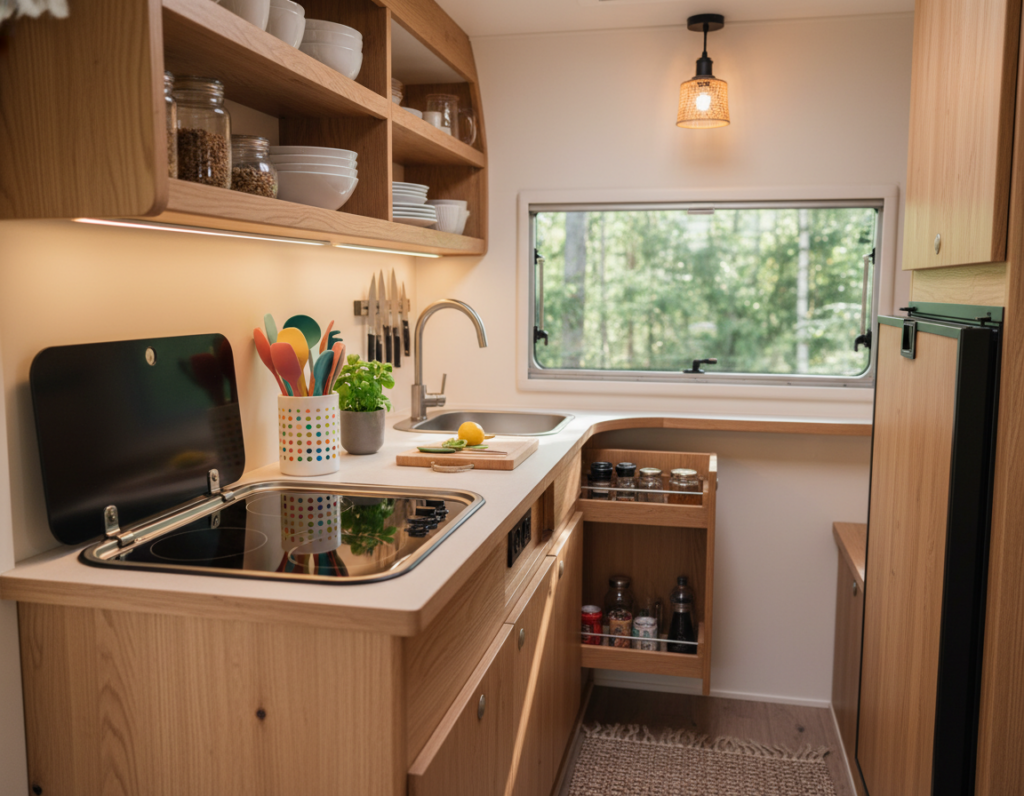
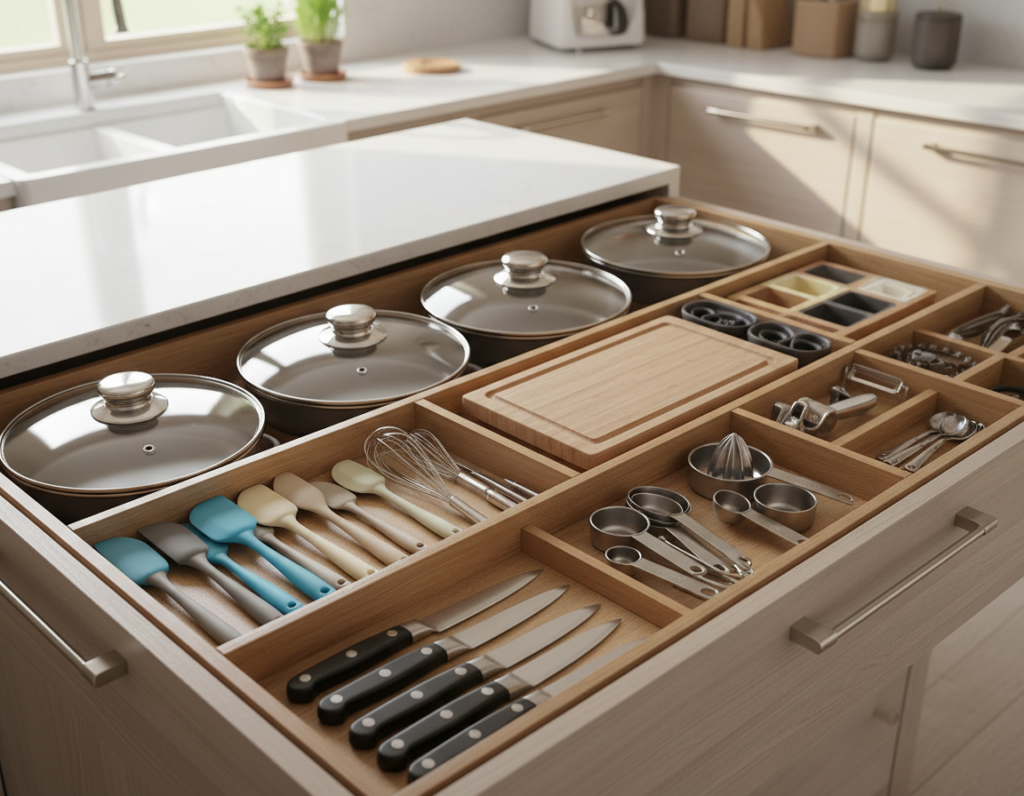
They note that a dedicated sink, stove, and fridge turn cramped space into a real cooking area. Smart storage like cabinets, a drawer for utensils, and a side pantry keep things tidy and easy to reach.
Counter space is precious, so every inch of countertop must work hard. Many builders add a fruit hammock or a cutting board as simple, high-value accessories.
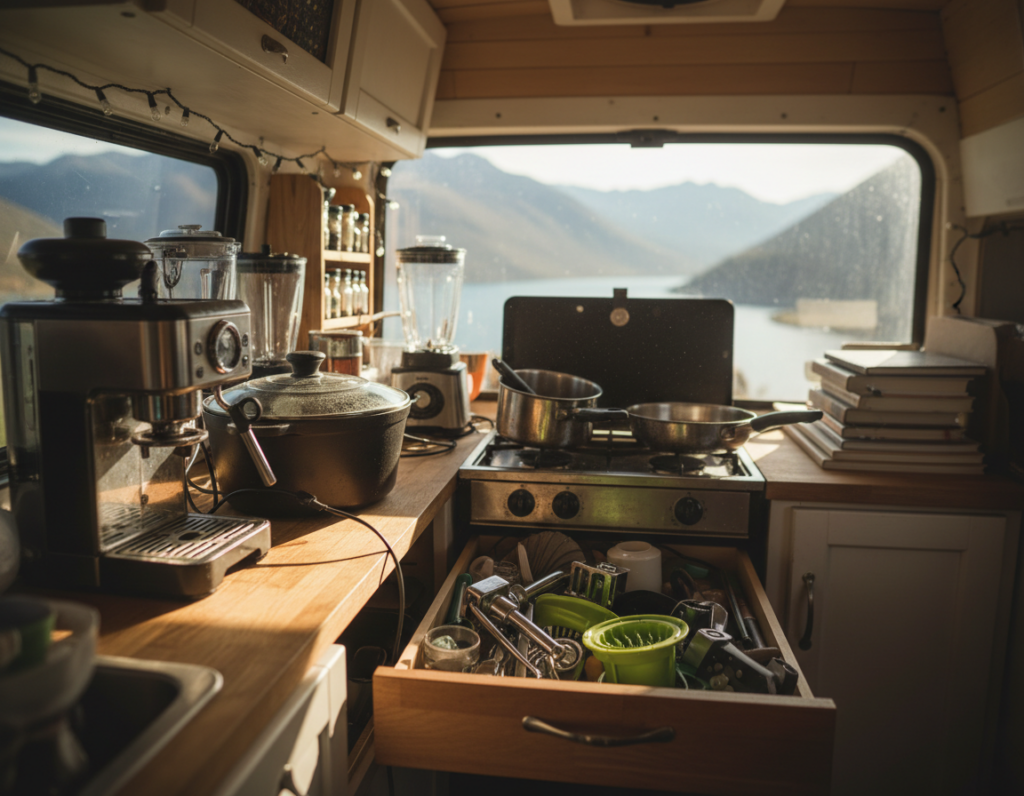
When planning a build, people should weigh appliance options and water system needs. A small oven or a propane stove can make the back of the van feel like home while preserving plenty of room for travel and adventures.
Essential Planning for Your Minimalist Camper Kitchen
Early layout choices guide every later decision in a van conversion. Good planning helps avoid wasted time and unexpected costs. It also shapes how well the cooking area performs during daily life and travel.
Defining Your Cooking Style
They should start by defining how often they will prepare meals inside the van. If someone cooks daily, a durable stove and a proper fridge matter more than decorative finishes.
Decide if you need a full system or a pared-down setup. This choice affects counter space, storage, and the water setup you select.
Balancing Weight and Space
Weight distribution matters for safe handling. Place heavy items like the fridge and cabinets so the load balances between the driver and passenger sides.
Experts recommend checking the work required to secure appliances. Proper anchoring keeps cabinets, stoves, and the water tank stable during travel.
- Define cooking needs to guide the overall kitchen design.
- Match water and storage systems to camping frequency.
- Plan counter and pantry space so meals feel easy to prepare.
Choosing the Right Stove for Your Cooking Style
A stove is more than an appliance — it defines how someone will cook on the road. The right unit sets the tone for daily meals and affects layout, weight, and fuel needs.
Two-burner propane stoves remain a top pick because they let people cook inside or move a portable unit to a table outside when the weather is good. They balance power and flexibility for life on the road.
Low-profile models that sit 3–4 inches deep install flush in a countertop and preserve storage under the counter. That saves valuable space for the fridge, sink, and other appliances.
If someone has a large battery system, an induction cooktop is a clean alternative to propane. It cuts fuel needs and suits those who love cooking with electric appliances.
- Consider safety and secure propane fittings before a permanent install.
- Decide if an oven fits the meals they plan to bake at home on the road.
- Think how stove placement affects access to the sink and fridge.
Maximizing Counter Space in Small Vans
Smart hinged tops let builders add counter room only when they need it. A fold-up board near the side door creates extra prep area for meals without taking permanent room.
“Foldable surfaces are a small change that makes a big difference.”
Utilizing hinged countertops is a popular DIY approach. Many builders fit a cutting board insert over the sink to create a seamless countertop for chopping.
Integrating the sink and stove into the counter keeps work surfaces clear. A front-loading fridge tucked under the counter saves room and keeps the layout efficient.
- Use a slide-out drawer or fold-down table for extra work space.
- Keep a dedicated drawer for tools to reduce clutter on the counter.
- Install overhead cabinets to move storage off the countertop.
Always verify the counter is sturdy for appliances, especially heavy induction cooktops or a propane stove. Good design balances storage, appliances, and safe work surfaces for van life.
Selecting the Best Fridge for Your Needs
Your fridge choice determines how much usable floor and counter space remains in the build.
Top-loading models often run longer and tuck neatly beneath a bench. They free floor area and can hide out of sight when not in use.
Front-loading fridges are taller and narrower. They fit under counters and mirror a home-style layout, which helps when someone cooks in the kitchen area.
- Measure first: always check height, depth, and door swing so the unit fits the planned design and space.
- Power and system: verify voltage and draw to match the van electrical setup for reliable operation during travel.
- Freezer needs: consider models with a small freezer if frozen storage matters for long trips.
Choosing between these options comes down to how the fridge will be used and where it will live. A well-chosen fridge keeps food fresh and the appliances layout functional for life on the road.
Integrating a Functional Sink and Water System
A well-planned sink and water system keeps daily chores efficient and prevents costly leaks on the road. Good placement and a simple plumbing approach save time and create more usable counter space for cooking tasks.
Portable Water Systems
Many van builders choose a portable water system with a hand or foot pump to avoid complex plumbing. This DIY-friendly route keeps fresh water accessible and reduces the chance of frozen lines or slow leaks.
A deep sink gives plenty of room for washing without splashing the counter. When space is tight, tuck tanks under benches and route lines to the side near the door for easy refill access.
Faucet and Shower Integration
Choose a faucet with a pull-out hose to double as a showerhead. This one change expands function without taking extra room on the countertop.
- Seal everything: proper gaskets prevent damage to cabinets and the van floor.
- Hinged cover: use a lid over the sink for extra counter space when it is not in use.
- Match needs to use: simple setups suit most people; a robust system works for longer trips with a fridge and more storage.
Smart Storage Solutions for Pantry Items
Efficient pantry design turns narrow gaps and deep cabinets into usable, visible storage. This approach saves counter area and keeps the kitchen tidy while on the road.
Pull-out shelving is a standout solution. It makes cans, jars, and boxes easy to reach and reduces wasted space under benches or in the garage area of the van.
Overhead cabinets work well for dry goods. A dedicated drawer for accessories keeps utensils and small things organized so they do not clutter the prep surface.
- Build around the fridge: use narrow shelves or cubbies to use every inch.
- Under-bed and side storage: tuck bulk items away to keep the kitchen area clear.
- Clear containers: store staples in see-through jars to avoid wasted food.
They should plan how much pantry space they truly need to avoid excess items. Intentional planning plus pull-outs and labeled containers makes meal prep faster and the van more comfortable for daily life.
Popular Layouts for a Minimalist Camper Kitchen
A practical layout makes meal prep faster and keeps the interior balanced on the road. Choosing one of three common arrangements helps builders match function to travel style.
Behind the Driver Seat
This back-of-van design centralizes the stove, sink, and fridge in one accessible block. It stores all cooking tools and meals together for quick access.
Advantage: easy organization and a compact workflow. Drawback: it can feel cramped inside during bad weather, but it frees the side doors for cooking outside.
Passenger Side Galley
The passenger side galley places the counter along the van wall so someone can cook while enjoying the view. It often offers more counter space and natural light.
Split Kitchen Design
The split layout spreads appliances on both sides to balance weight. Placing the fridge on one side and the stove or sink on the other evens load for safer driving.
- Best for balance: split setups are ideal when weight distribution matters.
- Flexible options: modular units and slide-outs let people adapt the layout for cooking outdoors or inside.
- Plan flow: consider how a sink opposite a stove affects movement and storage access.
Safety Considerations for Indoor Cooking
A safe on-board cooking setup balances ventilation, detection, and careful placement of appliances.
Install a carbon monoxide detector whenever a propane stove or oven is inside the van. CO alarms are mandatory for any living space that uses gas and they must be placed near sleeping areas and the cooking zone.
Ensure steady ventilation while cooking. Open vents or roof fans keep exhaust moving and prevent gas buildup. When weather allows, cook with the door cracked or use an exterior setup.
- Have a professional or certified guide verify any propane system during a DIY build to avoid leaks.
- Consider an induction cooktop as a safer alternative to propane to eliminate fuel leak risk.
- Never leave a stove unattended while cooking, even for quick tasks in the back of the van.
- Design the layout with a clear path to the door for fast egress in an emergency.
- Regularly inspect the water system for leaks; moisture near electrical components creates serious hazards.
Routine checks and simple habits make the kitchen and living area safer for daily life and camping trips. For practical tips on safe meal prep and equipment choices, see these tips for cooking in a camper van.
Conclusion
Closing the build starts with clear priorities about how the space will be used day to day.
Building a compact galley is an exciting project that lets someone shape a space for real travel needs. When they choose appliances and storage, good kitchen design makes daily meals easier and safer.
Whether they pick a simple setup or a full galley, practical kitchen ideas and creative options help maximize limited space. Prioritizing quality, ventilation, and certified installs protects gear and people on the road.
With thoughtful choices and a little creativity, anyone can enjoy great meals during their adventures. This guide aims to inspire the next step while you’re planning a build that fits your life.