The first night often feels great, but comfort can fade quickly when design choices clash with daily use. Many DIY builders found that a cozy impression hid flaws in structure, storage, and airflow.
They learned that a proper mattress mattered. The authors chose a 10-inch innerspring mattress to avoid the sleep heat associated with foam. That change improved night comfort without sacrificing support.
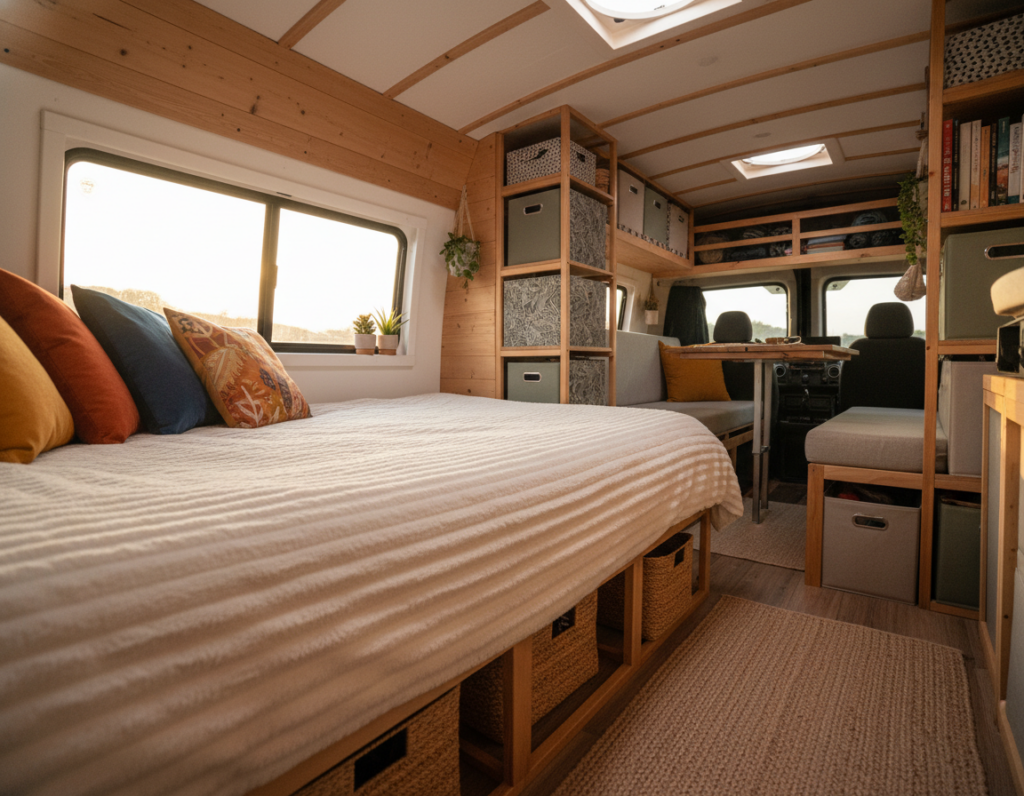
Height and storage played a key role. A 31-inch platform allowed bikes and gear to slide under the frame after removing front wheels and seats. This multi-functional platform created more usable space while keeping the floor clear.
Good planning during the conversion — even installing cabinetry before insulation — kept the project functional on the road. Thoughtful layout of the bed platform and storage system reduces constant fixes and keeps the living room of the vehicle usable over time.
Why Your Initial Camper Van Bed Setup Fails Over Time
What feels snug at camp can unravel quickly under constant movement and time. Many designs look tidy on day one but struggle after miles of bumps and weight shifts.
Common Design Oversights
Builders often skip matching cabinets to the curved walls, which wastes space and weakens attachment points. The authors used a cardboard template to trace the profile and make cabinetry fit precisely.
Storage integration is smart, but cabinets must be built to travel. Angled doors doubled as a backrest, turning the sleeping area into a lounge at night while keeping function intact.
The Impact of Road Vibration
Road vibration loosens fasteners fast. They installed horizontal 2×4 studs between metal ribs to create solid mounting points and anchored the system to the floor and ribs.
- Secure fasteners and perpendicular supports prevent racking.
- Attach frames to the ribs or floor to stop shifting.
- Test the layout after a short trip and retorque hardware.
Proper installation and attention to structure keep a build comfortable long term.
Evaluating Your Current Bed Platform Design
Assessing the frame, rails, and plywood reveals the true strength of a sleeping platform.
Start with load checks. Place the full-size 10-inch innerspring mattress on the platform and press across both removable sections. Look for flex, creaks, or separation at the joints.
Inspect the rails and anchors next. Aluminum angle rails are durable and light, but fasteners must be tight and anchored to the floor or ribs. Loose mounts mean motion and noise at night.
- Confirm 3/4-inch, 7-ply plywood spans without mid supports.
- Verify the two removable sections seat firmly on the rails.
- Check the floor mounting points and the overall system for racking.
A removable platform gives flexible space for hauling large items. If the platform feels unstable, reinforce the rails or upgrade the plywood to preserve comfort and storage longevity.
Selecting Durable Materials for Your Van Build
Choosing the right materials early prevents weak spots and costly fixes down the road. Durable choices influence weight, longevity, and noise for any conversion.
Plywood vs Extruded Aluminum
15 series extruded aluminum offers excellent strength-to-weight performance for a bed platform system. It resists flex and stays true through miles of vibration.
Plywood remains a practical, low-cost option. The authors used 1/2-inch sanded plywood for cabinetry and 1/4-inch plywood for back panels. Seal plywood well to prevent moisture and mold.
Choosing the Right Mattress
Mattress choice affects heat, support, and weight. An innerspring sleeps cooler than most foam options and can reduce night heat retention.
Balance comfort with the platform’s dimensions and height to maintain usable space and storage beneath the platform.
Hardware and Fastener Quality
Hardware reliability prevents rattles and loosening. Use high-quality bolts and screws and apply blue Loctite 242 on 80/20 or similar extrusion joints.
- Drill press and cobalt drill bits for precise holes.
- Measure each piece to keep the system square and level.
- Use a 1-1/4-inch hole saw to add finger holes for removable cabinet bottoms.
Finish smart: Varathane One Step water-based stain and polyurethane saved time and protected wood in the authors’ build.
Structural Integrity and Weight Distribution
Structural decisions determine whether a build stays solid after hundreds of road miles.
Even load distribution matters. The authors used 2×4 legs and angled brackets to anchor the platform to the floor. This approach keeps the weight of the mattress and gear from concentrating on a few fasteners.
They added L-shaped angle iron across the width of the plywood to stop bowing. That cross-brace keeps the plywood flat when someone sits on the edge or stores heavy bikes and tools beneath.
To avoid drilling new holes in the exterior, bolts and washers were fished behind the metal ribs. This preserved wall integrity while creating solid anchor points for bolts and screws.
Practical layout choices include mounting the electrical system to the back of the platform’s front panel. That frees up storage space and keeps the fuse box and solar controller accessible.
- Maintain even weight across the frame or floor to prevent sagging.
- Secure wood supports and metal brackets tightly to stop movement on the road.
- Choose a platform height that gives room to sit up—31 inches plus a 10-inch mattress worked well here.
Ergonomic Considerations for Long-Term Comfort
A few degrees of recline can turn a sleeping platform into a usable lounge for hours. The authors focused on how people sit and read as much as how they sleep.
Creating a functional backrest started with angled cabinet doors that double as a comfortable “couch.” They measured a standard couch back angle and matched that incline to avoid back strain.
To line up the doors with the mattress top, they added a mounting board to raise the hinges. This small change made the doors sit flush and act as a stable back support.
Multi-use cabinets that work
- The cabinetry was split into three compartments for clothes and extra bedding.
- Each compartment keeps storage organized so the living space stays tidy.
- Repurposing storage furniture saves space and improves daily comfort.
“A well-angled backrest keeps the space usable all day and prevents the slow fatigue that comes from poor posture.”
Test every angle and height before finalizing the design. If someone will spend a lot of time inside, these ergonomic decisions pay off in daily comfort and reduced strain.
Optimizing Under-Bed Storage and Access
Maximizing the garage under the platform starts with deciding which items need frequent access and which can be stowed long term.
The authors mounted fork clamps to hold their bikes securely and marked each clamp with blue painter’s tape to guarantee repeatable placement. Wheels live in custom cloth bags to stop rubbing and damage during travel.
Front access matters: a large door on the front of the bed platform doubles as a fold-up table and makes quick retrieval easy. This single panel proved more useful than the removable cabinet bottoms with 1-1/4 inch holes, which were seldom used.
Keep things simple: heavy plastic tubs replaced expensive drawer slides and organized tools and camping gear more reliably under the floor. Marking each tub location speeds loading and prevents shifting.
“A defined place for each piece of gear turns under-platform space from clutter into a confident system.”
- Balance security and access for heavy items like bikes.
- Use labeled tubs and fixed mounts to keep weight stable.
- Design front access so frequent items are within reach.
For more layout ideas and practical tips, see camper storage ideas.
Finishing Touches for Durability and Aesthetics
A careful finish protects the wood and keeps the interior looking new for years.
Applying protective polyurethane was the authors’ final step. They picked a water-based product for its low VOC content and fast dry time. That choice made the small space safer to work in and allowed them to return the van to service quickly.
Applying Protective Polyurethane
The authors applied three thin coats, sanding lightly between each pass. A nylon-bristle brush gave even coverage and reduced visible brush marks.
Water-based polyurethane forms a clear, durable film on plywood and trim. It resists scratches, stains, and the temperature swings common in mobile life.
Managing VOCs in Small Spaces
Even low-VOC options need ventilation. They aired the vehicle and used fans during curing to keep fumes low and drying uniform.
- Choose low-odor, water-based finishes for safer indoor work.
- Sand between coats to boost adhesion and long-term durability.
- Match stain—Honey Pecan in this build—to cabinets and the platform for a cohesive look.
“A proper finish protects your investment and makes storage, screws, and surfaces last through heavy use.”
Maintenance Tips to Prevent Squeaks and Wear
Routine checks and small fixes kept rattles from growing into real problems on long trips. A quick inspection after a weekend drive finds loose fasteners before they fail.
Use blue Loctite 242 on all bolts and retorque them after 100 miles. That simple step stopped many hardware failures in the authors’ diy camper van build.
Piano hinges are recommended for cabinetry because they spread load along the door. The authors deburred cut hinge ends with an iron file and used many screws to secure the hinge into plywood, improving hold over time.
When a bed platform begins to creak, check mounting points, bolts, and screws first. Tightening fasteners or replacing a worn screw often cures the noise.
- Inspect clamps and bike mounts to keep gear secure during the road haul.
- Lubricate moving parts, and replace stripped screws with a slightly larger bit or a teak plug in plywood.
- Test piano hinge alignment and file any sharp edges for safe, long-term use.
“Regular maintenance turned minor noises into one-time fixes and kept the conversion reliable for years.”
Conclusion
A resilient platform and smart storage turn temporary comfort into lasting livability. Thoughtful material choices, like extruded aluminum or sanded plywood, create a strong base that resists road wear and keeps the sleeping surface stable.
Ergonomics matter: a usable backrest and correct heights make the space feel larger and more relaxing. Regular checks of bolts, fasteners, and hinge alignment stop small noises from becoming major repairs.
The aim is simple: build a system that supports rest and daily life. For more detailed layouts and options for medium builds, see the ultimate guide to camper van beds.