Managing a tiny living space on the road starts with intentional storage. They measure every inch and give each item a clear place. That prevents clutter and keeps life more calm while traveling.
Smart ideas, like hooks on the wall or the back of a cabinet, help maximize limited space. Using bins for the kitchen and bed area keeps items off the floor and improves access.
For example, moving bulky gear to the roof or adding easy-access cabinets frees up room inside. Small changes make the space feel more like home and less like a jumble of things.
These simple tips focus on storage, bins, and clever use of side areas. They help people keep a tidy, functional campervan for long trips and everyday use.
Assessing Your Space for Better Camper Van Organization
Start by mapping every nook and shelf to see exactly how much usable space exists. Measure cabinets, drawers, and the floor to visualize where items will go. This simple step reduces guesswork and prevents last-minute shifts on the road.
Next, assign a place for each piece of gear. When every tool, kitchen item, or bedding has a clear spot, things stay put during travel and life gets calmer.
For example, identify the best spots for the bed and the table, then group kitchen supplies near the pantry area. That creates an efficient layout for van life and keeps daily tasks quick.
- Measure each cabinet and drawer before packing.
- Label zones for cooking, sleeping, and stowing daily items.
- Use this assessment to pick storage solutions that fit the room and floor plan.
These tips help turn tight spaces into a functional home on the road. For sleeping layout ideas, see sleeping options for camper van conversion.
Implementing Smart Bin Systems
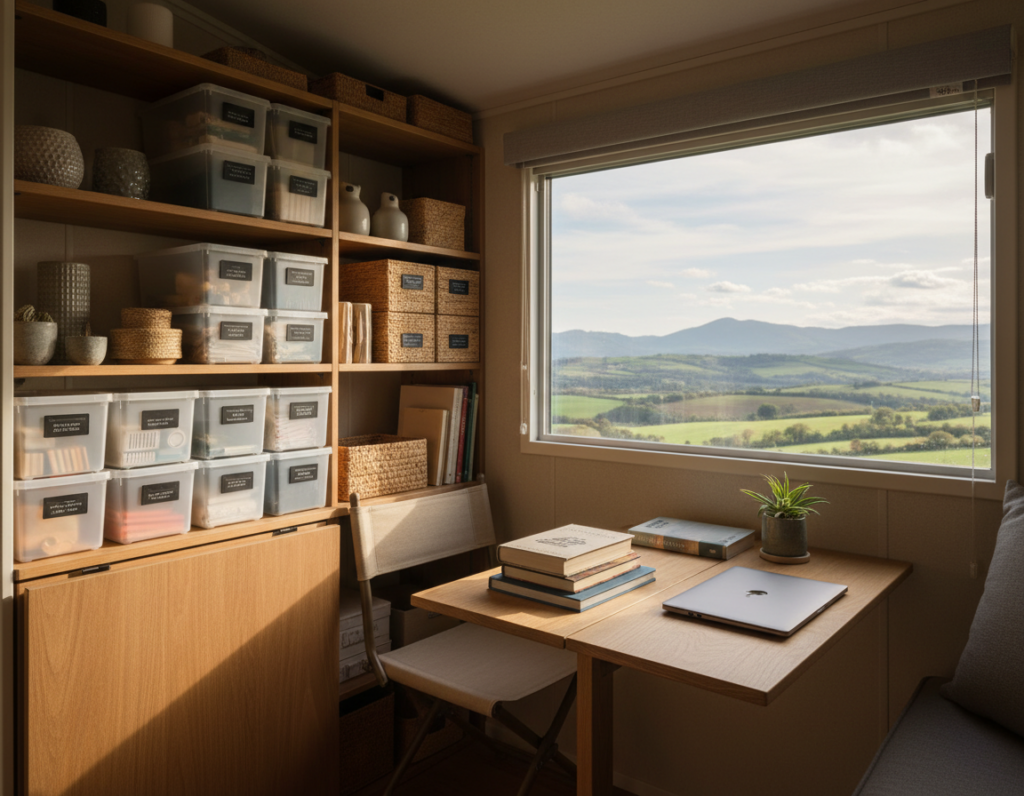
Using targeted bins creates tidy zones so kitchen tools and tech have a reliable place. A simple system gives each category a named box and a clear spot in a drawer or cabinet. This cuts time spent hunting for things and reduces movement while driving.
Categorizing Gear
They group similar items together: food in one box, tools in another, and shoes or outerwear in a separate container. Labeling makes access faster and helps keep each drawer tidy.
For example, dedicated boxes for tech can keep fragile items secure. The Radius Outfitters 5500 Gear Box is ideal for devices like Starlink and currently offers a 15% discount until 6/19.
Choosing Lightweight Containers
Pick plastic bins that are light but sturdy. Using lightweight plastic bins from The Container Store helps categorize gear without adding weight.
Fit bins to the space so they slide into cabinets or sit cleanly under the table. Hooks and small boxes add extra storage where cabinets leave gaps.
- Use drawer-friendly boxes for small items and utensils.
- Reserve one clear bin for food for quick pantry checks.
- Store tools in a low, secure spot to stop shifting on the road.
Maximizing Vertical and Hidden Storage
Raising storage into vertical zones turns wasted height into useful space. This approach keeps the floor clear and makes daily life on the road easier.
Utilizing Ceiling and Wall Areas
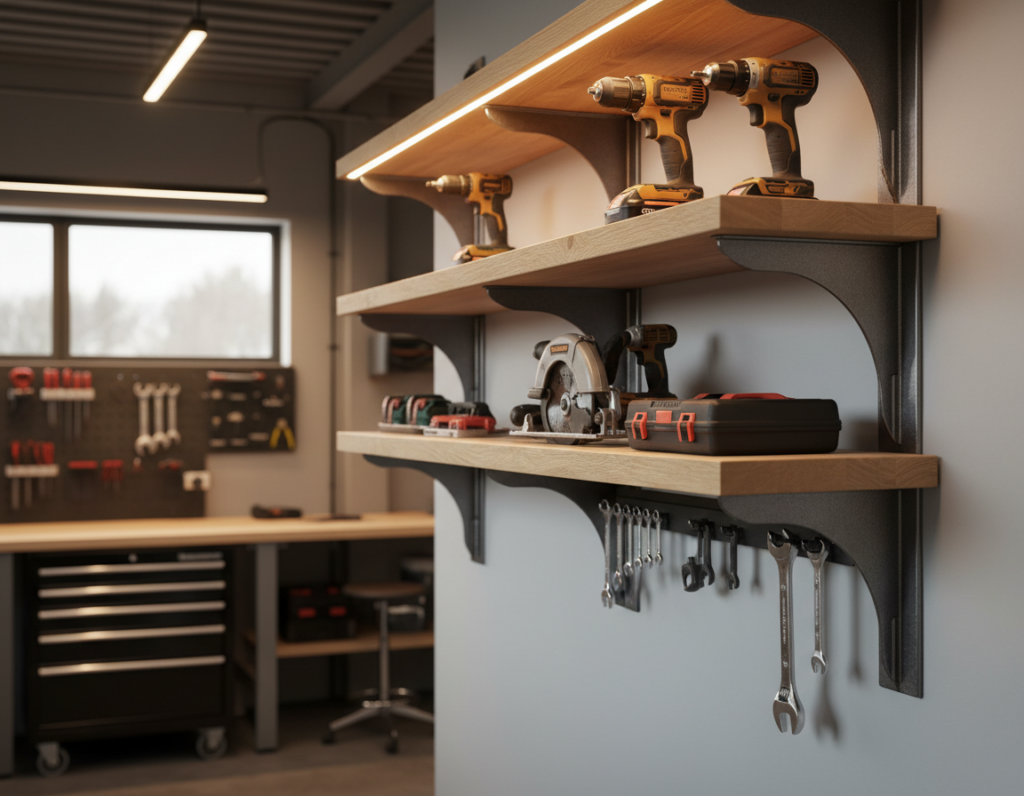
They can add shelves, slim cabinets, or low-profile racks along the wall to keep items off the floor. Hooks near the door and the table clear shoes and jackets fast.
Hidden nooks work well too. A drawer system or boxes under the bed store seasonal gear and bulk items that are not needed daily.
Practical ideas include:
- Install narrow shelves above cabinets to hold small boxes or cooking gear.
- Add hooks on the wall or the back of doors to hang shoes and jackets.
- Build pull-out drawers under the bed for tools, linens, or extra pantry items.
By using every side, roof, and back area, the campervan keeps essentials handy without clutter. This small shift in thinking makes van life feel larger and more efficient.
Streamlining Clothing with Packing Cubes
Packing cubes turn a messy pile of clothes into neat, easy-to-find bundles that save room and time.
They are ideal for anyone who wants efficient storage and clear access to daily items. By assigning one cube to shirts, another to pants, and a third to socks and underwear, the space stays tidy and predictable.
Using soft-sided bags lets clothes compress without damage. Cubes slide under the bed, tuck onto a shelf, or stack on the table so everything is in reach during van life.
Label each cube for fast retrieval. This system stops the need to dig through piles when packing or getting dressed. It also saves measurable space in a campervan and cuts time spent sorting.
- Dedicate one cube per clothing category.
- Keep a lightweight spare cube for laundry or overflow.
- Place frequently used cubes near the sleeping area for quick access.
Implementing cubes makes the small living area feel larger and more functional. Simple steps like these reduce clutter and keep travel routines calm.
Utilizing Seat Backs and Door Panels
Seat backs and door panels are often overlooked, yet they offer ready-made pockets and flat areas that reclaim floor and shelf space. Adding dedicated organizers turns these surfaces into practical storage without cutting into living areas.
Seat Organizers
The Overland Gear Guy Sprinter III Seat Organizer is ideal for storing charging cords, dog poop bags, and baby monitors. It fits behind a seat and keeps small items from sliding into corners while driving.
Giving each item a consistent place reduces time spent searching and keeps the main table and cabinets free for larger gear.
Door-Mounted Storage
Door panels can hold pouches, shoe pockets, or slim tool sleeves. This keeps tools and shoes within easy reach and uses space along the side that would otherwise sit empty.
“Turn every door and seat back into a functional storage area to make the interior feel more spacious.”
- Use seat-back organizers for small things and charging cords.
- Add hooks or pouches on doors for shoes and tools.
- Keep frequently used items near entry points for quick access.
Managing Trash and External Gear
Designating a weatherproof bin for refuse and firewood keeps the living area clean and usable. It helps prevent smells and clutter inside and preserves limited space for daily life on the road.
The Overland Gear Guy Spare Tire Trash Bag is water-resistant and ideal for trash or small firewood. Storing waste outside reduces odors and keeps the floor and cabinets free for real storage.
The Owl Vans Medium Expedition box works well for hoses, tools, and a LavaBox portable firepit. Using an outside box saves interior storage and gives a clear place for bulky items.
Practical tips:
- Keep trash in a weatherproof bag on the back or hitch to stop smells inside.
- Store hoses, tools, and fire pits in a single expedition box to free cabinet and drawer space.
- Reserve bins for food and a dedicated drawer for bed items to minimize clutter indoors.
Tip: Use code BEARFOOT to save 10% on any LavaBox and upgrade outdoor gear without stretching space inside the vehicle.
Optimizing the Kitchen and Pantry
A tidy onboard kitchen starts with choices that let cookware stack neatly and tools live where they’re easy to reach.
Nesting Cookware
Use nesting pots and pans to save cabinet and shelf space. Stacking items like lids inside the largest pan reduces bulk.
Tip: Place fragile pieces between towels to prevent scratches when stored under the bed or in a lower cabinet.
Magnetic Tool Holders
Install a magnetic strip on a wall or the back of a cabinet to hold knives and metal tools. This frees drawer space and keeps tools visible.
“A single strip can replace a crowded drawer and speed up meal prep.”
Pantry Labeling
Use clear plastic bins and labels for food and dry goods. Group similar items together for fast access during cooking.
- Label bins for snacks, baking, and canned food.
- Keep a small drawer for spices and a hook for kitchen towels.
- Reserve one cabinet for cookware and another for daily-use items.
Maintaining Order Through Regular Tidying
A quick five-minute tidy each day prevents small messes from turning into big problems on the road. This simple habit keeps the living area usable and reduces stress during travel.
They should make it routine to put items and gear back in their place after use. Returning bins and small tools right away stops clutter from building up.
Small, consistent actions keep the storage system effective over time. A short weekly reset—clearing crumbs, checking pantry bins, and stashing loose items—saves time later.
“Spend a few minutes each day to keep the space tidy; it’s the best way to enjoy long trips.”
- Make a habit: return things to a labeled place.
- Use one clear bin for daily essentials so items stay visible.
- Schedule a weekly tidy to prevent little messes from growing.
These simple tips help keep the van feeling like home and make living on the road easier to enjoy.
Conclusion
Thoughtful placement of everyday items turns cramped quarters into a usable, welcoming home. Mastering camper van organization starts with small, repeatable choices that keep daily routines simple.
By using smart storage solutions and clear spots for items, the limited space becomes easier to manage. Consistent habits make van life feel less chaotic and more comfortable.
Start with one change today — a labeled box or a seat-back pocket — and build from there. Small adjustments add up, letting travelers focus on the journey instead of the clutter.