Designing a small cooking area in a mobile home is like playing Tetris: every inch matters. Many owners discover that poor planning turns a relaxing trip into a cluttered, stressful experience on the road.
When a layout ignores how to use each room, the lack of usable space makes even the coziest rig feel cramped. Professional designers note that thoughtful planning keeps the daily travel routine calm and efficient.
Smart organization and a few practical ideas prevent the tiny mistakes that pile up over time. By applying simple tips, they can transform a compact cooking area into a functional home on wheels that supports van life and happy travel.
The Hidden Costs of Poor Camper Van Kitchen Storage
Overlooked design gaps can double costs and halve comfort in a tiny food prep area. Small mistakes in layout waste precious space and turn daily tasks into a hassle.
Investing early in professional storage solutions often prevents expensive retrofits later. A basic 2D plan typically runs between $150 and $500, which is small compared with replacing cabinets or refitting the counter after a build.
Common fallout includes cramped workspace, poorly placed fridge or sink, and drawers that won’t fit cookware. These oversights force owners to buy add-on storage ideas or custom cabinets while on the road.
- Measure every drawer and cabinet to avoid surprises.
- Plan fridge and sink placement to protect counter function.
- Secure gear to prevent rattles and damage during travel.
Smart planning saves money and keeps living areas calm. With thoughtful design, the camper kitchen becomes a functional part of life rather than a constant source of stress.
Overloading Cabinets with Unnecessary Kitchen Accessories
A crowded cabinet full of single-use gadgets quickly shrinks usable space and raises stress on the road. Owners often pack a range of appliances and racks that rarely see use.
The Trap of Excessive Gadgets
Buying a dedicated fridge or a novelty spice rack seems smart until there is no place to store it. A cluttered pantry hides essentials and makes simple meals take longer.
Assessing Your Daily Cooking Needs
Start with a short checklist:
- Which meals repeat most often? Pick tools that cover those dishes.
- Limit appliances to those used weekly, not occasionally.
- Choose multi-use utensils, bowls, and a compact stove or oven alternative.
Every item should earn its spot. A minimal setup frees counter and shelf space for food and essential cookware. Use cabinet doors and a single shelf to store spices and small items, keeping the area tidy and efficient.
Ignoring Vertical Space in Your Camper Van Kitchen Storage
Too many owners treat vertical surfaces as decoration, not as prime real estate for useful gear. Walls and cabinet doors offer simple ways to free counter inches and reclaim cabinet room.
Utilizing Magnetic Strips and Wall Racks
Magnetic strips hold knives and metal utensils off the counter. A 2025 Winnebago Solis owner can show how strips keep blades secure during transit and clear the stove area for safer cooking.
Hooks, racks, and adhesive shelves convert narrow wall space into a functional pantry for spices, bowls, and food containers. Mounting a spice rack on a cabinet door saves shelf room and keeps seasonings visible.
- Use a magnetic strip for knives and metal tools.
- Install wall-mounted shelves to hold small appliances and essentials.
- Add hooks for oven mitts, utensils, and a compact rack for bowls.
“Every inch of wall can reduce clutter and make the setup more efficient.”
Smart vertical solutions ensure counters stay clear and cabinets stop overflowing. These small changes make the camper kitchen more organized for life on the road.
Failing to Secure Items for Life on the Road
When pots slide and spice jars rattle, the result is more than noise—it is damage and danger. Small shifts can break dishes, dent cabinets, and scatter food across the floor.
Every drawer and door must latch. Loose drawers send gear into aisles during sudden stops. A simple latch prevents smashed plates and torn cabinet faces.
Use non-slip matting inside drawers and on the counter. That keeps jars, utensils, and cooking tools from shifting while in motion.
- Designate a home for each item so nothing roams the living space.
- Secure heavy gear and appliances to withstand bumps and vibration.
- Fasten a Dometic portable stove and install a proper propane hookup for safe indoor use.
“Properly secured gear protects the build and keeps the driver focused on the road.”
Good organization is safety. By securing kitchen items, owners protect their investment and keep the travel life ready for the next meal.
Neglecting the Potential of Under-Sink and Corner Areas
Turning awkward nooks into organized pull-outs gives more room for food, pans, and cleaning supplies without rebuilding cabinets.
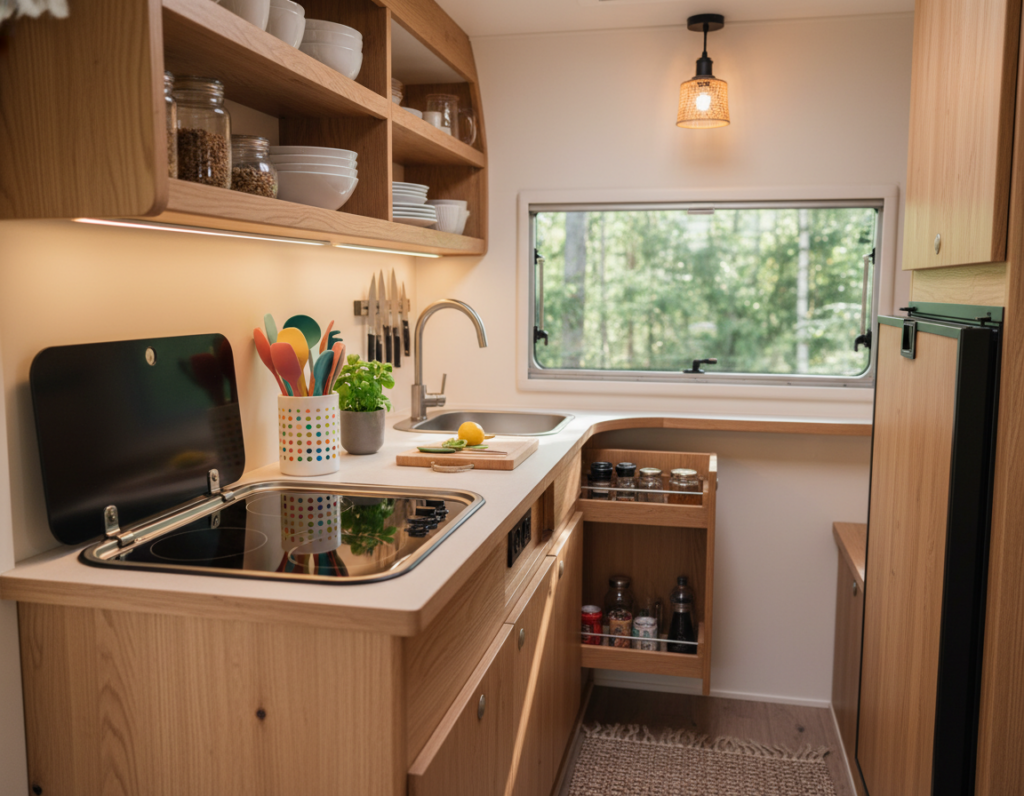
Deep corner cabinets often hide a lost world of usable space. A lazy susan or angled rack converts the back into an easy-to-reach pantry. This keeps spice jars visible and prevents lost cans from gathering dust.
Maximizing Deep Corner Cabinets
Fit a rotating shelf or pull-out carousel to bring items forward. It reduces bending and makes better use of otherwise wasted area.
Installing Sliding Shelves
Sliding shelves let owners pull the whole shelf out like a drawer. They make access simple and speed meal prep at the counter.
Waterproofing Under-Sink Zones
Protecting the base matters. Add waterproof liners and small trays for cleaning liquids to prevent leaks from ruining cabinetry.
- Tip: Label shelves for food and cleaning gear to avoid mix-ups.
- Use shallow shelves near the fridge to store frequently used items.
- Keep a dedicated drawer for small tools and spice packets.
“Optimize every corner to expand usable space and reduce daily friction.”
Choosing Incompatible Cookware for Tiny Kitchens
Ill-fitting cookware eats shelf space and makes meal prep slower on the road.
Buying large pots and pans that don’t nest or match the stove leaves little room for essentials. They fill a cabinet and block access to the fridge or sink when the door opens.
Nesting cookware sets are made for tight spaces and can save up to 50% of the space compared with traditional pans. They stack neatly, reduce clanging on bumpy travel, and free counter inches for prep.
Choose pieces that fit your oven and stove and avoid bulky appliances that rarely see use. Compact bowls and utensils designed to stack keep cabinets tidy and make it easier to find food and spice packets.
- Pick multi-use pans that nest and lock together.
- Match cookware diameter to the stove burner to save counter area.
- Prioritize quality, space-saving accessories over single-use items.
“Every piece should earn its place so the small setup stays functional and calm.”
Lack of Proper Drawer Organization
A jumbled drawer can undermine an otherwise tidy build and make simple tasks slow and frustrating.
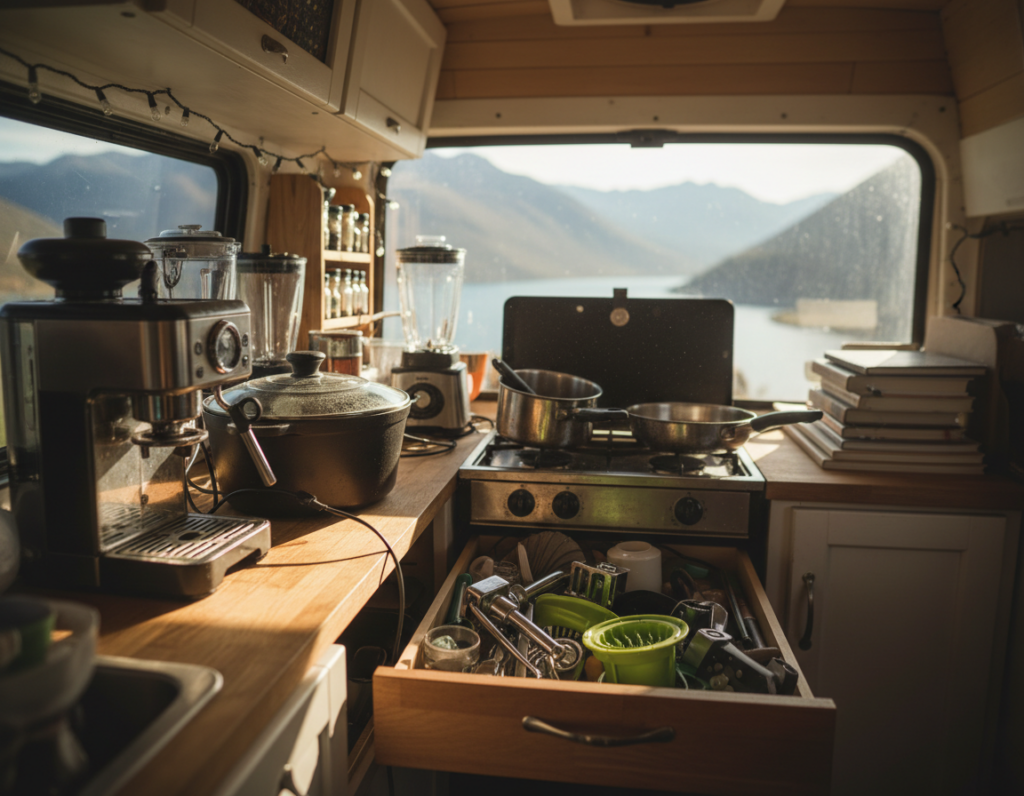
Messy drawers often hide utensils, spice jars, and cleaning supplies, turning meal prep into a time sink. This reduces usable space and makes the pantry and cabinets feel chaotic.
Implementing Modular Drawer Dividers
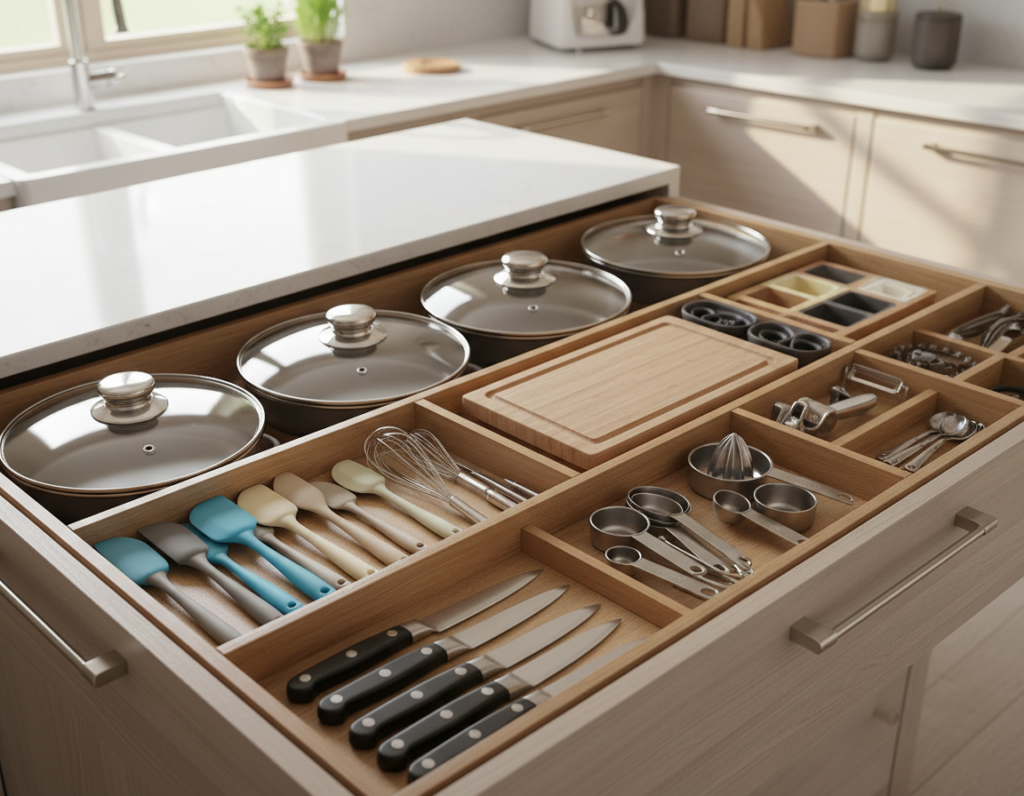
Modular dividers create designated homes for bowls, utensils, and small kitchen accessories. They keep items from shifting and make it easy to find what is needed while cooking or cleaning.
Many owners use SketchUp to draft drawer dimensions and plan dividers so everything fits inside custom cabinets. A lined drawer with non-slip material prevents motion from spreading items during travel.
- Tip: Measure each drawer and plan divider sizes before buying inserts.
- Group spices and small food packets near a single shelf or door for quick access.
- Use removable trays for cleaning gear so messes stay contained.
Well-organized drawers maximize storage and make the small kitchen feel larger. These simple solutions keep essentials ready for the next meal and reduce daily stress on the road.
Overlooking the Benefits of Outdoor Kitchen Modules
Cooking outside keeps the living area fresh and opens up shelf and cabinet room inside. Outdoor modules give a practical way to move the stove and fridge outdoors and reclaim interior space for food and essentials.
Rover Vans in California offers modular units like the Kitchen Moon that fit Sprinter and Ford Transit conversions. These systems often use a slide-out drawer or rack to host a stove, fridge, and prep area.
Keeping grease and smells outdoors reduces cleaning and protects finishes inside the home. A quality module can include a small sink and counter, giving a full cooking setup under shelter or stars.
- Move bulky appliances outside to free cabinet and pantry room.
- Choose durable, weather-resistant materials for long life on the road.
- Install a slide-out drawer for quick access to the stove and fridge.
“Adding an outdoor module is one of the best storage ideas to expand usable room and improve overall cooking function.”
Final Thoughts on Maintaining an Organized Kitchen
A tidy prep area turns small quarters into a calm and efficient home on the road.
Regular checks and a short editing session every few weeks keep tools and pans from piling up. Remove unused items and favor multi-use pieces to free up valuable space.
Keep one reliable drawer for daily utensils and a labeled bin in the fridge for perishables. Secure doors and liners to stop movement and prevent damage while driving.
For more quick hacks and practical ideas, see this RV kitchen organization guide.
With planning and simple routines, the camper kitchen can become a highlight of life on the road.