After a month on the road testing a one-drawer kitchen setup, the author boiled down what truly matters for mobile life. They found that thoughtful planning of the layout and storage beats excess gear every time.
Reliable basics — a fridge, a dependable sink, and a tidy counter — made daily routines like brewing coffee and washing dishes simple and fast.
Compact appliances, such as a portable induction cooktop or a small toaster oven, transformed meals and expanded cooking options. Water management and counter space kept mess and stress low.
The report emphasizes that smart features and efficient layout define how well a trailer or galley works. In short, good design and a few quality appliances turn tight space into a functional area for travel and meal prep.
Defining Your Cooking Style and Needs
Deciding how you like to cook is the first step toward a functional mobile galley. They should test whether they want to prepare elaborate multi-course meals or keep things simple with coffee and oatmeal each morning. This choice drives every other decision.
Placement of major items matters. A fridge under the countertop saves vertical space, while a slide-out drawer fridge can improve access and ventilation. Each option changes how storage and counter space are arranged.
The physical space in a trailer or van often limits options. Some people prefer a standing setup inside; others cook outdoors to reduce heat and smells. Professionals ask this early to shape an efficient layout that fits daily routines.
“Match your build to how you actually cook, not how you imagine you’ll cook.”
- Define if meals will be simple or elaborate.
- Decide fridge location early to optimize storage.
- Choose indoor or outdoor cooking based on available space.
Choosing the Right Small Camper Kitchen Layout
The right floor plan turns tight quarters into an efficient area for meal prep and storage. People should match a layout to how they live and travel. That decision affects counter space, fridge placement, and water access.
Rear layout
Rear layouts work well for people who love an outdoor kitchen. Cooking under the tailgate keeps grease and smells out of the living area. It also gives plenty of room for a slide-out table and prep station.
Side layout
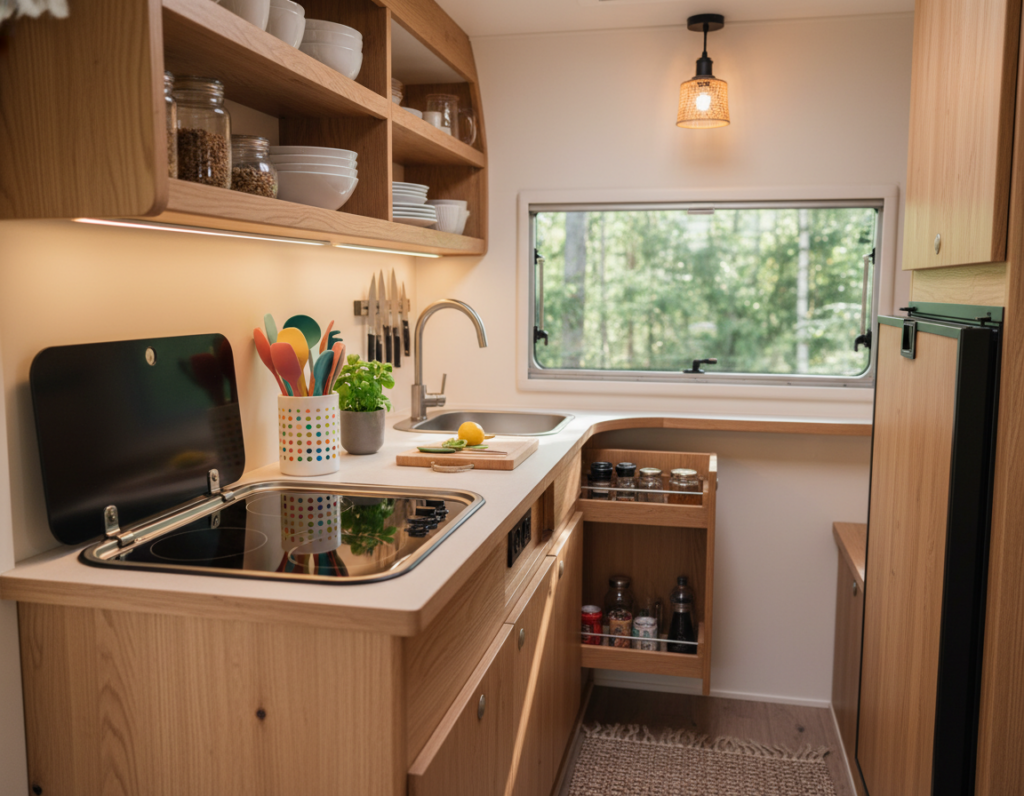
A side layout lets people cook inside with lots of counter space. Pull-out pantry units and smart storage make food and gear easy to reach. A cutting board insert over a stainless steel sink increases usable surface without clutter.
Galley layout
Galley kitchen setups are common in Sprinter and VW Crafter builds. They create a tiny-home feel with lots of storage and a logical floor plan. The r-Pod West Coast RP-202 trailer shows how to split features between interior and exterior for flexible meals on the road.
“Choose the layout that fits how you actually cook, then optimize storage around that choice.”
- Rear = outdoor cooking and plenty of room under the tailgate.
- Side = indoor prep with pull-out pantry for more storage.
- Galley = efficient floor plan with lots of room for food prep.
Essential Gear for Compact Cooking
Choosing the right gear makes cooking aboard a trailer both efficient and enjoyable. For a true small camper kitchen, prioritize a 12V fridge and a two-burner range like the No Boundaries NB10.6 provides.
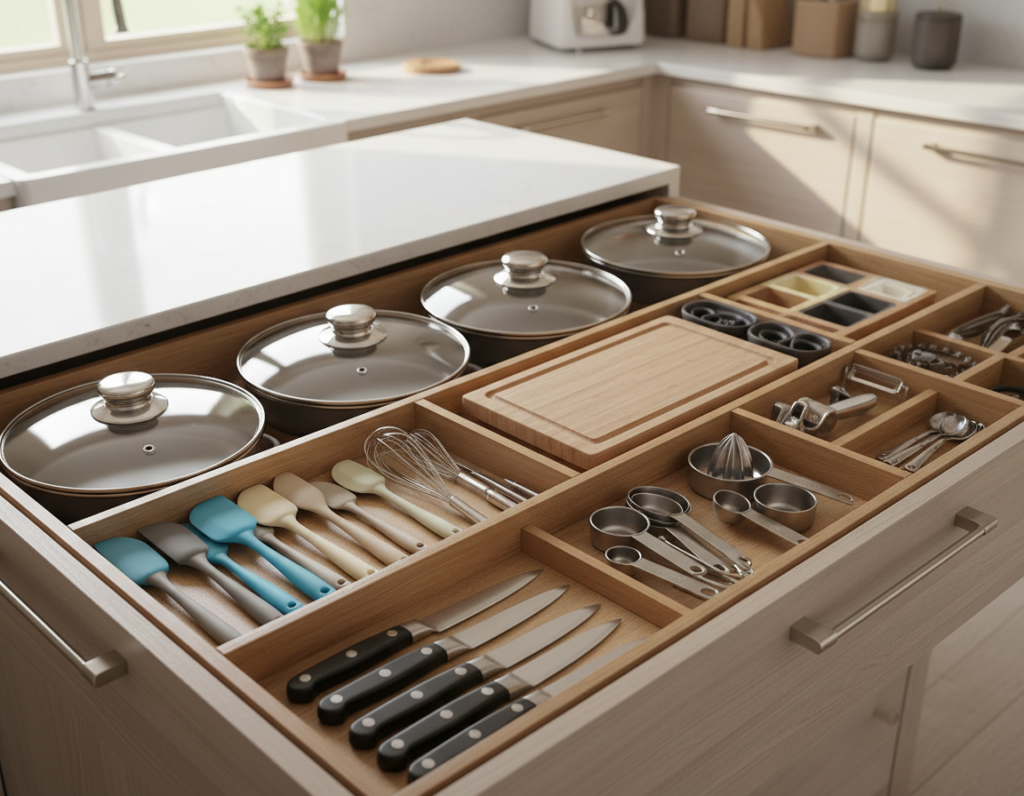
A slide-out drawer is one of the most useful features for anyone who prefers an outdoor kitchen. It keeps a compact propane stove and a prep surface within reach, then locks away when not in use.
“Use lightweight aluminum frames and locking slides rated at least 250lbs to protect the build and the floor.”
- The NB10.6 shows how a compact fridge and a 2-burner stove fit a tight layout.
- Choose lightweight ply or aluminum frames to cut weight while keeping storage durable.
- High-quality locking slides prevent gear damage and keep a heavy setup secure on the road.
- Electric owners may prefer the Rivian Camp Kitchen with its flat-top stove and 4-gallon sink.
Maximizing Storage Space in Your Camper
Good storage makes a compact galley feel roomy and calm. By planning cabinets and vertical storage, people keep counter space clear and find gear fast.
Clever Cabinet Solutions
Trail Kitchens makes Wheel Well Cabinets that use odd spaces above and behind wheel wells for reliable storage. A pull-out drawer for spices and an under-counter fridge are smart moves in a side galley setup.
The Meaner Bean teardrop shows how paper towel dispensers and washable work surfaces add function without clutter.
Utilizing Vertical Space
Overhead cabinets with gas strut lifts and mechanical latches keep gear secure while traveling. Vertical shelves and spice racks free the counter for prep and washing dishes.
- Use stainless steel around the sink for easy cleaning after meals.
- Build a pull-out pantry to hold plenty of food without wasting room.
- Integrate electrical outlets into kitchen units to power appliances while cooking.
“Pack storage around how you live, not around every item you own.”
Safety Considerations for Indoor Cooking
Cooking inside a mobile unit requires clear rules for ventilation, fuel, and electrical separation. Prioritizing these items keeps a trailer or van living area safe and comfortable on every trip.
Ventilation and Propane Safety
Always install proper ventilation when using propane. A dedicated vent fan or roof vent prevents gas buildup and clears heat and fumes quickly.
Install a carbon monoxide detector and test it before each season. These devices are the best early warning against invisible hazards.
- Use stoves with safety shut-offs, like many Dometic portable stove models or a built-in burner with automatic cutoff.
- Keep the water system sealed to avoid leaks near electrical storage and wiring.
- Never leave the stove unattended; even a compact layout can turn dangerous fast.
“Safety is the most important aspect of any kitchen setup, especially when you are cooking with propane inside a small camper.”
For more practical tips on daily cooking habits and layout choices, see this guide on cooking in a camper van.
Budgeting for Your Kitchen Design
Start your budget by choosing the right level of design: a basic 2D plan or a full 3D rendering. A simple 2D layout usually costs $150–$500. More detailed plans with dimensions and systems run $500–$1,200.
Full van-conversion designs with 3D renderings typically cost $1,200–$3,000 or more. Those prices save time and reduce costly mistakes during build.
IKEA base cabinets are a common budget choice. They cut material costs but require reinforcement for road travel in any trailer build.
- Pick plan depth: 2D for basics, 3D when systems and exact fit matter.
- Use SketchUp: visualize pantry, fridge placement, counter space and appliance fits before buying materials.
- Plan funds: allocate enough for quality appliances and reliable storage to support daily meals and real-world cooking.
“Investing in a proper layout up front prevents costly changes later.”
Professional Solutions for Your Small Camper Kitchen
Turnkey modular solutions give travelers a ready-made galley with integrated features and robust finishes. These systems speed installation and ensure a durable, functional layout for life on the road.
Rover Vans in California offers modular kitchen units like the Kitchen Moon. They fit Sprinter and Ford Transit conversions and simplify appliance and fridge placement.
Trail Kitchens in Truckee, CA, builds self-contained aluminum systems that convert into an ideal outdoor kitchen. The original Trail Kitchens Van Kitchen includes a marine-grade sink and a 14-gallon fresh and gray water system.
- Durable kitchen units: aluminum or marine-grade materials for long life and low maintenance.
- Smart storage: built-in drawers and racks keep gear accessible and protect fragile items on the road.
- Expanded counter space: flip-down tables create instant prep areas for indoor outdoor cooking.
- Integrated water and features: pumps, filtration, and plumbing make daily use simple and reliable.
Investing in a professional build ensures the layout and storage match real needs, giving more dependable performance than a DIY retrofit.
Lessons Learned from Thirty Days of Testing
After a month on the road, the most telling discovery was how much easier meal prep feels with generous prep surfaces. In a small camper kitchen, counter space changed every routine from making coffee to plating dinner.
The Importance of Counter Space
People who cook on the road need room to prep, rest plates, and stage ingredients. A cutting board that fits over a stainless steel sink creates extra room and speeds up washing dishes. The Timberleaf Classic rear galley proved that a smart floor plan can offer plenty of storage space and working area.
Essential Appliances for Daily Meals
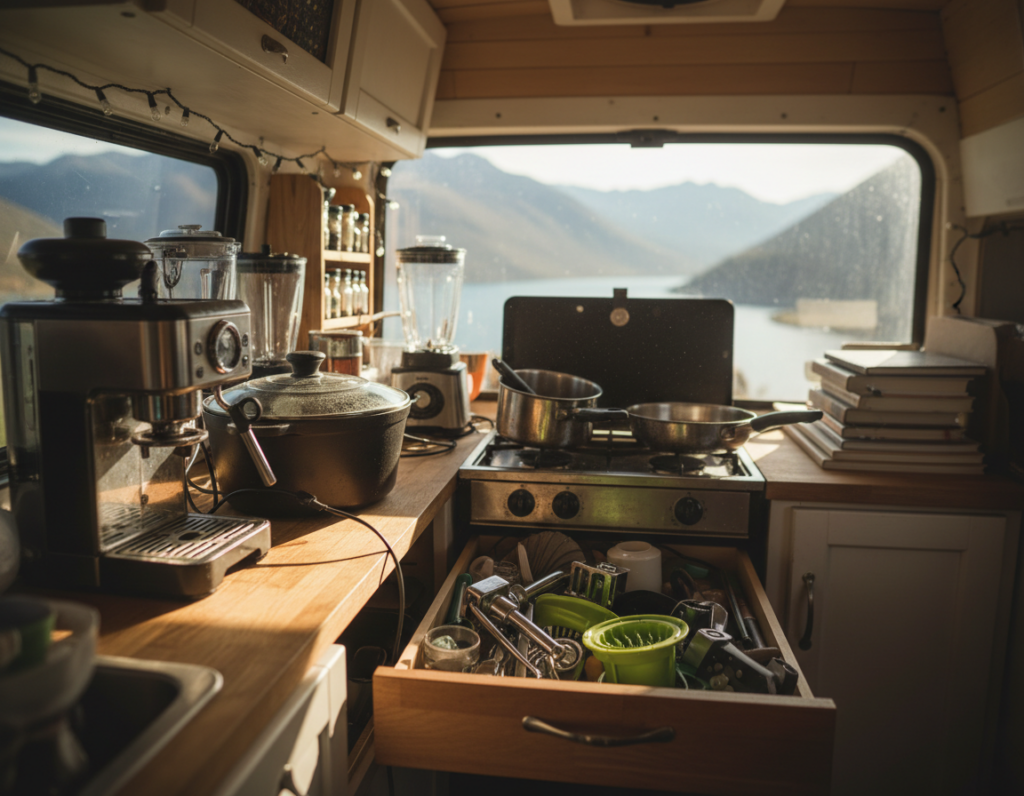
A portable induction cooktop and a toaster oven provide the most variety for long trips. Reliable appliances, a sturdy stove, and a dependable fridge keep meals consistent and reduce stress. Proper electrical outlets are necessary to run a coffee maker and other gear while traveling.
“A simple, clean setup often beats complexity when living on the road.”
- Prioritize counter space and storage in your layout.
- Choose a few quality appliances over many single-use items.
- Design for easy washing dishes with a cutting board and stainless steel sink.
For more hard-won tips, read the RV lessons I learned.
Conclusion
Design choices should make packing, prepping, and cleanup feel effortless during travel. Thoughtful planning ensures the layout supports the owner’s cooking style and storage needs.
Whether they pick a galley plan or a slide-out outdoor setup, functionality and safety must lead decisions. Investing in a reliable fridge and usable counter space changes daily life on the road.
Ultimately, the best setup fits travel habits and simplifies meal prep. By following these design principles, a traveler can build a compact living area that performs like home and makes every trip more enjoyable.