Efficient layout choices transform compact trailers into comfortable retreats. Designers focus on multi-functional furniture and clever circulation to keep interiors open while boosting utility.
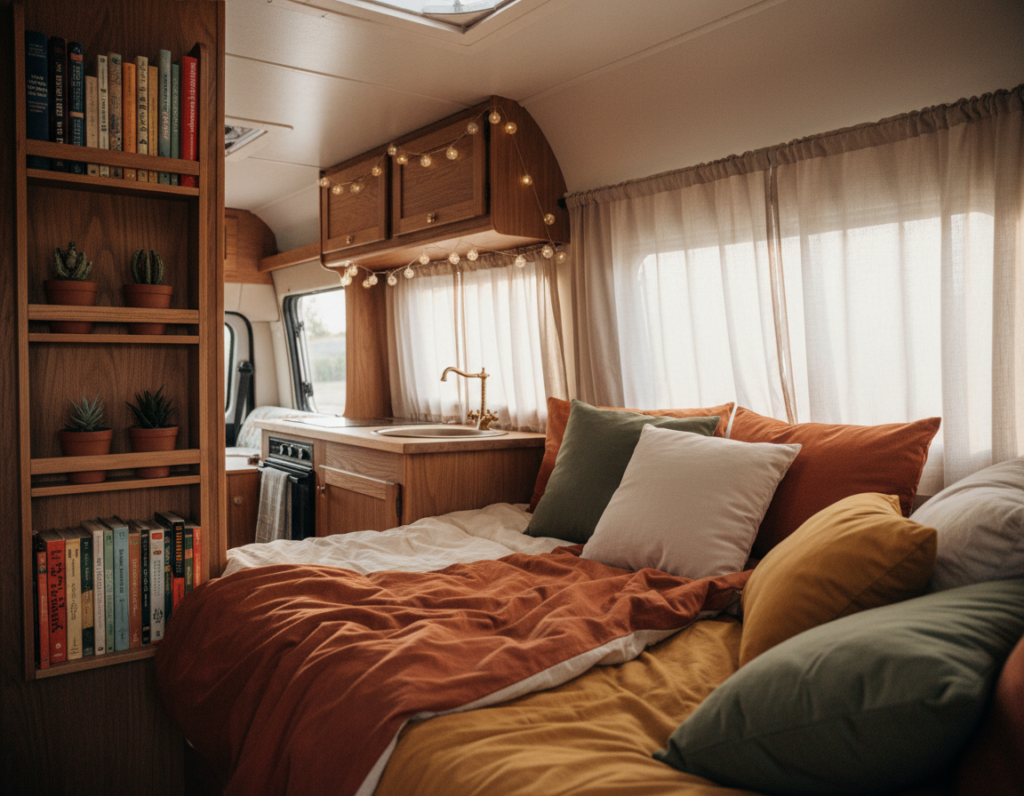
Maximizing the small camper sleeping area takes intent: choose pieces that double as drawers, fold away, or lift to reveal compartments. Travelers notice how a well-planned plan keeps pathways clear and gear tucked out of sight.
Modern builds use lightweight composites and engineered hinges to add storage without extra bulk. This approach preserves towing efficiency and lets owners carry essentials for long trips.
The right layout balances rest and functionality. By prioritizing adaptable surfaces and hidden pockets, a compact trailer feels roomy and reliable on every road.
The Challenge of Maximizing Your Small Camper Sleeping Area
Balancing comfort and storage in a travel trailer is often a game of compromises. Buyers must weigh weight, materials, and floor plans to keep a trailer light enough for their vehicle while still offering real living conveniences.
Some models solve this with smart layouts. The Casita Independence converts twin beds into a king. The Rockwood GeoPro 19FD uses a Murphy bed to free up daytime room for two adults. The Lance 1575 pairs durable construction with a dry weight of 2775 lbs for easier towing.
Practical features matter: an outdoor kitchen, LED lights, air conditioning, and a reliable refrigerator make trips easier for people who use their unit often.
- Choose trailers designed to fit your tow vehicle and keep weight under 3,500 lbs when possible.
- Prioritize quality—fiberglass or aluminum frames, good tires, and electric brakes improve safety and longevity.
- Check tank capacity, roof fans, windows, and a water heater to keep the interior bright and functional.
Utilizing Murphy Bed Designs for Daytime Versatility
A Murphy bed flips the overnight footprint of a travel trailer into daytime living in seconds. This design maximizes usable floor space while preserving a full-size bed for night use.
Wall-mounted mechanisms use counterbalanced springs or gas pistons to lift and lower a bed safely. These systems are engineered to keep weight low and function smoothly so the trailer stays easy to tow with a standard mid-sized vehicle.
Wall-Mounted Mechanisms
Well-built wall mounts allow the bed to fold vertically and lock in place. The mechanism protects the mattress and creates a clean, open interior during the day.
Couch Conversion Benefits
The Rockwood GeoPro 19FD shows how a front Murphy bed converts into a comfortable couch for two adults. When stowed, the couch frees up space for socializing, dining, or storage—making the trailer feel larger than its size suggests.
- Models with couch conversions let people host guests without a permanent bed in the way.
- Manufacturers add these features to meet demand for flexible travel trailers.
- Choose designs with quality mechanisms to protect the bed and keep the vehicle easy to tow.
Incorporating Multi-Functional Furniture
Designers rely on dual-purpose pieces to stretch usable living space inside travel trailers. Intentional furniture choices keep the floor clear and let families adapt the interior for different needs.
Convertible Dinette Tables
Convertible dinette tables are a staple in many trailers. They drop down to form a compact bed while adding hidden storage beneath the seat cushions.
These features maximize functionality without adding weight. A smart dinette pairs with the kitchen and refrigerator layout to maintain good flow during meals and at night.
- Many models include simple mechanisms that lower the table into a sleeping platform.
- Built-in storage under benches keeps gear organized and reduces clutter.
- Efficient floor plans use these tables to provide utility without a larger trailer footprint.
Manufacturers continue to refine materials and hardware so the pieces hold up on frequent travel. Choosing flexible furniture lets owners convert a compact camper into a well-equipped, multi-use living space.
Overhead Storage Solutions for Compact Interiors
Raised cabinetry provides smart vaults for gear, freeing the kitchen and living zones for daily use. Mounting storage near the roof preserves open floor space and improves circulation in tight designs.
Lightweight aluminum cabinets are common in modern travel trailers because they lower weight and resist corrosion. Many models add LED lights and soft-close doors to make items visible and secure while moving.
Well-designed overhead units can incorporate fan or air conditioning vents to streamline systems. The No Boundaries 19.2 shows how integrated LEDs and a central vacuum boost interior utility without adding bulk.
- Keep load limits in mind: use overhead space for lighter gear and supplies to protect capacity and balance.
- Store kitchen staples, small tools, and spare water containers near the roof to free counter and under-bed zones.
- Choose models with secure latches so belongings stay put during travel.
Under-Bed Compartments and Hidden Nooks
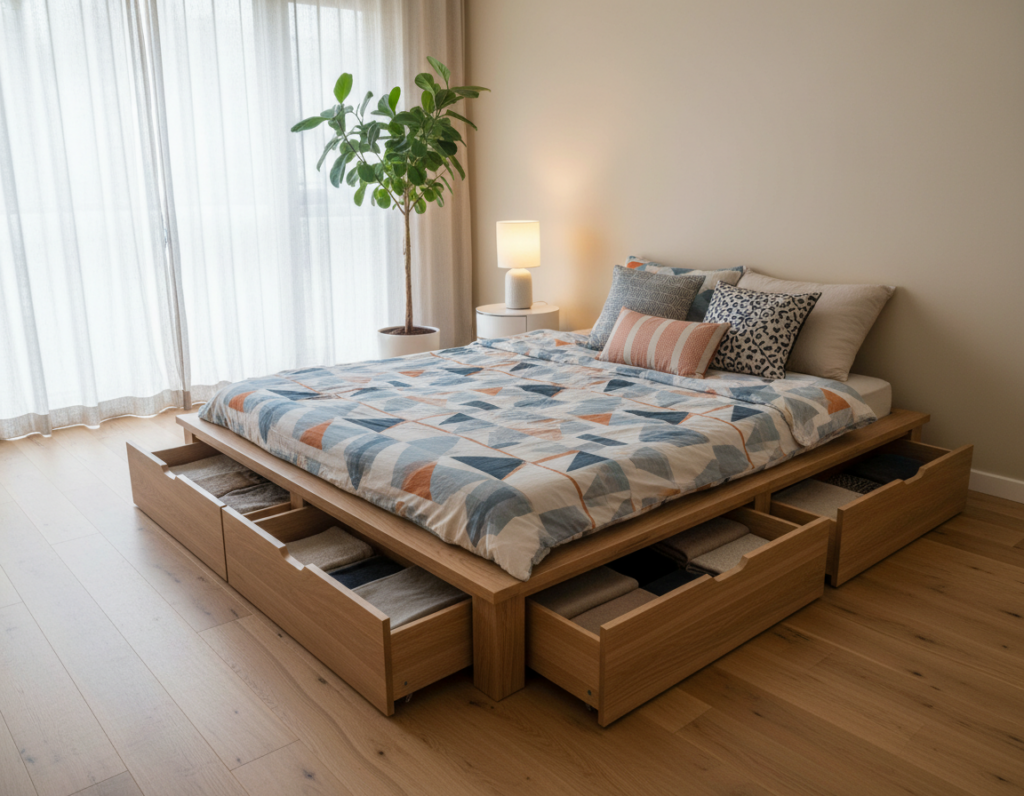
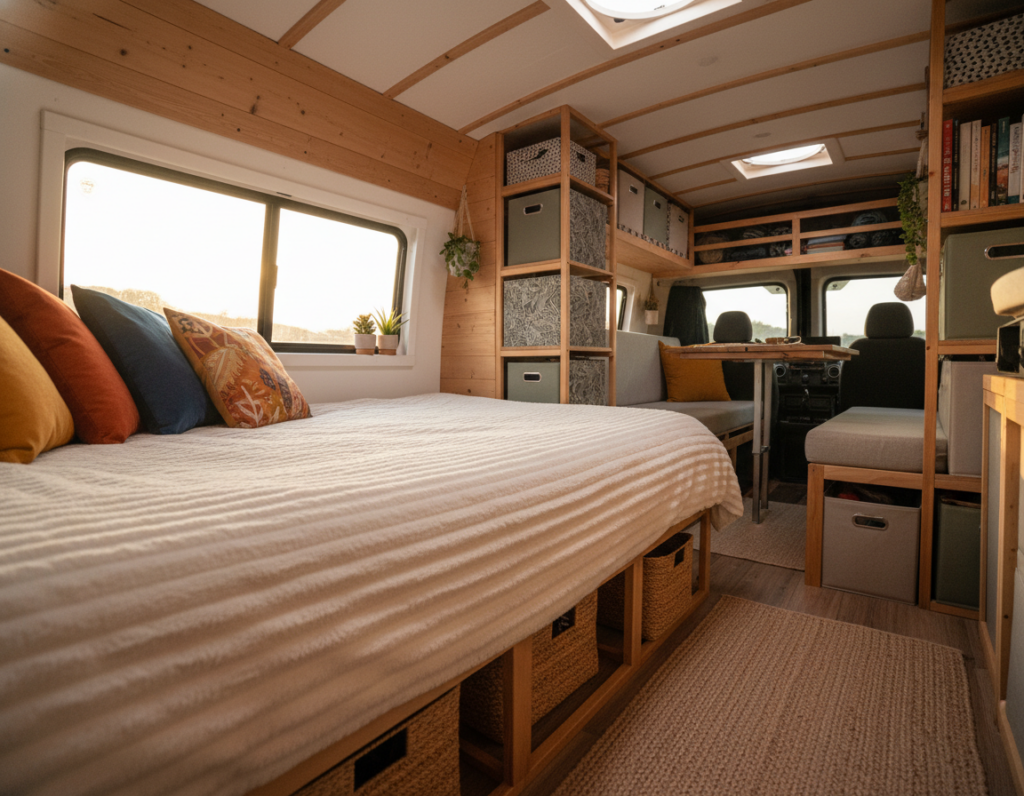
Under-bed storage is a powerful way to add utility without changing the floor plan. Many builders tuck drawers and cubbies beneath the mattress so gear stays out of sight and easy to reach.
Hydraulic Lift Systems
Hydraulic lifts make access effortless. Owners can raise the platform with little force to reach large items. The No Boundaries 19.2 flips a queen bed to reveal a couch and extra room for bulky loads.
Drawer Integration
Some models, like the Little Guy Max, add built-in drawers that slide from the foot of the bed. Drawers keep tools, kitchen supplies, and linens organized and protect weight limits by placing heavy items low.
Accessible Cubbies
Well-placed cubbies hold water hoses, spare tanks, and daily essentials. These nooks help keep the interior tidy on longer travel trips.
- Benefit: Maximizes usable storage without expanding the trailer footprint.
- Tip: Use heavier items under the bed to aid balance and weight distribution.
- Result: A cleaner, more functional living space in compact travel trailers.
Vertical Space Management Techniques
Rethinking height unlocks storage that keeps the floor clear and the room feeling open. Many trailers now use taller windows and higher ceilings to create a bright, airy interior.
The Aliner Grand Ascape ST offers 6′ 4″ of head room, which enables taller cabinets and vertical cubbies. These models turn wall space into useful storage for books, electronics, and personal effects.
Install shallow shelves, hooks, and magnetic strips on the side walls to keep gear off the floor. Vertical storage works well for items like air fans, clothing, and kitchen tools that would otherwise clutter a bed or bench.
“Use the wall up to the ceiling and you gain both organization and the perception of more room.”
Practical steps include hanging organizers, tall cubbies that reach the roof, and slim cabinets near windows for light. These features help a trailer stay functional during long travel and make daily packing easier.
- Benefit: frees the floor for movement and gear staging.
- Tip: prioritize lightweight fittings to protect weight limits.
- Result: a well-ordered interior that feels larger and more livable.
Choosing Lightweight Materials to Maintain Capacity
Choosing the right shell and frame materials keeps a trailer light while still tough enough for long trips. This choice directly affects how much gear a family can carry and how the vehicle behaves on the road.
Manufacturers now pair aluminum framing with composite panels to cut weight without losing strength. The Prolite Suite, for example, weighs only 590 lbs and suits very light tow vehicles.
Composite and Aluminum Construction
Aluminum frames offer high strength-to-weight ratios and resist corrosion, giving trailers a durable backbone. Composite panels and quality fiberglass shells add weatherproofing while keeping weight down.
- Keep capacity: lighter floor and roof materials free cargo capacity for supplies and gear.
- Improve handling: a low center of gravity from lightweight roof and floor construction boosts safety on turns.
- Real examples: Lance 1575 trailers use premium materials to hold a dry weight near 2775 lbs while keeping quality high.
“By prioritizing quality construction, owners get trailers that last and carry more without overloading the vehicle.”
Proper tire selection and balanced loading matter when weight is reduced. Lighter trailers let owners take more storage and accessories for travel without exceeding capacity limits.
Selecting Floor Plans That Prioritize Open Flow
Prioritizing clear circulation paths in the floor plan turns tight layouts into usable, comfortable homes on wheels. A good plan leaves a direct path from the kitchen to the bed so people move without stepping over gear.
Open flow helps light travel through the trailer, which makes the interior feel larger. Many modern trailers place the kitchen at one end and the sleeping zone at the other to create distinct living areas.
Avoid blocked walkways and cramped corners. That simple choice improves daily comfort and reduces frustration on long trips. Multi-functional zones—like a dinette that converts for lounging or work—add flexibility.
- Benefit: better traffic flow and clearer sight lines.
- Tip: choose a floor that keeps cooking and circulation separate.
- Result: a trailer that feels more like a home and less like a tight hallway.
For help choosing layouts, see this open-range travel trailer floor plan guide to compare designs and features.
Creative Lighting and Color Schemes to Enhance Perception
A layered lighting plan changes how people perceive depth and scale inside a trailer. Start with bright, neutral wall tones to reflect natural light from the windows. Light-colored fabrics and matte finishes reduce glare while making surfaces appear larger.
LED lights placed under cabinets, along toe kicks, and above storage create visual planes that lift the ceiling and open sight lines. Dimmable fixtures let users switch from task lighting to soft mood light without rewiring.
Good air circulation complements lighting. A steady flow prevents stuffiness and keeps the interior feeling fresh even on rainy days. Roof vents and window placement matter as much as color and bulbs.
- Tip: Use warm tones near seating to create a cozy feel and cool tones in work zones for an airy vibe.
- Benefit: Modern trailers increasingly include integrated lighting packages to add a premium look.
- Result: With modest upgrades, a camper can feel more open, brighter, and more welcoming.
“Proper lighting and a light palette can make a compact living space feel like a well-designed home.”
Conclusion
Smart selection of components and floor plans can make any trailer feel more roomy and capable. By choosing quality materials like aluminum or fiberglass and lightweight fittings, owners keep weight down and preserve capacity for gear.
Practical features—convertible bed systems, under-platform storage, and efficient floor plans—maximize storage and improve interior flow. Models such as the Little Guy show how thoughtful design serves two adults without excess bulk.
Remember to include essentials like air conditioning, a water heater, and electric brakes so the trailer is safe and comfortable on long travel. With the right choices, a camper becomes a reliable home on the road.