Stacy Bressler, an avid outdoorswoman from Jackson, Wyoming, says keeping gear tidy makes life on the road better. She notes that a neat living area helps prevent stinky shoes from taking over a small recreational vehicle.
Understanding the pros cons of exterior versus interior solutions is the first step. Many travelers use a simple bin for wet or muddy footwear. That keeps sand and mud off floors and saves time on cleanup.
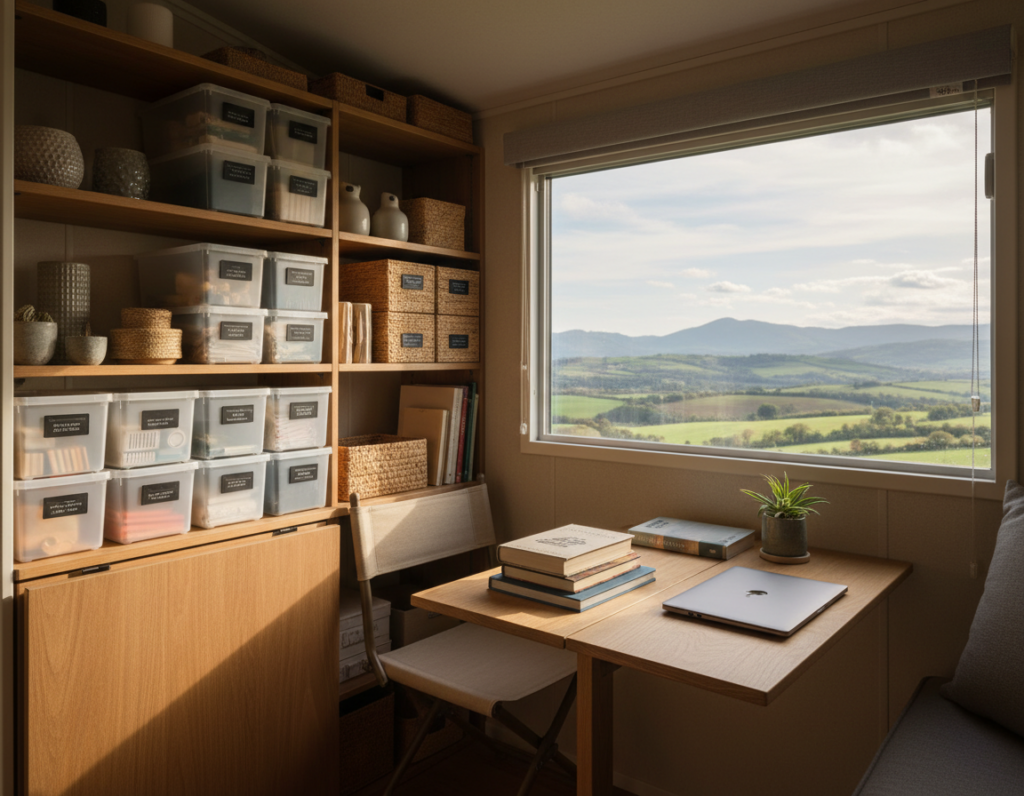
Hidden shoe storage solutions make a tiny home feel calm and minimal. Using vertical space or built-in compartments gives families a place for each pair. These practical ideas and tips help campers and RV users stay organized during any rainy travel day.
Exterior Camper Shoe Storage Solutions
A dedicated outside area for wet footwear stops mud at the door and preserves interior air quality.
Weather-Resistant Totes
Using weather-resistant bins or totes keeps wet pairs dry and organized. Many travelers opt for rugged totes that stack under an exterior shelf to protect gear from rain and dirt.
Utilizing Under-Stair Compartments
Lori C. built a ventilated compartment beneath entry stairs with lattice so sand falls through and air circulates. That design speeds drying and cuts cleanup time.
- Bill Harr secured two 15″x15″ REI cargo nets with cup hooks to suspend footwear off the floor while traveling in his rig.
- Ray and Brenda Fair placed a $2 plastic tray by the door to catch mud and grass before entering the living area.
- Steven Sternberg used Command hooks in his 2012 Palomino 8801 to make an inexpensive, stationary rack.
Tip: Convert an empty exterior compartment into a cabinet to keep items safe from rain and critters. For more creative ideas, see this RV organization guide.
Maximizing Vertical Space with Hanging Organizers
Hanging organizers turn empty wall and door surfaces into practical pockets for everyday footwear.
Command Hook Applications
Fabric hanging holders are a top choice for families with kids who misplace items. They create a dedicated place for every pair and keep floors clear.
Paul C. suggests using adhesive Command hooks to mount these organizers on a wall or the back of a door. This method frees floor space and avoids drilling into thin paneling.
- Use a tension bar in a closet to hang multiple pockets and keep gear compact.
- Build a PVC pipe frame, as Kristin P. did, to support larger hanging units for a custom fit.
- Over-the-seat organizers work well by the door to keep pairs accessible and off the floor while entering.
- Cargo nets or cup hook systems let you hang items by the heel for quick grab-and-go access.
Tip: Mix adhesive command hooks with a lightweight rack to secure heavier pairs during travel. These vertical ways save time and add a neat, hidden shoe storage solution to any small rig.
Creative Hidden Shoe Storage Camper Ideas
Smart mods make it easy to stash muddy pairs without sacrificing living space. These ideas use common components to keep mess off the floor and out of sight.
Storage ottomans double as seating and a tidy place to hide shoes. Place a plastic bin inside to catch mud and sand. That keeps the living area clean and lets guests sit comfortably while changing.
Pull-Out Drawer Systems
Pull-out drawers under sofas or dinettes provide a sleek way to keep shoes organized and easy to reach. Many owners retrofit slides into existing cavities or buy ready-made kits for a low-profile result.
Utilizing Shower Space
On travel days, the shower makes a sensible temporary spot for wet footwear if they are kept in a dedicated bag. This approach keeps the rig floor dry and reduces tracking of mud.
“Even small rigs can handle clever hidden solutions when owners plan with intent.”
- The Ikea Trones system fits narrow hallways and is a popular hidden solution.
- Solid-colored bins inside a cabinet keep pairs out of sight and neat.
- A kids-only bin helps prevent scattered items across the floor.
For more creative ideas, see this organization resource that offers practical tips for life on the road.
DIY Methods for Custom Shoe Organization
Simple DIY racks and hidden cubbies let owners turn odd nooks into useful gear areas.
Jessica J. and Trish W. show how custom shelves fit tiny, awkward gaps to keep pairs tidy. These builds are a great way to use wasted space and cost very little.
Adam S. and Jim W. suggest cutting into paneling to reveal hollow areas under beds or benches. That small change creates hidden shoe storage that frees floor room and makes the rig feel larger.
Kathy D. and Cherish J. recommend a wood frame or curtain rod rack for an exact fit between the shower and bathroom door. Using command hooks and cup hooks lets owners hang items on a wall or inside a cabinet without tools.
- Most projects take under an hour and often cost less than $20.
- Create a kids’ bin or low rack to keep gear off the floor and out of sand.
- These simple ideas give campers custom solutions and a neater life on the road.
Conclusion: Maintaining a Tidy Camper Environment
Small changes at the door make a big difference in how a rig feels and functions. Designating a clear place for wet and muddy pairs is the easiest way to keep the living area fresh and usable.
Whether someone chooses a storage ottoman, Command hooks, or a custom rack, the best solution is the one that keeps shoes off the floor. Add a cup hook or a small bin by the door to catch water and grit before it moves inside.
Forming the habit takes time—about two months of daily use—but the reward is more usable space and less cleanup. Use hidden shoe storage and vertical wall options to keep the rig feeling open and calm on every travel day.