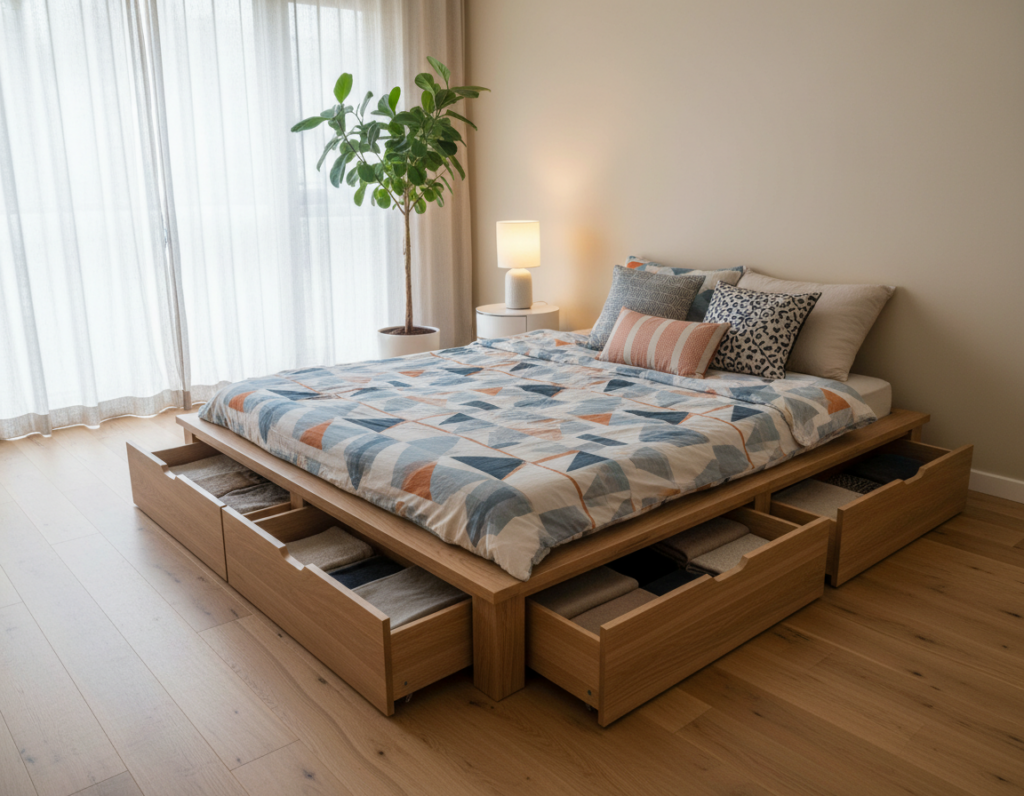
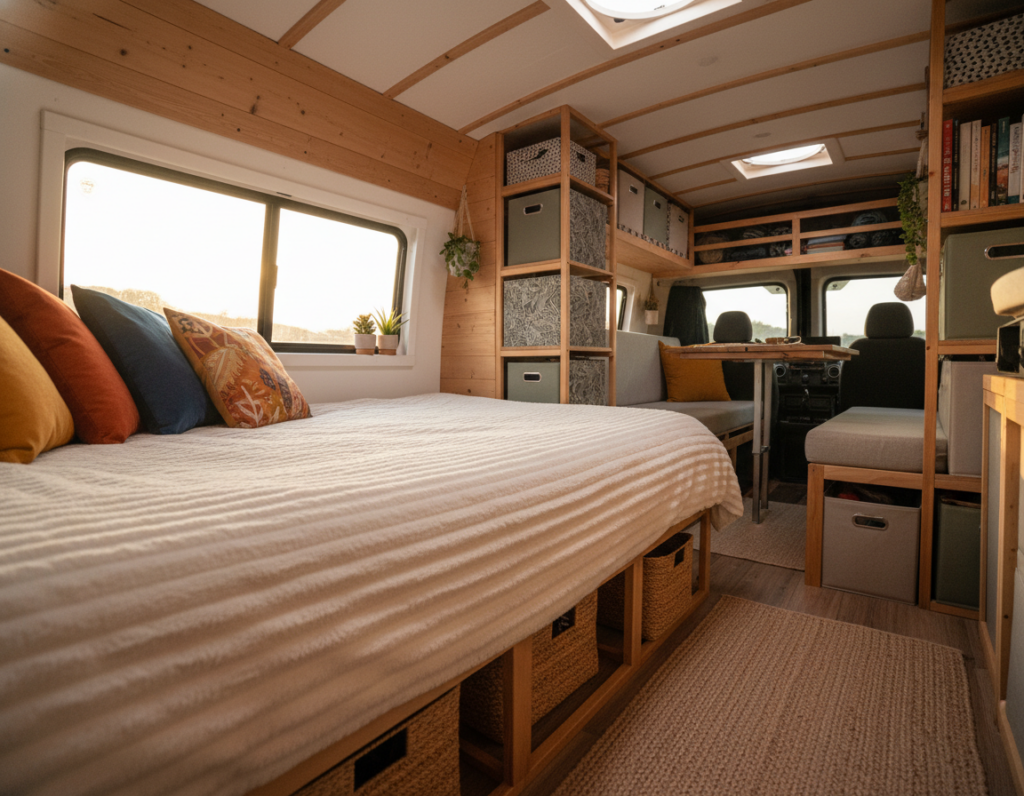
The challenge of life in a 200-square-foot rig is clear: every loose item threatens to overwhelm the limited space. A smart plan turns chaos into calm.
They focus on organization that fits daily needs. Simple solutions for blankets, chargers, and dog gear keep the bed area tidy. Kitchen spices and remotes find small, dedicated places so counters stay clear.
Vertical use of wall surfaces and adhesive hooks gives a practical way to free up floor and counter areas. High-quality silicone organizers and durable bins make it easier to keep things in order over time.
With a concise maintenance guide, the system stays effective and saves time on the road. These tips help transform a tight bedroom into a functional home that supports long-term camping life.
Identifying Hidden Camper Storage Opportunities
A methodical scan of walls and benches turns forgotten hollows into organized places for items. A short, room-by-room check helps map where additional storage can be added without cutting or rebuilding fixtures.
Assessing Unused Wall Space
Look behind cabinet doors and along narrow wall runs. Installing hooks or slim organizers clears counters of kitchen and camping essentials and creates vertical space for daily items.
Evaluating Under-Seat Compartments
Lift the dining cushions to inspect the box cavity beneath. That area often holds bulky gear like blankets or tools and works well with compartment dividers or labeled boxes.
- Check every cabinet and seat compartment to keep the home on wheels tidy.
- Use a simple maintenance guide to mark discovered areas and assign what items go where.
- Leverage professional ideas from ObeCo, a family-owned company in Elkhart, IN, that has engineered RV organization products since 1990.
“Identifying unused areas is the first step toward an efficient, organized rig.”
Maximizing Vertical Space with Netting Solutions
Stretching upward, wall-mounted nets turn empty vertical runs into reliable pockets for everyday gear. Framed net pockets hold lightweight items like pillows, blankets, or soft toys on flat wall surfaces without bulk.
Installing framed pockets in the kitchen or galley keeps counters clear and gives small tools a fixed place. Barrier nets also secure items inside cubbies and cabinets while the vehicle is in motion.
Simple advantages include quick access, visible organization, and minimal installation. Using specialized organizers and hooks on vertical surfaces reclaims otherwise unused space.
- Store soft items without using floor or cabinet room.
- Secure loose items during transit with barrier nets.
- Combine hooks and framed pockets for tidy, layered solutions.
“Net systems are professional-grade tools that keep gear secure and accessible for long trips.”
For practical how-tos and more ideas to maximize van space, see clever ways to maximise campervan space.
Utilizing Under-Bed and Furniture Cavities
Lift-up beds and bench boxes turn awkward gaps into practical, long-term places for seasonal gear. These cavities provide major opportunities to reclaim usable space without modifying the floorplan.
Using under-bed compartments and the area beneath dinette cushions stores bulky items that are not needed every day. This keeps the sleeping area tidy and reduces clutter in cabinets and on surfaces.
Gas-Assist Strut Upgrades
Simple gas-assist struts remove the struggle of lifting heavy mattresses. They reveal the storage box under the bed with one hand and make access safe for all travelers.
- Under-seat cavities handle blankets and seasonal coats.
- Custom organizers and dividers keep things sorted inside the bench and cabinet bays.
- Professional upgrades to frames and cabinets maximize every inch for long-term use.
“A well-designed under-bed system makes the bedroom feel larger and more livable.”
For more practical retrofit ideas, review these best camper storage ideas to plan upgrades that suit long trips.
Smart Kitchen and Galley Organization Hacks
A compact galley gets smarter when every pan and spice has a planned place. Small investments in foldable cookware and smart organizers change how the kitchen functions day to day.
Collapsible Cookware Essentials
Collapsible pots, nesting bowls, and fold-flat kettles reclaim cabinet space and reduce clutter on the counter. With the right set, a galley can free up to 40 percent of cabinet volume.
Drawer Divider Systems
Drawer dividers turn messy utensils into neat rows that are easy to find during meal prep. Silicone bins and labeled sections also speed up cleaning and cut the time spent searching for essentials.
Magnetic Spice Storage
Magnetic tins on a side panel or under a cabinet keep spices visible and secure. This method clears counter space and places frequently used items at arm’s reach.
- Time savings: A park with 20 turnovers can save 16+ labor hours monthly using efficient systems.
- About $150 in upgrades usually pays for itself within 45 guest stays.
- Professional organizers give a reliable place for toiletries, dog gear, chargers, and kitchen tools.
“Investing in compact, purpose-built organizers makes daily routines faster and cleaning simpler.”
Implementing Magnetic and Adhesive Mounting Systems
A well-chosen magnetic strip and a set of adhesive hooks make walls work harder without drilling a single hole. This approach reclaims counter and cabinet space while keeping frequently used items within reach.
Professional-grade magnetic strips offer secure storage solutions for knives and metal tools. For safety on rough roads, choose strips rated to at least a 50-pound pull force so items stay locked in place during transit.
High-bond adhesive hooks and strips protect interior surfaces and give flexible hanging points for lightweight gear and kitchen towels. They are ideal where permanent fasteners would damage panels or void warranties.
- Use magnets for metal items to free up drawers and cabinets.
- Place adhesive hooks on vertical surfaces to hang small organizers and daily gear.
- Pick quality adhesives and magnetic mounts for a professional, lasting solution.
“Mounting systems like these keep gear in place and help maintain a clean, efficient space.”
Keeping Gear Secure During Transit
Securing gear before departure prevents rattling, damage, and mid-trip surprises.
Install locking latches on drawers and add elastic nets to pull-outs so items do not shift on rough stretches of road. A simple latch-and-net approach protects surfaces and keeps fragile things in place inside each storage box.
A standardized maintenance checklist saves time at departure. It confirms each latch, net, and fastener is set and that all bins and organizers are closed.
Mount cleaning tools like a silicone toilet brush and other accessories so they stay put. This reduces cleanup and prevents cleaning items from becoming loose projectiles while driving.
- Prevent damage: keep every item in its place to avoid interior wear.
- Save time: a short pre-drive sweep checks all systems quickly.
- Professional security: combine elastic nets with locking latches for reliable transit protection.
“A well-organized rig is easier to secure because every item has a specific place.”
Maintenance Routines for Long-Term Success
A short, regular reset keeps small living areas usable and stress-free. It is a simple way to protect systems and extend the life of every organizer and box.
Standardized Reset Checklists
Teams or solo travelers should use a single checklist to reset the bed, kitchen, and living areas. A clear list speeds the process and saves time before departure.
Include quick checks for cabinets, bins, and wall hooks. Wipe down surfaces and run a brief cleaning of the counter and cabinet faces.
- Daily: tuck essentials, secure chargers, and straighten blankets.
- Weekly: empty and clean bins, inspect hooks, and test latches.
- Monthly: follow a professional guide to reorganize items and check fasteners; when installing new solutions, use self-tapping screws shorter than 3/4-inch to avoid hidden wiring or plumbing.
“A consistent maintenance schedule keeps gear neat and prevents small problems from growing.”
Using silicone tools and spare hooks makes upkeep easier. Over time, the habit keeps the home on wheels tidy and comfortable for long-term life on the road.
Conclusion
Practical habits and smart gear turn a tight bedroom into a restful retreat. By using vertical space, under-bed cavities, and compact kitchen systems, travelers can reclaim room and reduce daily clutter.
Routine maintenance and a standardized checklist keep systems reliable on long trips. Investing in quality mounting systems and collapsible gear saves time and labor while protecting finishes and fasteners.
Mastering hidden storage in a small camper bedroom lets people focus on the road ahead. These expert strategies form a clear roadmap to an organized, clean, and ready-to-go rig for every new adventure.