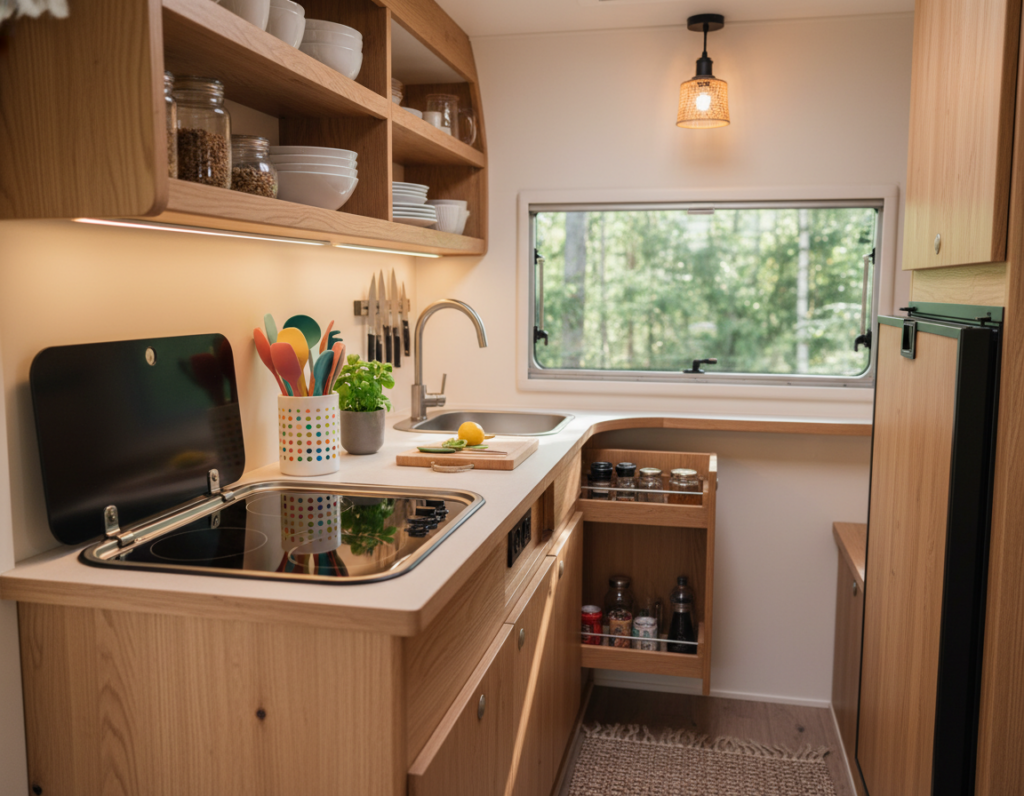
Full-time travelers face a constant challenge: how to keep a tidy, functional home on wheels. Sandy Vans offers custom storage starting at $130 to help them fit more into less space.
Good storage means prioritizing the kitchen and essential food items so the tiny cooking area does not become messy. Smart placement turns clutter into calm and saves time each day.
Experienced travelers use simple hacks and bins to make every inch count. By assigning a specific place for each tool and ingredient, they keep things organized and easy to reach.
These small storage solutions make the mobile home feel peaceful and efficient. With the right setup, people spend less time searching and more time enjoying the road.
Mastering Van Life Pantry Ideas for Small Spaces
Interchangeable storage modules let travelers tailor cabinet space to the foods they carry. Brands like Vandermoon and American Van offer modular systems with parts that snap together to fit narrow shelves.
Choose stackable bins to use vertical space and keep food items visible. Lightweight, durable containers cut weight while protecting goods from shifting during travel.
Group similar things together so the kitchen functions like a tiny grocery aisle. Place everyday items on the most accessible shelves and reserve upper cabinet space for less-used supplies.
- Use modular racks to secure jars and cans.
- Install narrow slide trays for spices and packets.
- Balance weight across cabinets to keep the vehicle stable.
Well-planned storage prevents chaos and speeds meal prep. Investing in quality units from American Van or Vandermoon makes the small kitchen feel organized and reliable on the road.
Utilizing Vertical Wall Surfaces
Wall-mounted storage turns unused panels into practical, visible spots for kitchen gear. This approach clears counter space and keeps frequently used items at hand.
Magnetic Strips for Utensils
Magnetic strips secure knives and metal tools to a wall or cabinet door. A 2025 Winnebago Solis owner can use them to free up counter space while keeping sharp items safe.
Mount strips at a sensible height so everyone can reach what they need without stretching.
Modular Pegboard Systems
Modular pegboards let users hang whisks, spatulas, and cups on adjustable hooks. Heavy-duty hooks hold bulky tools even when the vehicle moves on rough roads.
- Hang frequently used items where they are within easy reach.
- Use shelves and baskets on pegboards to store small things and packets.
- Secure panels to the framework to prevent falls and keep cabinet doors usable.
Pro tip: Combine magnetic strips and pegboards for layered organization that keeps the kitchen neat and efficient.
Implementing Pull-Out Drawer Systems
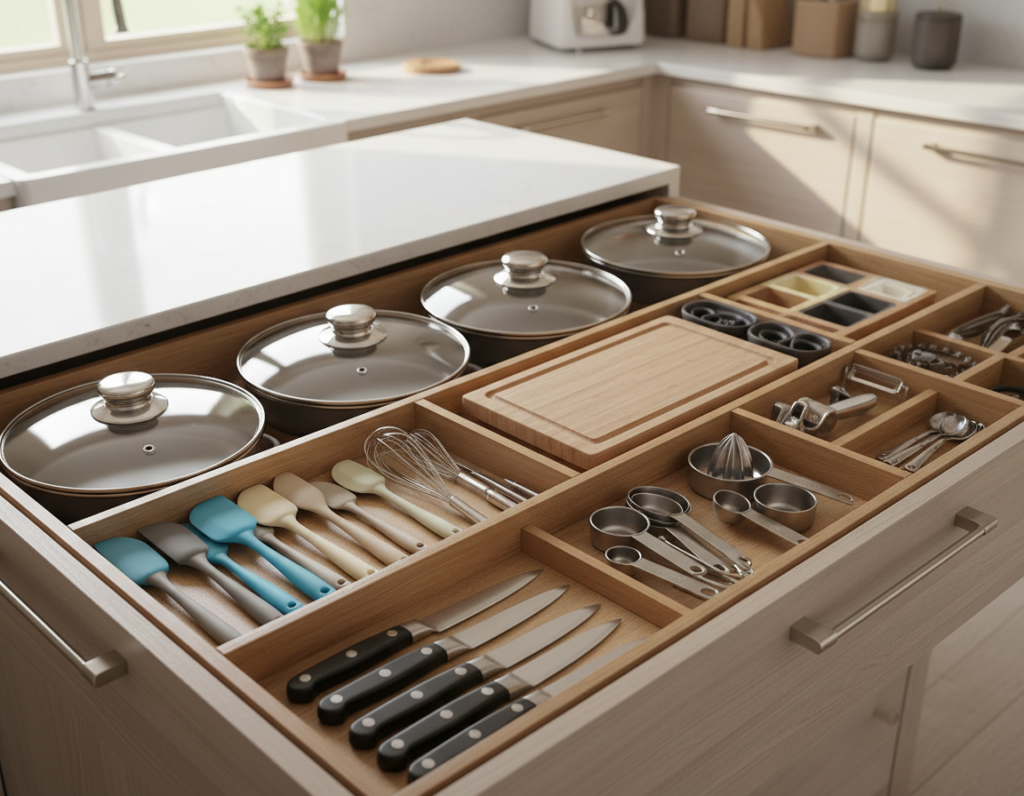
Pull-out drawer systems convert wasted cabinet depth into neat, reachable storage. They turn deep lower cabinets into organized zones that save time and reduce clutter in a compact kitchen.
Slide-out pantry racks like the VanCraft 2024 EasyGlide series offer soft-close mechanisms that keep drawers from sliding open while driving. These systems provide easy access to food storage and make sure nothing gets lost in the back.
Slide-Out Pantry Racks
Convert static shelves into sliding platforms to make ingredients visible and easily accessible. When selecting systems, make sure to measure the height and width of your cabinet space first so the fit is precise.
- Use heavy-duty drawer slides to handle canned goods and heavy kitchen items.
- Consider adding soft-close mechanisms to prevent rattling on rough roads.
- Organize drawers with dividers so items stay put and inventory is easy to track.
Durable sliding solutions save time during meal prep because shelves glide out and reveal everything at once. Proper organization also reduces waste by keeping food storage visible and accounted for.
“A well-built pull-out rack brings full cabinet access to the front.”
For DIY upgrades and detailed build guides, see this pull-out kitchen pantry guide to learn more about practical installation tips and materials.
Maximizing Under-Seat Storage
Under-seat compartments unlock hidden storage that keeps bulky gear out of sight but within reach. This approach frees up valuable space in the kitchen and living area while giving easy access to everyday items.
Owners often store items like shoes, tools, and outdoor gear under seats. They use sturdy bins or sliding drawers to maintain order and secure loose things.
Make sure there is enough clearance so heavy bags and bulky gear slide out smoothly. Many people reserve the deeper cabinet sections for extra bedding or seasonal clothing to keep the main cabin uncluttered.
- Use dividers in bins to separate small tools and electronics.
- Secure mounts to the floor so compartments do not shift while traveling.
- Balance stored weight across shelves and cabinets for stability.
These storage solutions maximize space and improve overall organization. Try a few simple tweaks and the place will feel more functional and calm.
Choosing Nesting and Stackable Cookware
Choosing cookware that fits together like building blocks saves both space and time. Nesting sets and fold-flat containers make the most of narrow cabinets and drawers. They keep things secure while driving and speed up meal prep.
Integrated Cookware Sets
Integrated sets such as the LagunaTech Fold-Away series, launched in late 2024, show how well-designed nesting pots cut bulk. Stack pots, lids, and a few utensils together to prevent clanking.
- Use soft liners or silicone bands so stacked items do not rattle.
- Store heavier pans low in the cabinet to balance weight.
- Pick durable metals that resist dents from road vibrations.
Collapsible Food Storage
Collapsible containers and bags fold flat when empty. This lets one keep a full set of containers in a fraction of the cabinet space.
Practical tips: invest in stackable containers for dry goods and use collapsible bags for grains to save space and keep the kitchen organized. Organized drawers and bins reduce cleanup time and free counter space for cooking.
“High-quality, stackable containers make storage efficient and keep items easy to find.”
Optimizing Awkward Corner Cabinets
A few targeted upgrades can turn stubborn corner cabinets into reliable storage hubs that offer easy access to daily essentials.
Install multi-level Lazy Susan turntables to spin canned goods and oils into view. Add pull-out sliding shelves so deep cabinet depth becomes useful and everything is within easy reach.
Use clear containers and labeled bins to group similar items. This makes inventory simple and keeps the small kitchen tidy while reducing waste of space.
- Measure cabinet dimensions and avoid interference with plumbing or vents.
- Choose soft-close slides for quiet access on the road.
- Place heavier things low to stabilize the load.
Pro tip: when organizing the pantry section, consider adding a shallow pull-out at the front for spices and cooking oils. These compact storage solutions maximize cabinet space and make meal prep faster and neater.
Leveraging Door-Mounted Storage Solutions
Mounting organizers to doors converts wasted surfaces into tidy, reachable spots for essentials.
Adhesive organizers applied to the inside of a cabinet door create extra storage without drilling. They make small kitchen items visible and ready for quick use.
Adhesive Organizers
Choose clear pockets for spices and small bottles so everything stays within easy reach during meal prep. Clean the door surface with alcohol before applying adhesive for a strong bond.
Use hooks to hang oven mitts, towels, and utensils. Hooks keep frequently used things handy and free valuable shelf space.
- Secure heavier items with additional adhesive strips so nothing falls while driving.
- Group similar items together to keep the cabinet tidy and reduce clutter.
- Pick low-profile shelves or racks to preserve opening clearance.
Practical solutions like clear organizers and hook strips deliver easy access and expand usable space. These storage solutions are ideal for anyone aiming to maximize a small kitchen without creating chaos.
Installing Modular Storage Units
Interchangeable storage units transform awkward shelves into a flexible, secure kitchen system. Brands like Vandermoon and American Van offer modular systems with parts that snap together to fit tight cabinet widths.
Design the layout around the things used every day. Place frequently accessed containers and bins up front so meal prep is fast and neat.
Choose durable, lightweight modules so the overall space remains efficient. These systems stack shelves, add hooks on the door, and allow easy swaps when needs change.
- Customize shelf heights to match jars, cans, and containers.
- Use hooks and small bins for utensils and spice packets.
- Secure units to the cabinet frame to prevent shifting while driving.
Practical benefit: modular storage solutions make it simple to rearrange storage as travel routines evolve. Many owners find these units perfect for long-term use because they keep the kitchen tidy and predictable.
“A modular setup gives every item a home and makes counting supplies fast.”
Incorporating Exterior Storage Options
Moving bulky gear outside the vehicle opens crucial space inside the kitchen and living area. Owners often add roof racks or hitch-mounted carriers to reclaim cabinet depth and reduce clutter.
Sandy Vans offers custom exterior storage starting at $130, making it simple to expand capacity without heavy DIY work. The company’s side-mounted boxes free floor and shelf space so food and cookware stay neat.
For secure hauling, many choose Thule 2024 carriers. These van-specific units include multi-point locks to protect gear from theft and weather. Using weather-resistant bins and hooks keeps items stable and ready for quick access.
- Use roof and hitch carriers to move bulky gear outside and free interior space.
- Organize exterior bins with compartments so frequently used things are easy to reach.
- Install side-mounted boxes for quick access to tools, cooking gear, or extra shelves.
Pro tip: always confirm weight limits and lock mechanisms before mounting. Proper exterior storage solutions increase total capacity and keep the home cabin cleaner and more functional on the road.
Repackaging Food for Efficiency
Repacking staples into uniform, airtight containers is a simple way to save space and speed meal prep. The OXO Good Grips 8-Piece Container Set is BPA free and works well for grains, snacks, and dry goods.
Remove bulky packaging from boxes and bags, then transfer contents into clear containers or ziplock bags. Label each container so frequently used recipes and ingredients are easy to find.
Group similar items in small bins to keep shelves and drawers tidy. Many travelers store items like pasta and rice together to prevent shifting and to simplify inventory checks.
Use a slim container near a cabinet door for snacks you grab most often. This placement saves time and keeps the main shelf space for less-used goods.
- Choose airtight containers to extend freshness and reduce spills.
- Stack uniform boxes and bags to make the most of vertical space.
- Keep a few labeled zip bags for single-meal portions to save time.
“A small switch to quality containers changes chaotic shelves into a predictable system.”
Conclusion
With a few thoughtful choices, a small mobile home can feel roomy and efficient. Smart storage and consistent routines free up valuable space and make daily cooking easier.
They should use every surface, including the inside of a pantry door, and choose secure, modular units for cabinets and drawers. These simple moves reduce clutter and speed meal prep.
When items have a clear place, the focus shifts from managing gear to enjoying the trip. A well-organized setup keeps van life practical and calm.
Final tip: invest in reliable mounts and stackable containers, then tweak the layout as needs change to keep the home functional for years.